Journalism of Courage
Advertisement
Premium

Not so random anymore: What Indians should know about changes in the US H-1B visa lottery system

The measure, alongside other recent policy changes, will likely impact the number of H-1B applicants and the profile of those who ultimately get the visa.

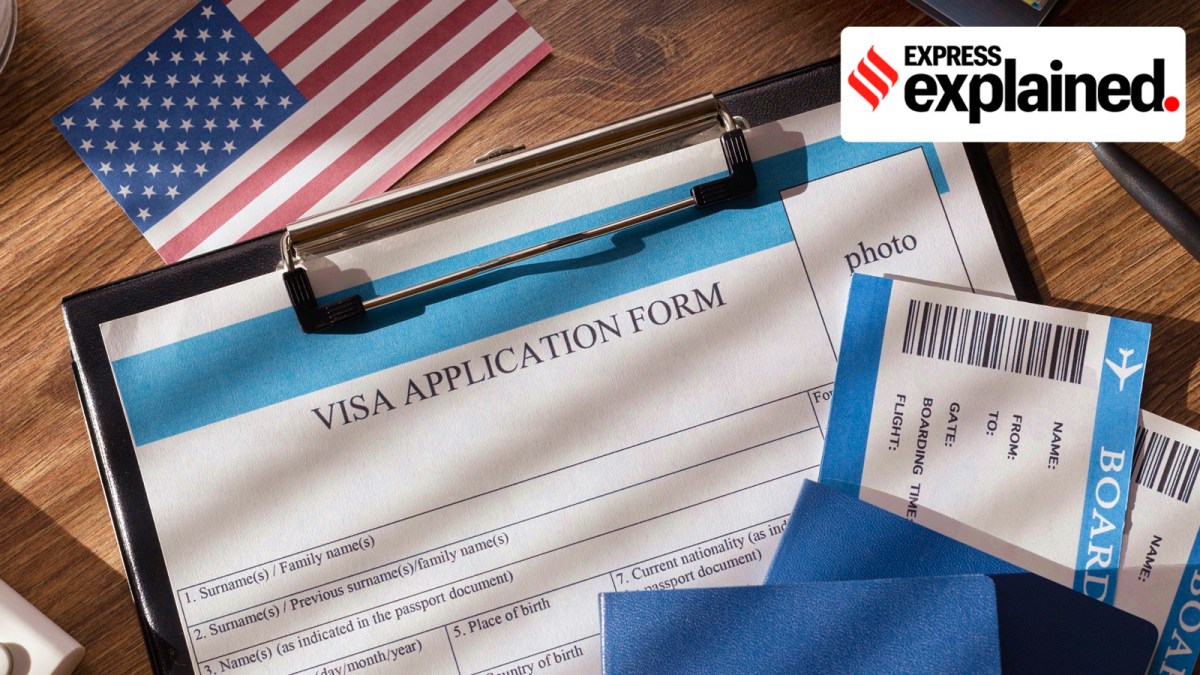
The rule is designed to benefit more experienced and higher-paid professionals.The rule is designed to benefit more experienced and higher-paid professionals. (Freepik photo)

The United States government finalised a major overhaul of the H-1B visa selection process earlier this month, replacing the long-standing random lottery with a wage-weighted system that gives preference to applicants in higher-paid jobs.

The change will be applicable from the March 2026 H-1B registration cycle. Separately, a $100,000 fee was imposed this year for certain H-1B petitions filed for workers outside the US.

Together, the two measures mark a shift in how the US selects foreign workers, giving preference to salary and seniority. They are expected to have far-reaching consequences for Indian students and professionals, who form the largest group of H-1B applicants each year.

What has changed in the H-1B lottery system?

The key change is that the H-1B lottery will no longer be purely random. Employers apply for and sponsor the H-1B visa for their overseas employees to work in the United States.

Until now, when applications exceeded the annual H-1B cap of 85,000 visas, every eligible registration had an equal chance of selection, regardless of salary or experience. From 2026, the US Citizenship and Immigration Services (USCIS) will use a weighted lottery, where applications tied to higher wages receive more chances in the draw.

Texas-based immigration attorney Chand Parvathaneni noted that the change did not come via an executive order — a tool that US President Donald Trump has increasingly deployed in his second term. “It went through a proper federal rule-making process. They first published the proposal in September, gave the public time to comment, reviewed those comments, and then finalised the rule,” he said.

Because the final rule was published with a notice period, Parvathaneni said, it will only take effect from February 27, 2026.

How will the new wage-weighted lottery work in practice?

Story continues below this ad

The new system relies on the four wage levels set by the US Department of Labor for when employers file H-1B petitions. These wage levels are determined by occupation, location, and experience.

Under the new lottery:

Wage Level 1 (entry-level): 1 chance in the lottery

Wage Level 2: 2 chances

Wage Level 3: 3 chances

Wage Level 4 (highest): 4 chances

“It is still a lottery,” Parvathaneni said, “but not a random lottery. It is weighted towards the wage level. Somebody who gets a higher wage has more chances and a higher probability of being selected.” Safeguards will also be instituted to prevent employers from artificially inflating wages to game the system.

Who stands to benefit from this change?

The rule is designed to benefit more experienced and higher-paid professionals.

Parvathaneni stated that the government’s logic is straightforward: higher salaries are seen as a proxy for higher skill. “The general view is that somebody who is more experienced obviously has more skills and commands more salary,” he said. “The government wants to give that person more preference.”

Story continues below this ad

Because Indian applicants already comprise a large share of senior IT, engineering and consulting roles, the change does not disadvantage Indians as a nationality. Instead, it shifts the advantage within the applicant pool. “It won’t shift from one country to another,” Parvathaneni said. “It will shift from junior-level people to more senior-level people.”

Who is likely to lose out?

Entry-level applicants, including fresh graduates and many international students, are expected to face a disadvantage. Speaking to The Indian Express, Virginia-based immigration attorney Rajiv Khanna said, “One obvious impact of the new H-1B methodology is that the chances for entry-level people have reduced drastically.”

Khanna said the change is particularly damaging for students who took on large educational loans. “There are students here with hundreds of thousands of dollars in loans, anticipating that they’ll be able to get a job,” he said. “It appears very unlikely now.”

At first glance, lower-paid fields such as teaching, education, and some non-profit roles might appear vulnerable. However, Parvathaneni said the rule does not impose a fixed salary threshold. “They are not talking about a dollar figure,” he explained. “They are talking about wage levels within an occupation.”

Story continues below this ad

For example, a wage level 4 teacher may earn far less than a wage level 4 software engineer, but both would still receive the highest weighting within their respective professions. “So it’s not that teachers will automatically be impacted,” Parvathaneni said. “In every occupation, they are looking for senior-level people.”

Where the real impact may be felt, Khanna said, is among entry-level hiring across sectors, especially at startups and small businesses. “An employer who wants to apply for an entry-level individual to get the visa may not be keen on spending hundreds or even thousands of dollars just to set up the lottery,” he said. “Large employers have no problem spending that money. It’s the smaller businesses, entrepreneurs and startups that will suffer.”

Will the number of H-1B filings fall because of this?

Yes. Khanna said the new system increases legal and compliance costs even at the registration stage. “Earlier, the lottery was just basic information,” he said. “Now we have to lay the groundwork for a future H-1B filing.” As a result, some employers may choose not to apply at all for entry-level candidates with low odds of selection.

Story continues below this ad

How does the $100,000 H-1B fee fit into this change?

The wage-weighted lottery is separate from the $100,000 fee. Employers sponsoring workers from outside the US must pay the fee, but students already in the US transitioning from the F-1 visa to H-1B are exempt.
Together, both policy changes mean that while students in the US will avoid the fee, experienced professionals in India may benefit from being at higher wage levels.

What should Indian applicants do next year? 

Both lawyers say Indian students and professionals need to recalibrate expectations and plan far more deliberately. Parvathaneni advises applicants to focus on compliance, experience and have greater clarity about their career trajectory. “The government wants specialised people, and salary is being used as a proxy for that,” he said.

Khanna urges students, especially those considering expensive US degrees, to reassess the potential risk. He cautions that entry-level pathways have narrowed sharply and that policy shifts are being made without clear evidence of long-term economic benefit. “If you are coming purely for education, the US is still the best,” he said. “But if you are coming with the expectation of a career and a hospitable environment, this is not the time to assume things will work out.”

Curated For You

Vidheesha Kuntamalla is a Senior Correspondent at The Indian Express, based in New Delhi. She is known for her investigative reporting on higher education policy, international student immigration, and academic freedom on university campuses. Her work consistently connects policy decisions with lived realities, foregrounding how administrative actions, political pressure, and global shifts affect students, faculty, and institutions. Professional Profile Core Beat: Vidheesha covers education in Delhi and nationally, reporting on major public institutions including the University of Delhi (DU), Jawaharlal Nehru University (JNU), Jamia Millia Islamia, the IITs, and the IIMs. She also reports extensively on private and government schools in the National Capital Region. Prior to joining The Indian Express, she worked as a freelance journalist in Telangana and Andhra Pradesh for over a year, covering politics, rural issues, women-centric issues, and social justice. Specialisation: She has developed a strong niche in reporting on the Indian student diaspora, particularly the challenges faced by Indian students and H-1B holders in the United States. Her work examines how geopolitical shifts, immigration policy changes, and campus politics impact global education mobility. She has also reported widely on: * Mental health crises and student suicides at IITs * Policy responses to campus mental health * Academic freedom and institutional clampdowns at JNU, South Asian University (SAU), and Delhi University * Curriculum and syllabus changes under the National Education Policy Her recent reporting has included deeply reported human stories on policy changes during the Trump administration and their consequences for Indian students and researchers in the US. Reporting Style Vidheesha is recognised for a human-centric approach to policy reporting, combining investigative depth with intimate storytelling. Her work often highlights the anxieties of students and faculty navigating bureaucratic uncertainty, legal precarity, and institutional pressure. She regularly works with court records, internal documents, official data, and disciplinary frameworks to expose structural challenges to academic freedom. Recent Notable Articles (Late 2024 & 2025) 1. Express Investigation Series JNU’s fault lines move from campus to court: University fights students and faculty (November 2025) An Indian Express investigation found that since 2011, JNU has appeared in over 600 cases before the Delhi High Court, filed by the administration, faculty, staff, students, and contractual workers across the tenures of three Vice-Chancellors. JNU’s legal wars with students and faculty pile up under 3 V-Cs | Rs 30-lakh fines chill campus dissent (November 2025) The report traced how steep monetary penalties — now codified in the Chief Proctor’s Office Manual — are reshaping dissent and disciplinary action on campus. 2. International Education & Immigration ‘Free for a day. Then came ICE’: Acquitted after 43 years, Indian-origin man faces deportation — to a country he has never known (October 2025) H-1B $100,000 entry fee explained: Who pays, who’s exempt, and what’s still unclear? (September 2025) Khammam to Dallas, Jhansi to Seattle — audacious journeys in pursuit of the American dream after H-1B visa fee hike (September 2025) What a proposed 15% cap on foreign admissions in the US could mean for Indian students (October 2025) Anxiety on campus after Trump says visas of pro-Palestinian protesters will be cancelled (January 2025) ‘I couldn’t believe it’: F-1 status of some Indian students restored after US reverses abrupt visa terminations (April 2025) 3. Academic Freedom & Policy Exclusive: South Asian University fires professor for ‘inciting students’ during stipend protests (September 2025) Exclusive: Ministry seeks explanation from JNU V-C for skipping Centre’s meet, views absence ‘seriously’ (July 2025) SAU rows after Noam Chomsky mentions PM Modi, Lankan scholar resigns, PhD student exits SAU A series of five stories examining shrinking academic freedom at South Asian University after global scholar Noam Chomsky referenced Prime Minister Narendra Modi during an academic interaction, triggering administrative unease and renewed debate over political speech, surveillance, and institutional autonomy on Indian campuses. 4. Mental Health on Campuses In post-pandemic years, counselling rooms at IITs are busier than ever; IIT-wise data shows why (August 2025) Campus suicides: IIT-Delhi panel flags toxic competition, caste bias, burnout (April 2025) 5. Delhi Schools These Delhi government school grads are now success stories. Here’s what worked — and what didn’t (February 2025) ‘Ma’am… may I share something?’ Growing up online and alone, why Delhi’s teens are reaching out (December 2025) ... Read More


Tags:
  • Express Explained Immigration
Weather
Edition
Install the Express App for
a better experience
Featured
Trending Topics
News
Multimedia
Follow Us
Express PremiumWhy 'national' science has been obsessed with ancient history
X