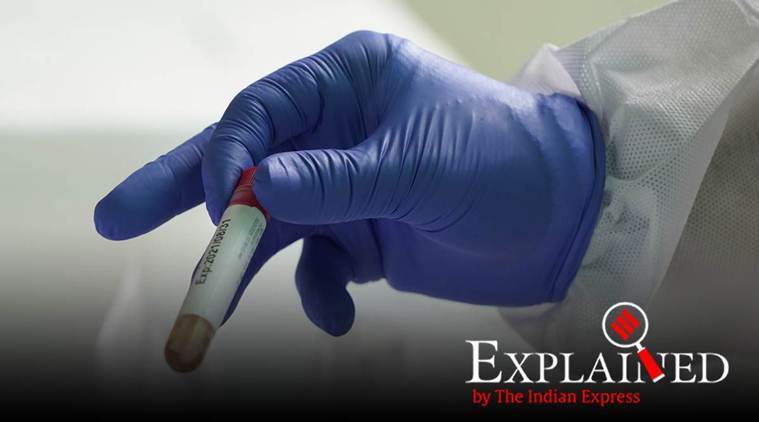
RT-PCR is currently the gold standard frontline test for the diagnosis of Covid-19. (File Photo)
On Monday, the Indian Council of Medical Research (ICMR) approved one more kind of test for diagnosis of Covid-19. The rapid antigen detection test is to be used in specified settings, and kits from only one manufacturer have got approval.
What is the rapid antigen detection test for Covid-19?
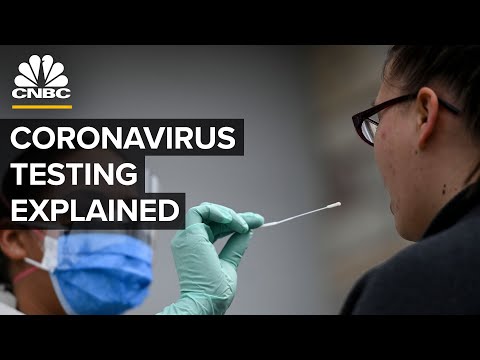
It is a test on swabbed nasal samples that detects antigens (foreign substances that induce an immune response in the body) that are found on or within the SARS-CoV-2 virus. It is a point-of-care test, performed outside the conventional laboratory setting, and is used to quickly obtain a diagnostic result. In India, the ICMR has allowed the use of antigen detection kits developed by the South Korean company S D Biosensor, which has a manufacturing unit in Manesar. The kit, commercially called Standard Q COVID-19 Ag detection kit, comes with a with an inbuilt Covid antigen test device, viral extraction tube with viral lysis buffer and sterile swab for sample collection.
You’ve Read Your Free Stories For Now
Sign up and keep reading more stories that matter to you.
How is rapid antigen detection test different from RT-PCR test?
RT-PCR is currently the gold standard frontline test for the diagnosis of Covid-19. Like RT-PCR, the rapid antigen detection test too seeks to detect the virus rather than the antibodies produced by the body. While the mechanism is different, the most significant difference between the two is time. As the ICMR has pointed out, the RT-PCR test takes a minimum of 2-5 hours including the time taken for sample transportation. “These specifications limit the widespread use of the RT-PCR test and also impedes quick augmentation of testing capacity in various containment zones and hospital settings,” the ICMR advisory states. In a reliable rapid antigen detection test, the maximum duration for interpreting a positive or negative test is 30 minutes.
Why has only the kit by the company SD Biosensor been allowed?
Very few reliable antigen detection kits for Covid-19 diagnosis are available worldwide. On May 9, the US Food and Drug Administration (FDA) authorised the first antigen test, with US-based Quidel’s antigen kit called the Sofia 2 SARS Antigen FIA. On May 14, Japan’s Ministry of Health, Labour and Welfare approved the use of Tokyo-based Fujirebio Inc’s antigen test kit.
In India, the ICMR conducted an independent two-site evaluation of the SD Biosensor kit, at ICMR and AIIMS.
The results revealed that the kit had a very high specificity, or the ability to detect true negatives, ranging between 99.3% and 100% at the two sites. The sensitivity of the test, or its ability to detect true positives, ranged between 50.6% and 84%, depending upon the viral load of the patient. The higher the ability to detect true negatives, the more reliable is any positive result.
Having allowed SD Biosensor to market its kit commercially, ICMR has also asked other manufacturers/developers who have antigen detection assays to come forward for validation.
Where will the test be used?
As of now, the kit will be used in containment zones or hotspots and healthcare settings. In both settings, the ICMR, has advised that the test will be performed onsite under strict medical supervision and maintaining the kit temperature between 2° and 30°C.
In containment zones, the test can be conducted on all symptomatic influenza-like illnesses. Asymptomatic direct and high-risk contacts with co-morbidities (lung disease, heart disease, liver disease, kidney disease, diabetes, neurological disorders, blood disorders) of a confirmed case are to be tested once between day 5 and day 10 of coming into contact.
In healthcare settings, it can be used in three categories. First, in all persons presenting influenza-like symptoms in a healthcare setting and suspected of having Covid-19 infection; second, in asymptomatic patients who are hospitalised or seeking hospitalisation, in the following high-risk groups — those chemotherapy, immunosuppressed patients including those who are HIV positive, patients diagnosed with malignant disease, transplant patients, elderly patients (over age 65) with comorbidities — and third, in asymptomatic patients undergoing aerosol-generating surgical/non-surgical interventions such as elective/emergency surgical procedures like neurosurgery, ENT surgery, dental procedures, and non-surgical interventions like bronchoscopy and dialysis.
Is the test a confirmatory one for diagnosis of Covid-19?
According to the ICMR guidelines, if the test shows a positive result, it should be considered as true positive, and does not need reconfirmation. However, those who test negative in the rapid antigen test should then be tested by RT-PCR to rule out infection.
What are the limitations of an antigen test’s results?
When it gave emergency authorisation for the first antigen kit, the US FDA pointed out that antigen tests are very specific for the virus, but are not as sensitive as molecular PCR tests. “This means that positive results from antigen tests are highly accurate, but there is a higher chance of false negatives, so negative results do not rule out infection. With this in mind, negative results from an antigen test may need to be confirmed with a PCR test prior to making treatment decisions or to prevent the possible spread of the virus due to a false negative,” the USFDA said.
Also, the ICMR has said that once the sample is collected in the extraction buffer, it is stable only for one hour. “Therefore, the antigen test needs to be conducted at the site of sample collection in the healthcare setting,” ICMR has said.
SD Biosensor has said a negative test result may occur if the level of an extracted antigen in a specimen is below the sensitivity of the test or if a poor quality specimen is obtained; a negative result may also occur if the concentration of antigen in a specimen is below the detection limit of the test or if the specimen.
Also, the company points out, children tend to shed the virus for longer periods than adults, which may result in differences in sensitivity between adults and children.
As City Editor ( Delhi) at the Indian Express, Kaunain Sheriff leads city reporting with a sharp focus on accountability journalism, data-driven stories, and ground-level impact. As the National Health Editor he leads the newsroom’s in-depth coverage of pressing health issues.
He is the author of Johnson & Johnson Files: The Indian Secrets of a Global Giant, a definitive investigation into the accountability of one of the world’s most powerful pharmaceutical corporations.
Areas of Expertise
Investigative Reporting: Has deep expertise in investigative reporting spanning public health, regulatory affairs, drug safety, and the criminal justice system. His work sits at the intersection of governance, law, and accountability, with a particular focus on how regulatory failures, institutional lapses, and policy decisions affect citizens’ rights and safety.
Data Journalism: Has extensively on big data–driven investigations, including analyses of flagship government schemes and large datasets on criminal trials, uncovering systemic gaps.
Global Collaborations
Kaunain is a key contributor to major international journalistic projects:
The Implant Files: Collaborated with the International Consortium of Investigative Journalists (ICIJ) to expose global malpractices in the medical device industry.
Chinese Big-Data Investigation: Uncovered how a foreign data firm monitored thousands of prominent Indian institutions and individuals in real-time.
Awards & Recognition
His commitment to "Journalism of Courage" has been recognized with the industry's highest honors:
Ramnath Goenka Award for Excellence in Journalism
SOPA Award (Society of Publishers in Asia)
Red Ink Award (Mumbai Press Club)
Indian Express Excellence Awards (Triple recipient for investigations into the NSA abuse in UP, Vyapam scam, and the anti-Sikh riots).
Education: Studied Mechanical Engineering at Visvesvaraya Technological University (VTU), Bangalore, before moving to Delhi to pursue his passion for journalism. His engineering training informs his analytical approach, enabling him to decode technical, legal, and data-heavy systems with precision.
Social media
LinkedIn: linkedin.com/in/kaunain-sheriff-3a00ab99
X ( fromerly Twitter): @kaunain_s ... Read More