Journalism of Courage
Advertisement
Premium

Explained: How Gujarat, Maharashtra came into being

From 1956, the Samyukta Maharashtra Movement spearheaded the demand for a separate Marathi-speaking state. Simultaneously, the Mahagujarat Movement pressed for a state of Gujarat for Gujarati-speaking people in the Bombay State.

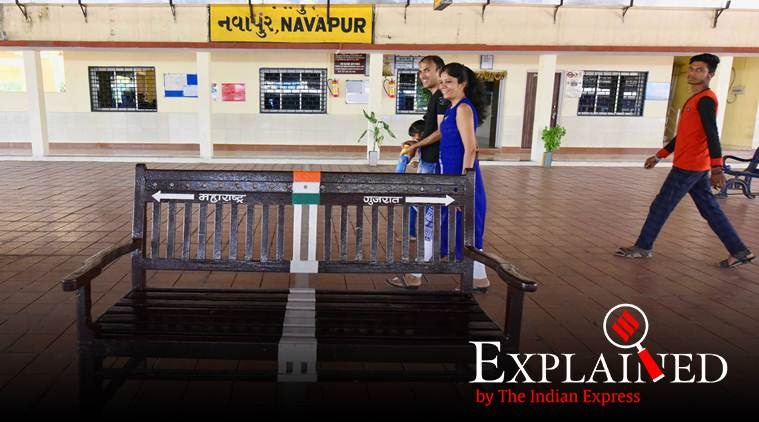
navapur-01
Gujarat state was parted from Bombay state on 1st May 1960. Apart from this the left out Bombay state was named as Maharashtra. On 1st May, people of both these neighbouring state celebrates this day.
But one unique thing which connects both these States is Navapur railway station. Half portion of this railway station lies in Navapur and half in Gujarat. 
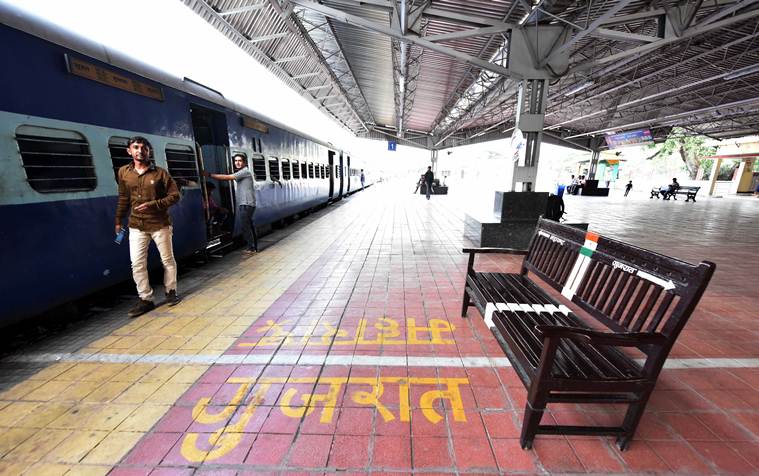
A yellow line had been painted on the walkway at Navapur railway station which shows Gujarat area and Maharashtra area. The railway authorities had also installed a bench at Navapur Railway station in the mid and on the border yellow strip which attracts large number of passengers who seats on this bench which also has yellow strip of dividing both states. People seats on the bench takes selfie in their mobile phones. This bench also had become selfie point for the people. One more amazing thing of this railway station is that the passengers ticket counter lies in the Gujarat border while passengers stands in queue in Maharashtra border. Here the train announcement is done in English, Hindi, Gujarati and Marathi. When train coming towards Maharashtra, from Gujarat its engine lies in Navapur in Maharashtra while its boggies lies in Gujarat border. express photo javed rajanavapur-01 Gujarat state was parted from Bombay state on 1st May 1960. Apart from this the left out Bombay state was named as Maharashtra. On 1st May, people of both these neighbouring state celebrates this day. But one unique thing which connects both these States is Navapur railway station. Half portion of this railway station lies in Navapur and half in Gujarat. A yellow line had been painted on the walkway at Navapur railway station which shows Gujarat area and Maharashtra area. The railway authorities had also installed a bench at Navapur Railway station in the mid and on the border yellow strip which attracts large number of passengers who seats on this bench which also has yellow strip of dividing both states. People seats on the bench takes selfie in their mobile phones. This bench also had become selfie point for the people. One more amazing thing of this railway station is that the passengers ticket counter lies in the Gujarat border while passengers stands in queue in Maharashtra border. Here the train announcement is done in English, Hindi, Gujarati and Marathi. When train coming towards Maharashtra, from Gujarat its engine lies in Navapur in Maharashtra while its boggies lies in Gujarat border. express photo javed raja Gujarat state was parted from Bombay state on May 1, 1960. One unique thing that connects both these states is Navapur railway station. Half portion of this railway station lies in Navapur and half in Gujarat. (Express photo)

The states of Gujarat and Maharashtra are celebrating their Foundation Day today, the anniversary of their creation 59 years ago in 1960. Prime Minister Narendra Modi posted on Twitter his greetings to the people of Maharashtra on the state’s Foundation Day, and his best wishes to the people of Gujarat on Gujarat Diwas.

What were the circumstances of the creation of Gujarat, Maharashtra?

With the passage of the Indian Independence Act, 1947, Britain’s paramountcy lapsed, and Indian states regained the position they had prior to the assumption of suzerainty by the Crown. Of the more than 550 states situated within the geographical boundaries of the Dominion of India, all but a handful had acceeded to India before the “appointed day”, and the efforts of Sardar Vallabhbhai Patel ensured the rest, too, acceeded subsequently.

These states were merged into provinces that were geographically contiguous to them, or converted into centrally administered areas, or consolidated into one of five Unions.

The First Schedule in the 1949 Constitution recognised States in Parts A, B, and C, and Territories in Part D. Part A States were the former Governors’ Provinces of British India — nine of them were listed, including Bombay. The Bombay State included large parts of today’s Maharashtra, plus parts of modern Gujarat and Karnataka.
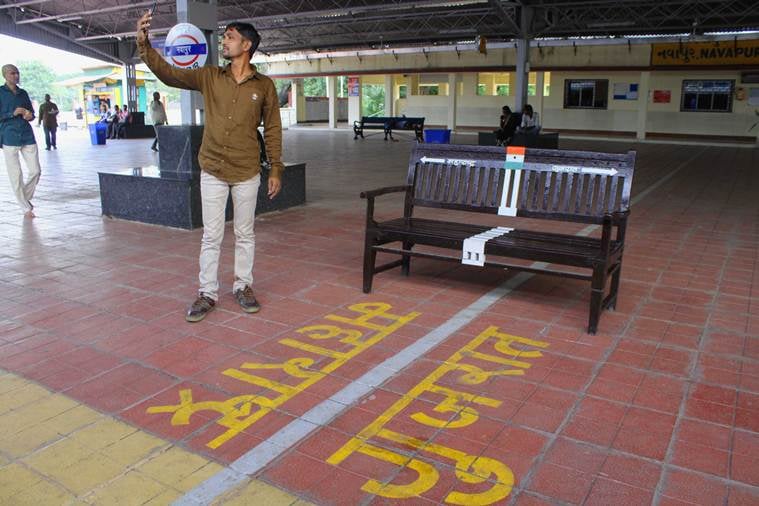
A yellow line has been painted on the walkway at Navapur railway station which shows Gujarat area and Maharashtra area. The railway authorities have also installed a bench that attracts a large number of passengers. (Javed Raja)

The recognition of the fact that a grouping of states on political and historical grounds did not satisfy linguistic and cultural aspirations led to the appointment of the S K Dhar Commission in 1948, followed by the so-called “JVP Committee”, both of which felt that a reorganisation of states on the basis of language was not desirable.

However, a powerful agitation in the Telugu-speaking parts of Madras State, and the subsequent creation of the Andhra State in 1953 had a ripple effect across the country, and the States Reorganisation Commission was appointed. In 1956, Parliament passed The States Reorganisation Act, which re-drew the boundaries of Indian states.

The States Reorganisation Act created new boundaries for the State of Bombay, transferring some Kannada-speaking areas to Mysore State, and expanding the territories of Bombay to include Marathi-speaking Marathwada and Vidarbha, as well as Gujarati-speaking Saurashtra and Kutch. The new state was bilingual, and also included areas that spoke Kutchi and Konkani.
Story continues below this ad
In this station, passenger ticket counter lies in the Gujarat border while passengers stand in a queue in Maharashtra border. (Javed Raja)

From 1956 onward, the Samyukta Maharashtra Movement spearheaded the demand for a separate Marathi-speaking state with Bombay as the capital. Simultaneously, the Mahagujarat Movement pressed for a state of Gujarat for Gujarati-speaking people in the Bombay State.

Their agitations bore fruit when Parliament passed The Bombay Reorganisation Act, 1960, which provided that “as from the appointed day (May 1, 1960), there shall be formed a new State to be known as the State of Gujarat comprising the following territories from the State of Bombay, namely… and thereupon, the said territories shall cease to form part of the State of Bombay, and the residuary State of Bombay shall be known as the State of Maharashtra”.

Curated For You


Tags:
  • Express Explained
Weather
Edition
Install the Express App for
a better experience
Featured
Trending Topics
News
Multimedia
Follow Us
C Raja Mohan writesA question at Davos — are we back to the era of kings?
X