7 min read
© The Indian Express Pvt Ltd



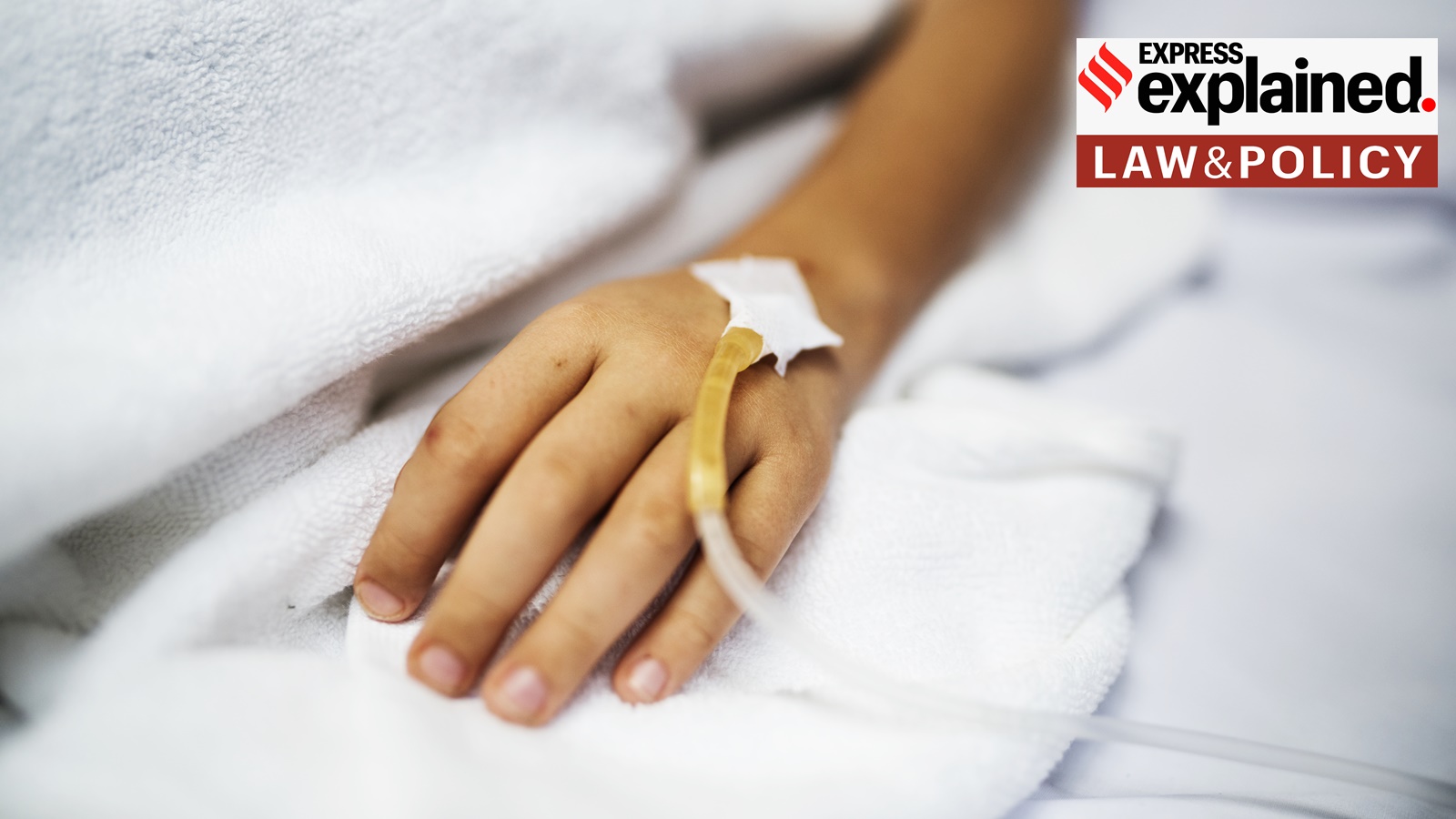 The judicial journey began with "Aruna Ramchandra Shanbaug v. Union of India" in 2011. The Supreme Court reaffirmed that Article 21 does not include a general “right to die”. (Freepik)
The Supreme Court said on Thursday (December 18) that it wanted to “personally speak with the parents of Harish Rana”, after medical boards reported that his condition had deteriorated and that the “chances of his recovery from this state is negligible”.
A Bench of Justices J B Pardiwala and K V Viswanathan had earlier ordered the constitution of primary and secondary medical boards, and is now hearing directly from the family that has lived with the aftermath of a single accident for over a decade. “It’s a very sad report, and it will be a big challenge for us also, but we can’t keep the boy like this for all time to come,” the court said.
Rana, now 31, fell from the balcony of his paying guest accommodation as a young student and has remained in a vegetative state for 13 years. The Primary Medical Board recorded that he was “lying in bed with tracheostomy tube for respiration and gastrostomy for feeding.”
While the board found “intact brainstem function”, it said his vegetative state required “external support for his feeding, bladder bowel and back.” Describing his condition as “pathetic”, the court indicated it would examine whether life-sustaining treatment can be withheld or withdrawn.
Assisted dying is an intention to cause death through the administration of a lethal injection. In India, this directly attracts criminal liability. Assisted dying is treated as murder under the Bharatiya Nyaya Sanhita (BNS), or at the minimum, as culpable homicide. When a doctor assists the patient in performing the act, criminal liability arises for abetment to suicide. Attempted suicide continues to be an offence, even though the Supreme Court has repeatedly observed that a person attempting suicide requires care, not punishment.
Withdrawing or withholding life-sustaining treatment, however, is treated differently because it is based on omission rather than action. It involves stopping or not initiating life-sustaining treatment and allowing the underlying illness or injury to take its course. The constitutional basis for this distinction lies in Article 21. Over the years, the Supreme Court has interpreted the “right to life” to include the right to live with dignity.
When a patient is terminally ill or in a persistent vegetative state and life is “ebbing out”, the court has held that the Constitution protects the choice not to be kept alive through invasive or futile medical intervention.
Criminal liability does not attach to withdrawing or withholding life-sustaining treatment because there is no intention to cause death. The law treats death as resulting from the disease or injury, not from the withdrawal of treatment. However, in the absence of a governing statute, courts have been forced to step in and frame procedural safeguards.
How the SC framework evolved
The judicial journey began with Aruna Ramchandra Shanbaug v. Union of India in 2011. The Supreme Court reaffirmed that Article 21 does not include a general “right to die”, relying on its earlier decision in Gian Kaur.
Suicide and assisted suicide remained outside constitutional protection. At the same time, the court recognised that the right to live with dignity may include, in limited circumstances, the right of a dying person to a dignified death. It drew a clear line: assisted dying was illegal, but withdrawing or withholding life-sustaining treatment could be permitted.
The court observed that a premature extinction of life for a terminally ill or persistent vegetative state patient “may fall within the ambit of the ‘right to die’ with dignity as a part of right to live with dignity, when death due to termination of natural life is certain and imminent and the process of natural death has commenced”.
Despite this, the court refused permission in Aruna Shanbaug’s case. Shanbaug was a nurse who was sexually assaulted in 1973, leading to severe injuries and her entering a permanent vegetative state. She could “certainly not be called dead”, the court said, noting that her brain stem was functioning, she breathed without a ventilator, and showed responses such as blinking, smiling at her favourite foods, and licking food. The nurses of KEM Hospital, whom the court treated as her next friend, wanted her to live.
Since there was no legislation governing end-of-life decisions at the time, the court established interim guidelines. Any decision to withdraw life support had to be taken by family members, a “next friend”, or doctors, acting “bona fide in the best interest of the patient”. But implementation required approval from the High Court. A Bench of at least two judges had to be constituted, supported by a committee of three reputed doctors. Judicial oversight was a central component of the framework.
This approach was revisited in Common Cause (A Regd. Society) v. Union of India in 2018. A Constitution Bench held that the right to die with dignity is an inseparable facet of Article 21. Withdrawing or withholding life-sustaining treatment was upheld on the ground that it merely “accelerat[es] conclusion of the process of natural death which has already commenced”. The court also recognised Advance Medical Directives, allowing competent adults to record in advance their wishes regarding refusal or withdrawal of medical treatment.
However, the 2018 safeguards proved difficult to implement. Advance Directives had to be signed by two witnesses and “countersigned by the jurisdictional Judicial Magistrate of First Class”. Implementation required verification by the JMFC, review by two medical boards with doctors having 20 years of experience, involvement of the Collector, and final authorisation after the JMFC visited the patient. In practice, hospitals and families found the process unworkable.
In 2023, the Supreme Court acknowledged that the framework had created “insurmountable obstacles.” Advance Directives can now be attested before a notary or Gazetted Officer and stored in digital health records. Hospitals constitute two medical boards, a primary board and a secondary board with an external nominee, with doctors having at least five years’ experience. The Collector’s role and mandatory Magistrate visits were removed. Hospitals now only inform the JMFC before implementing withdrawal. If boards refuse permission, families can still approach the High Court.
Speaking to The Indian Express, Dr Dhvani Mehta, co-founder of the Vidhi Centre for Legal Policy, explained that the two-board structure under the Supreme Court’s framework requires a primary medical assessment followed by a secondary review, before a decision on withdrawal of life-sustaining treatment is taken.
It is within this evolved legal framework that the Supreme Court is now considering Harish Rana’s case. By choosing to hear directly from his parents, the court appears to be testing how the law on paper translates into the lives of families who have spent years waiting for either recovery or closure.