6 min read
© The Indian Express Pvt Ltd



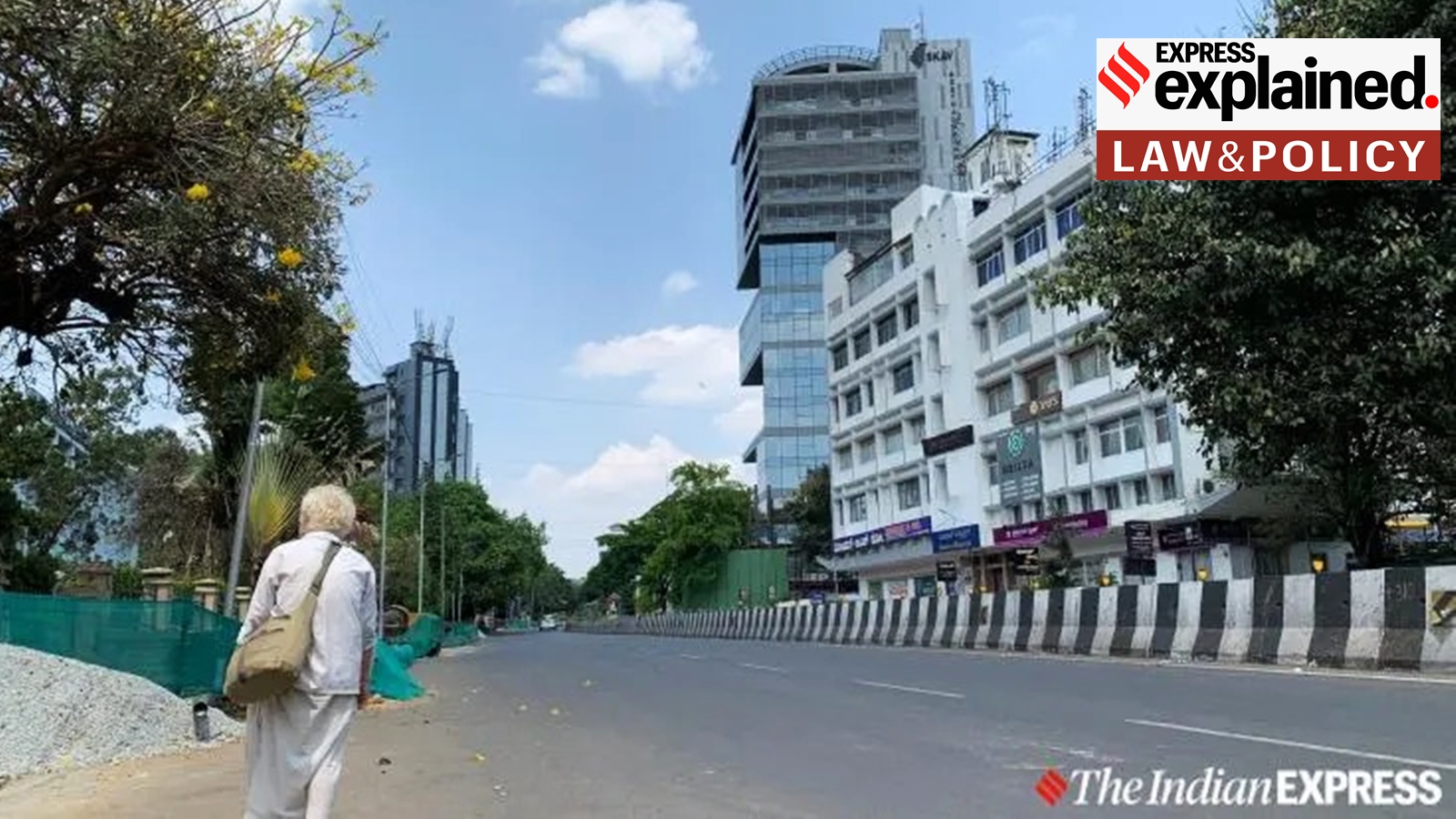 The court had to decide whether a General Body could impose an area-linked maintenance formula. (Archives)
A civil court in Bengaluru has held that an apartment association cannot use the size of a flat as a basis to decide how much a household should pay for common daily services.
The November 20 verdict sets aside a General Body decision at Purva Seasons, a 660-unit complex, which had approved a model linking most of the maintenance bill to each apartment’s square footage.
The single bench of Justice Veena N held that for services similarly used by every resident, the association must collect maintenance equally from every flat — a finding that may influence similar disputes in other apartment communities.
The main issues
Purva Seasons is built across eight towers. Each flat owner is part of the Purva Seasons Owners Association, which was formed under the Karnataka Apartment Ownership Act (KAOA) of 1972. The Act requires a deed of declaration and registered bye-laws. A clause in the byelaws stated that annual assessments for building upkeep, repairs, salaries and other recurring expenses “shall be made pro rata according to the super built-up area.”
By early 2020, several residents argued that this area-based system did not reflect how common services were actually used, and discussions began on whether the formula should be replaced. In January 2020, the Board of Managers presented six models before the General Body. The debate remained unresolved, and five members of the committee resigned, prompting fresh elections.
A second Extraordinary General Body Meeting was held in July 2020. This meeting approved a split model, under which 25.95% of the maintenance would be charged equally, and 74.05% would be linked to each flat’s built-up area.
The petitioner, joint-owner of a 1,523 sq. ft. unit, challenged this resolution. He argued that common services such as security, lifts, lighting, housekeeping, water management, and waste collection are consumed identically by all residents. He also questioned the procedure followed for the meeting and voting.
Because the association was formed under the KAOA and not under the co-operatives’ law, it could not rely on the Registrar of Co-operative Societies to validate its process. As such, sending the Registrar a letter to “oversee” or defend the online voting had no legal consequence. The association, however, argued that since the petitioner had agreed to the byelaws when he became a member, the Karnataka Association Ownership Act made the General Body the final decision maker.
The court had to decide whether a General Body could impose an area-linked maintenance formula.
The legal framework
The KAOA sets out the ownership structure in an apartment project. It links each flat to an undivided share in the common areas in proportion to its size. Many associations use this principle to calculate sinking fund contributions or structural repair costs.
Section 3(g) of the KAOA defines common expenses as sums “lawfully assessed by the Association” for administering, maintaining, repairing, or replacing common areas and facilities. These also include any expenses that the bye-laws “declare to be common expenses.” Section 10 states that such common expenses “shall be charged to the apartment owners according to the percentage of undivided interest” assigned to each flat in the Declaration.
The court, in the Purva Seasons case, noted that while Section 10 recognises the undivided-interest formula, the provision does not allow the Association to impose charges unrelated to the nature of the service. It held that Section 24 binds owners only to decisions “lawfully made,” and that a General Body cannot rely on majority support to sustain a resolution that is “arbitrary and unreasonable.”
The Act does not prescribe a single method for calculating operational maintenance. Courts step in when a resolution is challenged as arbitrary, especially when the basis of calculation has no connection to the service being provided.
The court relied on a well-known principle from Venus Co-operative Housing Society v. J.Y. Detwani, where the court held that there is no basis to assume that residents of larger flats use common services more than those of smaller ones. The judgment noted that it is “unwise to think” that a household in a smaller flat uses less security, less lift access, or less common lighting, and that “it cannot be said that the big flat holders are getting higher or more services to make them liable to pay more.”
Indian courts generally apply this reasoning to services that all residents consume in the same way. For these categories, equal contribution is treated as the logical basis because no metric links consumption with area.
What the court said
The Bengaluru court examined whether the July 2020 resolution could stand on the principle that the association relied on, that flat size determines contribution for all common services. The court rejected this position.
It held that the July resolution was “null and void and not binding,” as there was no link between flat size and the extent to which households use lifts, corridors and other similar facilities. The court repeated the Detwani principle and stated that the association had “no right to claim maintenance” for these services “based on the area of the flat.”
Invoices issued between May and December 2020 under the disputed model were invalidated. The Association and the Board of Managers were directed to “fix the maintenance charges on an equal pro rata basis” for amenities, facilities, infrastructure, and services of common enjoyment.
The court also restrained the association from stopping water, electricity, or any other essential service to exert pressure for payment of the disputed charges.
The ruling does not bar associations from using area-based formulas for other categories of expenditure. It limits only those heads where the service is uniform for all residents. Structural repairs, capital works, or long-term funds tied to ownership share may still follow an area-linked method if there is a logical connection.
The judgment further limits the power of the General Body: decisions remain binding, but only when the basis of the decision is rational. In this case, the court found no basis to link flat size with the cost of daily services that do not vary by unit. The ruling is likely to become a reference point for similar disputes in large apartment projects governed by the KAOA.