From battery-operated golf carts to digital exhibits and immersive storytelling modules, Sirpur is set for a facelift as Chhattisgarh pushes for a UNESCO World Heritage tag for the 5th Century archaeological site.
Earlier this month, the Archaeological Survey of India (ASI) and the Sirpur Special Area Development Authority (SADA) conducted a joint inspection of the Sirpur archaeological site to advance its nomination for the UNESCO World Heritage status.

Located two hours from Raipur, Sirpur in Mahasamund district is a 5th–12th Century archaeological site with 34 Hindu, Jain and Buddhist monuments on the banks of the Mahanadi.
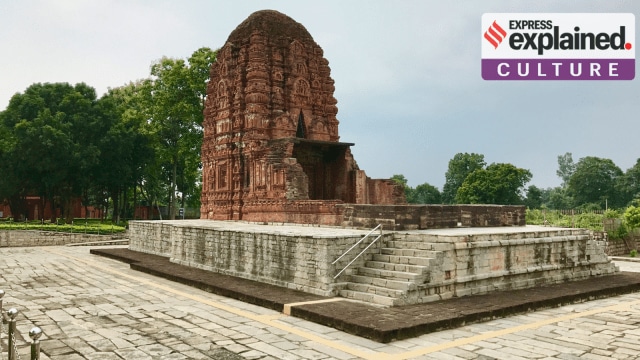
A view of the Lakshmana temple in Sirpur in Chhattisgarh’s Mahasamund district. (Source: Archaeological Survey of India)
What UNESCO tag does
A World Heritage Site is a location of “outstanding universal value” — a place of cultural and/or natural significance so exceptional that it transcends national boundaries and is of common importance to present and future generations of humanity.
A UNESCO tag enhances a site’s international recognition, boosting its tourism and revenue. It can also help mobilise funds and strengthen efforts to protect monuments from destruction and encroachment.
What’s fascinating about Sirpur
Sirpur, also known as Shripur and Sripura, is a multi-religious urban centre first discovered in 1882 by Alexander Cunningham, a British army engineer who became the first Director-General of the Archaeological Survey of India (ASI) in 1871. Excavations stalled in subsequent years, resuming only in the early 1950s, and later in the 1990s and 2003.
These excavations revealed 22 Shiva temples, five Vishnu temples, 10 Buddhist viharas and three Jain viharas, with the earliest monuments dating back to the 5th Century AD.
Story continues below this ad
A fine example of early-medieval urban planning, Sirpur was the flourishing capital of Dakshina Kosala under the Panduvanshi and later Somavamshi kings. The site still has ruins of palace complexes, market structures, residential quarters, brick and stone temples, viharas, stupas, meditation cells and a water management system.
The Lakshmana Temple (dedicated to Vishnu), one of India’s finest brick temples, was built around the 7th Century. The Surang Tila complex is especially dramatic: built on a high terrace accessed by a steep flight of 37 steps, it has multiple shrines in the panchayatana style (one main shrine surrounded by four subsidiary ones).
The site was a major Buddhist centre with large viharas, meditation halls and excavated stupas. One monastery (Tivaradeva Mahavihara) houses a significant Buddha statue. Archaeologists have also uncovered a 6th Century market complex, showing Sirpur was both a religious and commercial hub.
Sirpur’s location along the Mahanadi creates a sacred riverine cultural landscape with ghats and temple clusters, aligning with UNESCO’s concept of a combined work of nature and humankind, enhancing the site’s value.
Story continues below this ad
What the govt plans to do
Currently, tourists must navigate scattered village tracks and unstructured routes to access the monuments — a journey that takes nearly three hours. The Chhattisgarh government plans to cut this by an hour by paving pathways connecting the monuments and using battery-operated vehicles.
The town naturally forms four thematic clusters — Buddhist Monastic, Hindu Temple Cluster, Civic–Administrative and Riverine Sacred Landscape. A primary pathway will connect all four, officials said.
“To make them visitor friendly, all four thematic clusters are proposed to be integrated through a coherent system of heritage pathways, designed to connect the principal monuments with the existing main approach roads and internal circulation routes. The secondary pathway will serve as the last-mile connector from the primary corridor to each monument,” said M. Kalimuthu, Superintending Archaeologist, ASI Raipur circle.
For unified management, the ASI has asked for around 30 hectares of state government land in and around the site to be transferred to them, officials said. This includes land adjoining major monuments, approach corridors, proposed pathway routes, buffer zones of excavated remains and open tracts needed for heritage management infrastructure.
Story continues below this ad
Identified mounds and areas of archaeological potential will be surveyed for further excavations, officials added.
What tourists can look forward to
A state-of-the-art Interpretation Centre with digital exhibits, 3D reconstructions and immersive storytelling modules is in the works to showcase Sirpur’s Buddhist, Shaiva and royal history, said Dhammshil Ganvir, Chief Executive Officer, Special Area Development Authority (SADA), Sirpur.
Tourist-friendly facilities planned include rest areas, seating bays, drinking water points, shaded shelters, trilingual (English–Hindi–Chhattisgarhi) signage for each monument, QR-based digital information panels for self-guided tours and thematic trail markers linking the four clusters.
There will also be designated photo points, cultural interpretation nodes and curated viewpoints.
Story continues below this ad
“Keeping eco-tourism in mind, eco-friendly lawns, gardens, and tree-lined avenues will be developed. Local art forms, crafts and cultural performances will be promoted. Each year, we will celebrate World Heritage Week (November 19 to 25). There will be guided tour services in collaboration with local youth and trained volunteers, heritage walks, student engagement programmes, archaeology awareness camps and workshops,” said Rahul Tiwari, Assistant Superintending Archaeological Engineer.


 5 min read



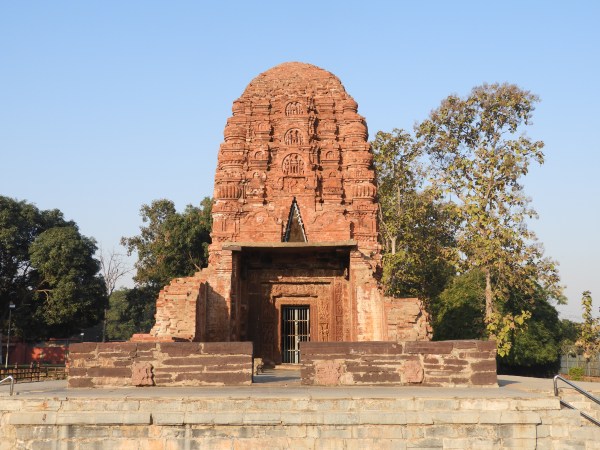 A view of the Lakshmana temple in Sirpur in Chhattisgarh’s Mahasamund district. (Source: Archaeological Survey of India)
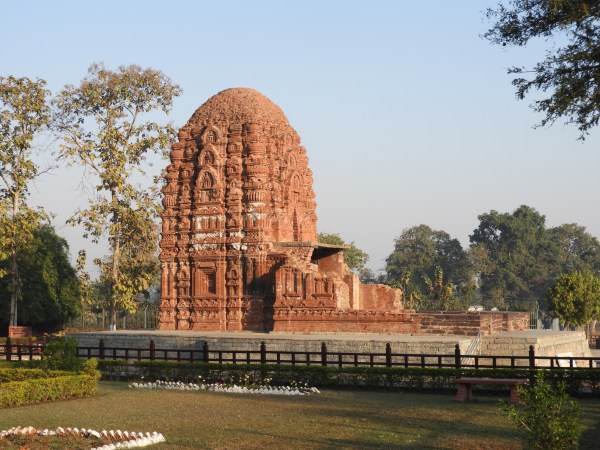 A view of the Lakshmana temple in Sirpur in Chhattisgarh’s Mahasamund district. (Source: Archaeological Survey of India)