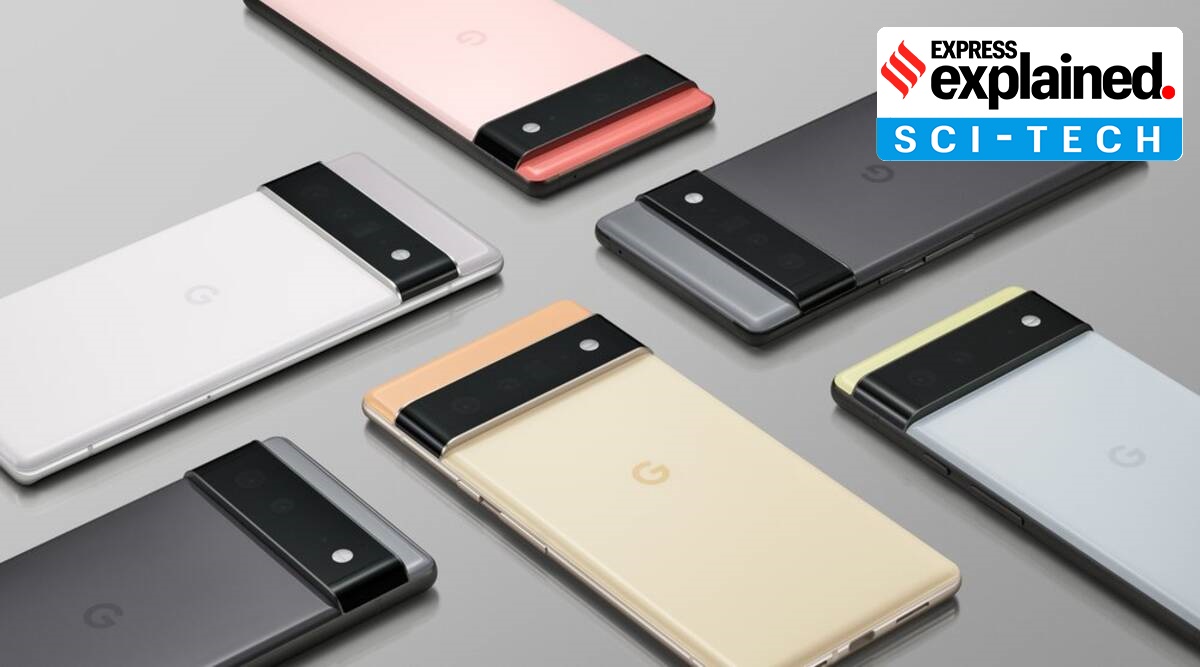
Google has come a long way from being just another company trying to sell smartphones. On Tuesday, when the search powerhouse announced the Pixel 6 and Pixel 6 Pro it also ushered in the Tensor “system on chip” (SoC), its own mobile processor.
This is the first time Google has envisioned a smartphone that it can truly call its own and take full responsibility of the development, right from the industrial design and operating system to designing the chip. The Tensor SoC puts Google in direct competition with Apple in the cut-throat smartphone race, but it also changes the dynamics the tech giant has with chipmakers and phone companies.

We explain why the Tensor SoC in the Pixel 6 is significant at many levels, and its impact on the larger Android ecosystem which thrives on partnerships and openness.
Google has had limited success with ‘Pixel’ phones so far
Since 2016, Google has been making Pixel-branded phones, but sales have been disappointing. Google reportedly shipped just over 3.7 million phones in 2020. It’s not that Pixel phones are bad, but they are definitely not on par with the iPhone despite incredible cameras and Google’s prowess in artificial intelligence (AI). The Pixel 4a, which retails for under Rs 30,000, is a great phone marred by poor battery life.
In India, the world’s second-largest smartphone market, Google has been relatively muted in its promotion of the Pixel phones and some of the models have not even been launched in the country.
… but Google now wants to take full ‘control’ over its Pixel devices
Google definitely doesn’t lack resources or talent to develop a phone that can compete with the iPhone. It has been using the expertise of HTC’s design team for which it paid $1.1 billion in 2018 but what was really missing from the very beginning was access to a custom processor that’s designed just for the Pixel phone. Owning and controlling the primary technologies, including the processors that power smartphones, wasn’t in Google DNA. In contrast, it was this approach that made iPhone the success it is now. Google, like Oppo and Xiaomi, was another OEM dependent on Qualcomm to supply chips for its Pixel phones. But that has now changed with Tensor SoC, the chip that powers the Pixel 6 and Pixel 6 Pro.
Story continues below this ad
“Google feels they can best exemplify their vision of ambient computing where software, hardware and AI comes together to empower the user. In order to do so, they felt they needed to control the hardware just as Apple has done with their A-series processors in the iPhone,” Wayne Lam, Senior Director, Research, Americas at CCS Insight, told indianexpress.com.
In development for four years, Tensor SoC has been designed by the “Google Silicon” team, which is headed by Phil Carmack, the vice president and general manager, and Monika Gupta, senior director of Google Silicon. During the Pixel 6 launch, Google repetitively highlighted why it needed a chip that focuses heavily on AI and machine learning yet was powerful enough to align with Google’s vision for the Pixel series. In a way, Google made it clear that the solutions available in the market aren’t enough to meet the level of performance Google is looking to add in its phones.
Controlling its own technologies will help Google integrate its product more deeply, like Apple has been doing for years. This means Google does not have to depend on Qualcomm’s schedule and is independent in designing chips – meaning more control over timeline and costs. On average, chips take three years to develop.
“Google with its enormous scale and resources is running its Pixel hardware business very much like their other “bets,” Lam said. “They see this as a long game.” “They were willing to keep at it for six iterations of the Pixel to get to the vision they were aiming for. It is clear that Google’s business model is different from others in the smartphone business that relies on generating volume.”
“Google may, with the Tensor chip, create a better experience in things like AI and ML, but other than that, Google needs to keep their Android licensees happy since it ultimately drives Google’s bottom line and ad revenue,” Lam noted.
Story continues below this ad
Qualcomm won’t be impacted
“Qualcomm is unlikely to be significantly impacted by the move by Google on their Pixel 6,” Lam said. “However, if someone like Oppo were to develop their own SoC then they should get worried,” he added. Losing Google as a client does not mean much, given the Pixel series have less than 1 per cent market share. But if you look broadly, Qualcomm will be hit sentimentally because if Google starts developing its mobile processors on its own, it will prompt phone companies such as Xiaomi, Vivo and Oppo to invest in the chipset development and be less dependent on chip makers to differentiate their products.
Lam points that “if major OEMs want to grow to a size whereby they have the scale and resources to develop their own SoC, they clearly would be incentivised to develop their own SoC.”
But developing a chipset on its own needs a lot of cash, expertise and patience. The advantage that chipset companies like Qualcomm and Mediatek bring is that it’s always cheaper to buy chips rather than develop one’s own SoC. These companies offer “off-the-shelf” design solutions, meaning OEMs can pick an existing Snapdragon design and build a phone within months instead of developing a chip that takes at least three to four years.
Story continues below this ad
For now it’s not clear how serious Chinese phone players are in developing their own SoC, although Oppo is reportedly looking at the 2023 window to announce their first chip designed in-house. And even if they are secretly developing chips, after the Chinese government’s push to be self-reliant in semiconductors, Lam said there is no guarantee that they get access to leading fabs to mass produce their chips. “US is clearly putting China in check on this front, but China is looking inward to develop their own capabilities.”
Newsletter | Click to get the day’s best explainers in your inbox


 7 min read