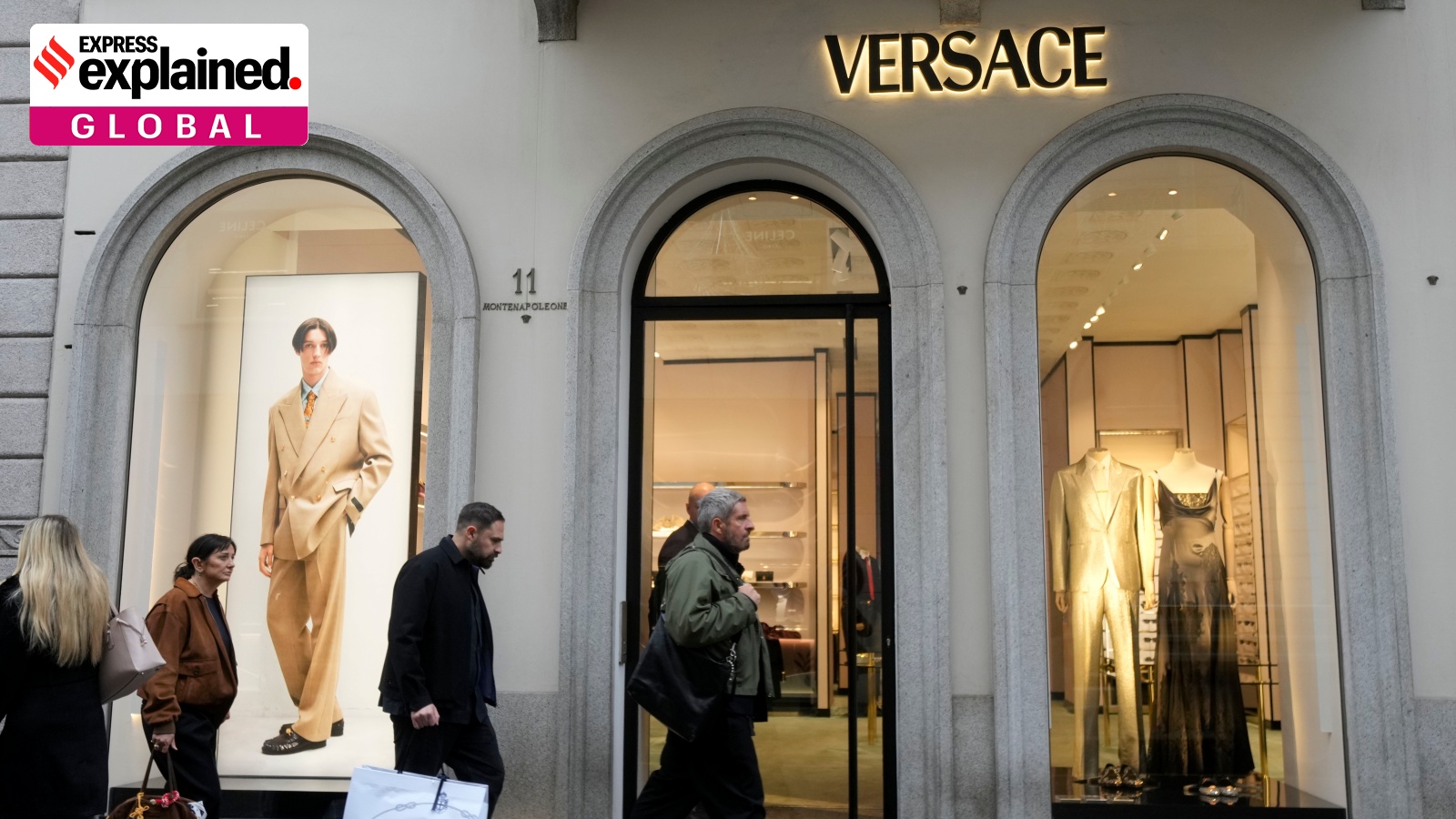
Prada on Tuesday (December 2) announced that it had completed the acquisition of the smaller Italian rival Versace. Lorenzo Bertelli, the son of Prada owners Miuccia Prada and Patrizio Bertelli, will become executive chairman of Versace. Donatella Versace, from the founding family, will be the brand ambassador.

While the merger of fashion houses is not new, this one stands out due to the different cultural aesthetics, histories and philosophies each represents.
Why did Versace have to sell out?
Despite its iconic status, Versace has faced a serious downturn since the outbreak of the Covid-19 pandemic. According to Capri Holdings, the label has posted consecutive quarterly losses since 2024.
Capri Holdings, which also owns brands such as Michael Kors and Jimmy Choo, had paid $2 billion for Versace in 2018 but was unable to get the desired returns. There are several reasons for this downfall. For instance, the brand was pivoted around its founder, Gianni Versace and his expansionist creative vision. This dependency left Versace rudderless when he was murdered in 1997. His sister, Donatella, who became the creative director, could neither match the originality of design nor set a clear business model. She also failed to restructure the company.
Changes in ownership and management followed, but nobody could get the label out of the trough it had sunk into, thanks to Giovanni’s diverse allied businesses, which were spread too thin.
The brand also tried to become too commercial to stay afloat, diluting its boutique appeal. This alienated some of its traditional high-end clientele.
Story continues below this ad
The recent slowdown in the fashion sector and the US tariffs have raised costs and forced supply chain restructuring, affecting most Italian fashion houses. Italian industry associations, such as Confindustria Moda, predicted losses exceeding 2 billion euros in fashion exports.
Prada, however, managed to be successful despite the downturn. Unlike many legacy brands, which recorded declining profits over the last few years, Prada has reported 19 consecutive quarters of growth.
Will this dilute Versace’s identity?
Not necessarily, as legacy brands never dilute their visible identity, aesthetic or creative DNA. For example, French fashion conglomerate Louis Vuitton and Moet Hennessy (LVMH) has stayed away from devouring the identity and aesthetics of all the brands it owns.
Such acquisitions led to a restructuring of production lines and synergising costs to increase productivity. It can also help smaller brands to upscale their product range. Versace could benefit from the massive investment Prada has made in design innovation labs.
Story continues below this ad
The Prada leadership has emphasised that Versace will maintain its creative independence and distinct identity, as the two brands are complementary rather than overlapping. Donatella Versace will remain as brand ambassador, alongside the new creative director, Dario Vitale, who has already generated buzz with his creations on the Milan ramps before the merger.
A Prada will look like Prada, and Versace will still look like Versace. The question is how much premium space Prada will allocate for Versace.
What does the acquisition mean for Prada and Versace?
Prada, which apart from its eponymous mother brand, owns Miu Miu, Church’s, Car Shoe and now Versace, can emerge as a strong Italian entity to challenge LVMH, which has 75 brands, including mother brand Louis Vuitton, Christian Dior, Fendi, Givenchy, Celine and Loewe.
Expect an explosion in branded accessories, footwear, and lifestyle merchandise with Italian refinement. They could spearhead a “Made in Italy” moment.
Story continues below this ad
Prada and Versace complement each other. While Prada has long been associated with cerebral chic and minimalism, Versace has been the opposite — individual, opulent and bold with its Medusa logo and baroque prints. Giovanni lifted fashion out of its elitist mould and made a pop art statement, with supermodels, celebrity campaigns and innovative use of materials like metal. In fact, it was Giovanni who expanded his design philosophy into new areas like jewellery, home furnishings, and accessories in 1982, when most labels kept to convention.
Bertelli admits to Giovanni’s original spunk, which Prada, besieged by complaints of cultural appropriation, lacks.
“Gianni [Versace] was the man who made a traditionally bourgeois, ultra-elite sector suddenly pop. He brought aspiration into a world where aspiration didn’t even exist. In my view, it was a revolution comparable — dare I say — to what Michael Jackson did in music: he took something aspirational and made it wildly popular, glamorous, and culturally magnetic. Versace still has that fascination today,” he said in a statement.
“It’s completely complementary to the other brands in our group — there’s no overlap in identity, no risk of one stepping on the other’s toes. It’s a universe of its own. That’s why it stood out in a sea of options,” said Bertelli.


 5 min read