Premium

Why are immigrants being arrested during green card interviews & what does this mean for Indian applicants?

The sudden escalation has prompted widespread anxiety among immigrant communities, especially Indians who also rely on marriage-based adjustment for long-term residency

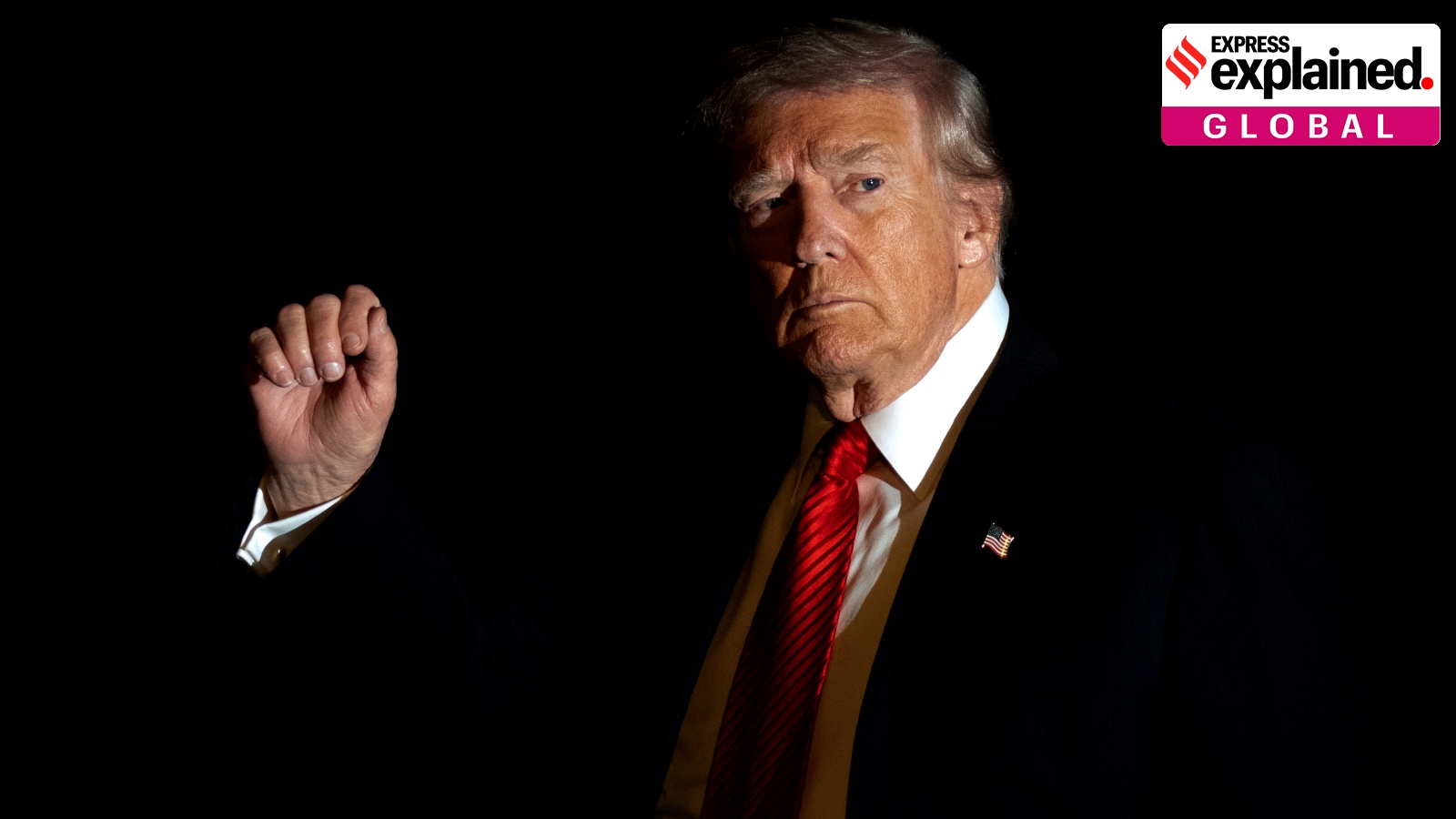
green card interviewsSome believe that the Trump administration's stringent action is targeted towards avoiding illegal immigrants from entering the US from Mexico. (Photo: AP)

Across the United States, marriage-based green card interviews have long been treated as administrative checkpoints, but that changed last week, when multiple immigration lawyers reported that foreign spouses were detained inside the USCIS field office in San Diego during their routine adjustment-of-status interviews.

Several of those detained had reportedly entered the US legally, had no criminal history and were married to American citizens.

The sudden escalation has prompted widespread anxiety among immigrant communities, especially Indians who also rely on marriage-based adjustment for long-term residency.

Why are arrests happening inside marriage-based green-card interviews?

The shift is partly based on identifying fraudulent marriages and partly to arrest those who are overstaying even after being out of status despite qualifying for adjustment. A person who qualifies for adjustment means that they are eligible to change their status from temporary/non-immigrant status (like a tourist visa, student visa, etc.) to that of a lawful permanent resident (green card holder) without leaving the US.

Houston-based immigration attorney Rahul Reddy describes the current environment as one in which USCIS officers are no longer hesitating to escalate suspicions. “You need to understand, there are a lot of fraudulent cases that get filed in marriage cases. Approximately 30 to 40 per cent of the cases filed under marriage are fraudulent, if not more.”

He says that what previously would have triggered a routine request for more documentation has now become grounds for immediate detention. “Previously, when officers suspected fraud, they used to issue a Request for Evidence. Now, under Trump 2.0, the direction is, if you’re confident it’s fraud, go and directly detain them.”

Officers appear unwilling to delay an investigation when they believe something is amiss. “Nowadays, they don’t send an RFE. They are arresting the people and then asking the questions.”

Story continues below this ad

Is overstaying enough to justify arrest, even when married to a US citizen?

Under long-standing immigration law, a spouse who entered the US legally remains eligible for a green card even if they have overstayed for years. Reddy emphasises this principle clearly, noting that “the law is very clear: if a person has overstayed even for 30 years, the person is still entitled to get the green card if the marriage is genuine.”

Despite this, several of the recent detentions appear to involve nothing more than a visa overstay. “To arrest someone in a green-card interview just because of overstay is a grey area. They have not denied the adjustment of status, so the person is in a grey area and should not have been arrested.”

Speaking to The Indian Express, Texas-based Immigration lawyer Chand Parvathaneni echoes this concern, pointing out that the overstays being targeted were often those traditionally forgiven in the adjustment process.

Story continues below this ad

He says that “basically overstays used to be forgiven if one married a US citizen, and now it looks like overstays can expect detention during green card interviews.”

In his practice, Parvathaneni said he has not seen an Indian national detained under these circumstances, but he stresses that the legal vulnerability is universal: if someone is out of status, ICE can act, even if the green card application is valid.

Are Indians being affected by this policy?

Some believe that this stringent action is targeted towards preventing illegal immigrants from entering the US from Mexico.

“I have not seen any for Indian citizens yet, since mostly Indians usually do not overstay compared t,o say people who came in from Mexico”, Parvathaneni said.

Story continues below this ad

He explains that “so far, I don’t think any Indians have been detained or arrested for cases like these.”

However, Reddy states that Indian nationals are not immune to scrutiny when fraud is suspected. “Indians are not immune to fraudulent marriage cases. Some of them do it, and they have been detained. One of the top illegally entering groups now is Indians… the number has become very high.” He also stated that claims of political persecution, once used by some migrants, are being treated far more strictly now.

“Earlier, people would make excuses, ‘we are from Khalistan,’ ‘we are Congress people and Modi is harassing us.’ Now, Trump 2.0 is putting illegal entrants in jail… If the marriage is genuine, absolutely no problem,” says Reddy. However, he suggests that applicants with status gaps or irregularities should seek counsel. “I would definitely recommend taking a lawyer to the interview if there are questions on the legality of the marriage,” Reddy adds.

Is this happening all over the United States or limited to certain field offices?

Story continues below this ad

Attorneys report that so far the enforcement pattern appears concentrated in the San Diego USCIS field office, although they warn it may spread if it reflects an internal shift in national strategy rather than a regional anomaly. Reddy says, “So far, we are only noticing this in San Diego. We are not noticing it in any other district.”

“We don’t know yet whether the detentions in San Diego are because of overstay, or because they think the marriage is not genuine,” Reddy added.

Parvathaneni confirms that the trend seems localised at the moment. He notes that “for now, I heard this happening in San Diego field office interviews” and says he has not come across similar cases at other field offices.

What happened during previous US administrations? Were arrests common before this?

Story continues below this ad

Historically, arrests during marriage-based green-card interviews were extremely rare, and when they did occur, they typically involved applicants with significant red flags such as criminal warrants, prior deportation orders or severe fraud findings.

Under the Obama administration, officers generally relied on Requests for Evidence (RFEs) or follow-up interviews when they suspected fraud.

During the Trump administration’s first term (2017–2020), enforcement rhetoric was tough, and interviews became more stringent, but interview-room arrests were still unusual and usually limited to individuals already in removal proceedings (deportation to home country)

Under the Biden administration, USCIS moved back toward a facilitative approach in marriage-based cases, prioritising removals based on public safety or national security concerns. Overstays alone were never treated as grounds for detention at USCIS facilities.

Vidheesha Kuntamalla is a Senior Correspondent at The Indian Express, based in New Delhi. She is known for her investigative reporting on higher education policy, international student immigration, and academic freedom on university campuses. Her work consistently connects policy decisions with lived realities, foregrounding how administrative actions, political pressure, and global shifts affect students, faculty, and institutions. Professional Profile Core Beat: Vidheesha covers education in Delhi and nationally, reporting on major public institutions including the University of Delhi (DU), Jawaharlal Nehru University (JNU), Jamia Millia Islamia, the IITs, and the IIMs. She also reports extensively on private and government schools in the National Capital Region. Prior to joining The Indian Express, she worked as a freelance journalist in Telangana and Andhra Pradesh for over a year, covering politics, rural issues, women-centric issues, and social justice. Specialisation: She has developed a strong niche in reporting on the Indian student diaspora, particularly the challenges faced by Indian students and H-1B holders in the United States. Her work examines how geopolitical shifts, immigration policy changes, and campus politics impact global education mobility. She has also reported widely on: * Mental health crises and student suicides at IITs * Policy responses to campus mental health * Academic freedom and institutional clampdowns at JNU, South Asian University (SAU), and Delhi University * Curriculum and syllabus changes under the National Education Policy Her recent reporting has included deeply reported human stories on policy changes during the Trump administration and their consequences for Indian students and researchers in the US. Reporting Style Vidheesha is recognised for a human-centric approach to policy reporting, combining investigative depth with intimate storytelling. Her work often highlights the anxieties of students and faculty navigating bureaucratic uncertainty, legal precarity, and institutional pressure. She regularly works with court records, internal documents, official data, and disciplinary frameworks to expose structural challenges to academic freedom. Recent Notable Articles (Late 2024 & 2025) 1. Express Investigation Series JNU’s fault lines move from campus to court: University fights students and faculty (November 2025) An Indian Express investigation found that since 2011, JNU has appeared in over 600 cases before the Delhi High Court, filed by the administration, faculty, staff, students, and contractual workers across the tenures of three Vice-Chancellors. JNU’s legal wars with students and faculty pile up under 3 V-Cs | Rs 30-lakh fines chill campus dissent (November 2025) The report traced how steep monetary penalties — now codified in the Chief Proctor’s Office Manual — are reshaping dissent and disciplinary action on campus. 2. International Education & Immigration ‘Free for a day. Then came ICE’: Acquitted after 43 years, Indian-origin man faces deportation — to a country he has never known (October 2025) H-1B $100,000 entry fee explained: Who pays, who’s exempt, and what’s still unclear? (September 2025) Khammam to Dallas, Jhansi to Seattle — audacious journeys in pursuit of the American dream after H-1B visa fee hike (September 2025) What a proposed 15% cap on foreign admissions in the US could mean for Indian students (October 2025) Anxiety on campus after Trump says visas of pro-Palestinian protesters will be cancelled (January 2025) ‘I couldn’t believe it’: F-1 status of some Indian students restored after US reverses abrupt visa terminations (April 2025) 3. Academic Freedom & Policy Exclusive: South Asian University fires professor for ‘inciting students’ during stipend protests (September 2025) Exclusive: Ministry seeks explanation from JNU V-C for skipping Centre’s meet, views absence ‘seriously’ (July 2025) SAU rows after Noam Chomsky mentions PM Modi, Lankan scholar resigns, PhD student exits SAU A series of five stories examining shrinking academic freedom at South Asian University after global scholar Noam Chomsky referenced Prime Minister Narendra Modi during an academic interaction, triggering administrative unease and renewed debate over political speech, surveillance, and institutional autonomy on Indian campuses. 4. Mental Health on Campuses In post-pandemic years, counselling rooms at IITs are busier than ever; IIT-wise data shows why (August 2025) Campus suicides: IIT-Delhi panel flags toxic competition, caste bias, burnout (April 2025) 5. Delhi Schools These Delhi government school grads are now success stories. Here’s what worked — and what didn’t (February 2025) ‘Ma’am… may I share something?’ Growing up online and alone, why Delhi’s teens are reaching out (December 2025) ... Read More

 

Latest Comment
Post Comment
Read Comments
Advertisement
Advertisement
Advertisement
Advertisement