


Tags:


Written by Livia Albeck-Ripka
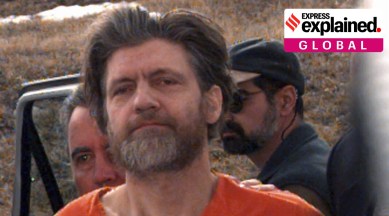
Ted Kaczynski, the confessed killer who attacked academics, business officials and others over nearly 20 years and became known as the Unabomber, died by suicide Saturday at a federal prison in Butner, North Carolina, according to three people familiar with the situation. He was 81.

Here are the key facts about his life, the attacks and the long search that led to his capture.
Theodore J. Kaczynski was a domestic terrorist who from 1978 to 1995 planted homemade bombs at or sent them to universities and other locations including people’s homes, killing three people and injuring 23 others. Federal authorities arrested Kaczynski in 1996. Two years later, he pleaded guilty to the bombings and was sentenced to life in prison without the possibility of release.
He said his violent campaign was intended to bring about the collapse of the modern social order.
The rampage spurred one of the longest and most expensive searches in United States history, and years before the Sept. 11 attacks, it made many Americans fear opening mail and boarding planes.
When Kaczynski was arrested in 1996, the details of his life emerged: Born in Chicago in 1942 to working-class parents, he went on to study at Harvard and teach mathematics at the University of California, Berkeley. In 1971, Kaczynski moved to a shack he built in rural Montana, where he lived without electricity and running water and where, it was later revealed, he went on a spree of environmental vandalism, sabotaging mining machinery, burning logging equipment and destroying hunting camps.
The remote shack was also where Kaczynski built more than a dozen bombs and devised his plan to terrorize those he perceived to be advancing the evils of technology.
Who were his targets?
During Kaczynski’s yearslong terror campaign, he mailed and delivered more than a dozen bombs across the country. Investigators later found lengths of pipe, smoldering wire and explosive chemicals and determined that the homemade devices had been constructed in his Montana shack.
At first, Kaczynski’s victims appeared random: Many were academics. A few were corporate executives. One was a secretary, Janet Smith, who on May 5, 1982, happened to open the wrong package. She spent three weeks in the hospital, having suffered lacerations and powder burns on her chest, arms and hands.
Two months later, Diogenes J. Angelakos, a professor emeritus of electronic engineering, was near his laboratory at UC Berkeley when he picked up what he believed was a misplaced construction tool. The pipe bomb exploded, ripping through his right hand and sending shrapnel tearing into his face.
In June 1993, David Gelernter, a computer science professor at Yale University, became another of Kaczynski’s victims when he opened a package believing it was a doctoral thesis. He was wounded severely, later requiring several surgeries, and permanently lost the use of his right hand.
In 1979, the FBI began an inquiry into the series of bombings, which they referred to as the “UNABOM” case. The acronym stood for the “UNiversity and Airline BOMbing” targets involved. More than 150 investigators spent years tracing the lives of the victims, recovering bomb components and searching for other forensic clues.
Investigators said they felt confident that the suspect, whom they called the Unabomber, had been raised in Chicago and had lived in the Salt Lake City and San Francisco areas, but they struggled to pin down other details, including the bomber’s gender.
In 1995, an anonymous letter was sent to The New York Times and The Washington Post.
In the letter, the writer or writers, identified only as “the terrorist group FC,” claimed responsibility for the serial bombings in the UNABOM case and promised to “permanently desist from terrorist activities” if the papers agreed to publish a manifesto, which was more than 29,000 words.
What was in the manifesto?
Later in 1995, after consulting with the FBI, the papers published the writing in full. Federal authorities said they hoped a reader might help identify the author.
The document condemned industrialization, saying it led to “widespread psychological suffering” and had caused such environmental damage and alienation that modern society ought to be destroyed. It advocated “a revolution against the industrial system.”
How was the Unabomber caught?
Shortly after the writing was published, David Kaczynski, the brother of Ted Kaczynski, approached authorities. He recognized the language in the letter and believed his brother might be the Unabomber. Authorities then arrested Kaczynski in his shack in Montana, where they found 40,000 handwritten journal pages that included information on bomb-making experiments and descriptions of his crimes; they also found a live bomb.
In January 1998, Kaczynski pleaded guilty in Sacramento, California, as part of a deal that ensured he would not get the death sentence. Later that year, he was sentenced to four life sentences plus 30 years in prison. He served most of that sentence at the U.S. Penitentiary, Administrative Maximum Facility, near Florence, Colorado, alongside the 1993 World Trade Center bombing mastermind Ramzi Yousef and 9/11 conspirator Zacarias Moussaoui.
In 2021, Kaczynski was moved to a federal medical center in Butner, North Carolina, because of poor health. He was found dead in his cell Saturday.


