First Advance Estimates of India’s GDP out: What are they, and what do the data show?
The First Advance Estimates released on Friday are the last GDP data released before the Union Budget is presented. They also provide the first complete picture of economic growth in the 10 years of the government led by Prime Minister Narendra Modi.
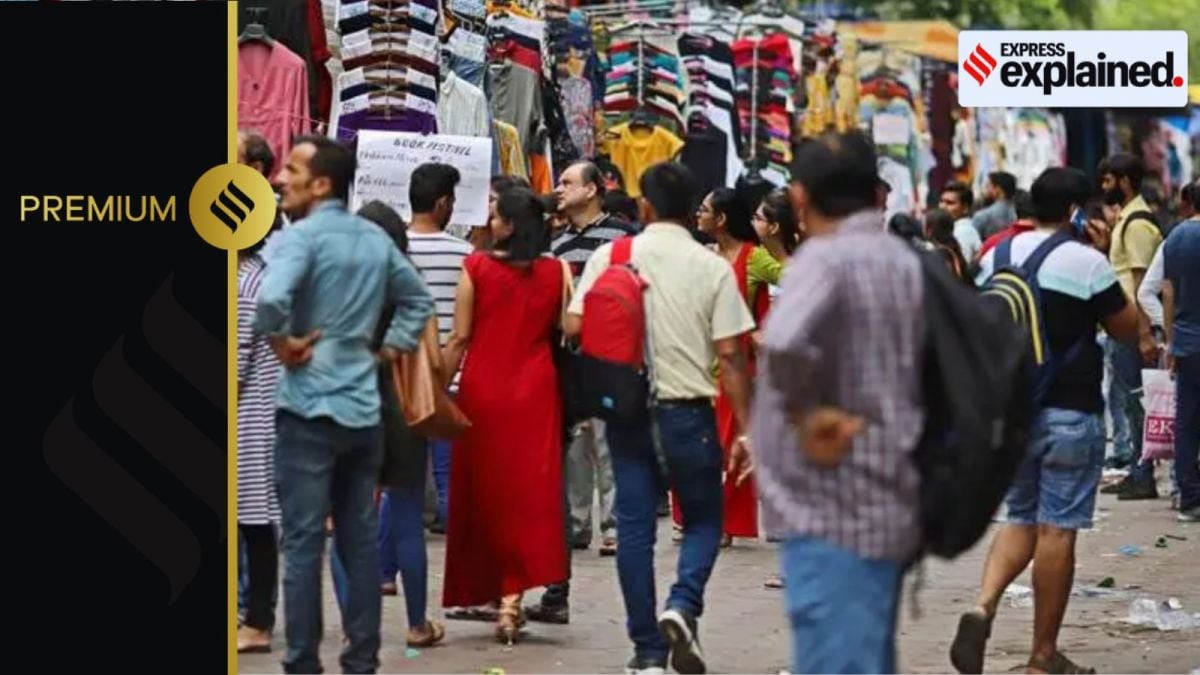
Muted private consumption is made worse by growing inequality — consumption in some parts of the economy (say, the urban rich) has grown quite fast while large sections of the economy (especially rural India) haven’t yet recovered enough. (File)
India’s GDP will grow by 7.3% in the current financial year (2023-24), slightly faster than the 7.2% growth in 2022-23, the First Advance Estimates (FAEs) released by the government on Friday showed.
How can GDP be estimated when there are still almost three months to go in the year?
The FAE are presented at the end of the first week of January every year. They are only the first estimates of growth for that financial year. By the end of February, the Ministry of Statistics and Programme Implementation (MoSPI) will release the Second Advance Estimates and, by the end of May, the Provisional Estimates.
You’ve Read Your Free Stories For Now
Sign up and keep reading more stories that matter to you.
The GDP estimates continue to be revised as more and better data become available — and in the coming three years, MoSPI will release the First, Second, and Third Revised Estimates of this year’s GDP before settling on the final number, which is called the “Actuals”.
The FAE are based on the performance of the economy over the first seven-odd months, and the data are extrapolated to arrive at an annual picture.
“The Advance Estimates of National Income are indicator-based and are compiled using the benchmark-indicator method, i.e. the estimates available for the previous year (2022-23) are extrapolated using the relevant indicators reflecting the performance of sectors,” the official press release said.
If the data are not final, what is the point of the FAEs?
The crucial significance of the FAEs is that they are the last GDP data released before the Union Budget for the coming financial year (which is presented on February 1) is finalised. As such, the FAEs constitute the base for the Budget numbers. However, since Lok Sabha elections will be held in April-May, a full-fledged Union Budget will not be presented this year.
This year’s FAEs draw some additional significance from the fact that they provide the first complete picture of economic growth in the 10 years of the government led by Prime Minister Narendra Modi.
Story continues below this ad
So what do the FAE data show?
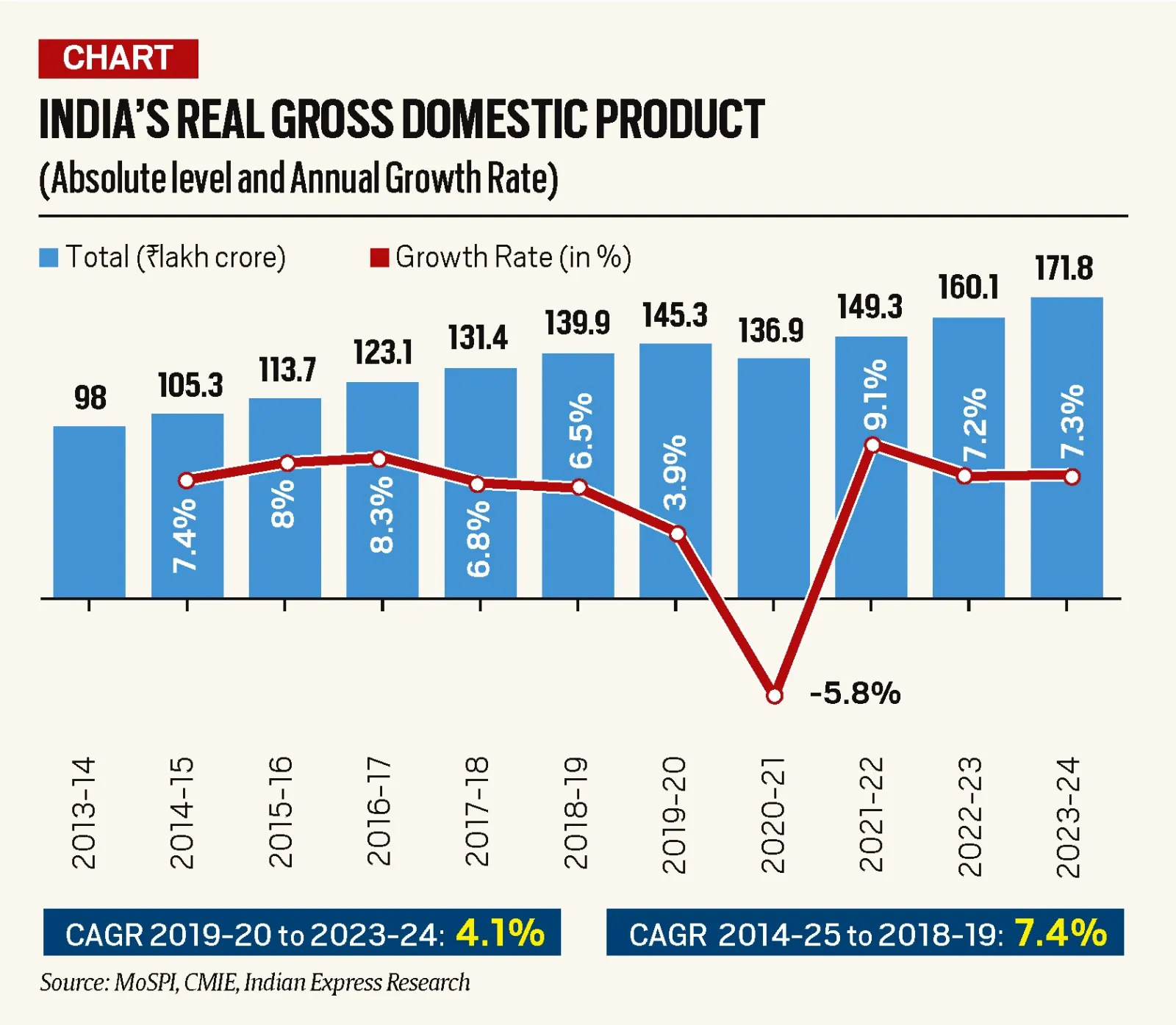
The chart shows India’s real GDP (GDP after stripping away the effect of inflation), both in absolute terms (in Rs lakh crore) and in terms of growth rate.
Chart.
By the end of March 2024, India’s GDP is expected to rise to almost Rs 172 lakh crore. When Prime Minister Modi took charge for the first time, India’s GDP was Rs 98 lakh crore, and it had reached almost Rs 140 lakh crore when he began his second term.
On an annual basis, the 7.3% growth rate estimated for 2023-24 presents a substantial and pleasant upside surprise. Most observers, including the Reserve Bank of India, had expected growth to decelerate in the current financial year to somewhere between 5.5% and 6.5%. That the GDP growth rate is now expected to beat even the higher estimate by almost a percentage point underscores the strength of India’s economic recovery.
However, there is a clear deceleration of growth in the second term of the Modi government compared to the first. During 2014-15 to 2018-19, the Indian economy grew at a compounded annual growth rate (CAGR) of 7.4%; in the second term (2019-20 to 2023-24), it was just 4.1%.
Story continues below this ad
The big reason for this is the poor growth rate in the first two years of the current term of the government. The economy grew by less than 4% in 2019-20 (before the Covid-19 pandemic), and then contracted by 5.6% in 2020-21 (immediately after Covid struck).
Overall, the 7.3% growth rate in the current year suggests an optimistic picture because most of this momentum has little to do with the low base effect that bumped up GDP growth rates in FY22 and FY23.
India’s GDP is calculated by adding up all kinds of spending in the economy — the demand side of the economy. As such, there are four main “engines” of GDP growth.
*Spending by people in their individual capacity: Technically this is called Private Final Consumption Expenditure (PFCE). It accounts for almost 60% of India’s GDP.
Story continues below this ad
*Spending towards investments in boosting the productive capacity of the economy: This could be the building of a factory, companies buying computers for their offices, or governments building roads. This is called Gross Fixed Capital Formation (GFCF), and is the second-largest engine of growth that typically accounts for 30% of the GDP.
*Spending by governments to meet daily expenditures such as salaries: This is Government Final Consumption Expenditure (GFCE). It is the smallest engine, accounting for around 10% of GDP.
*Net exports or net spending as a result of Indians spending on imports and foreigners spending on Indian exports: Since India typically imports more than it exports, this engine drags down GDP calculations, and shows up with a minus sign.
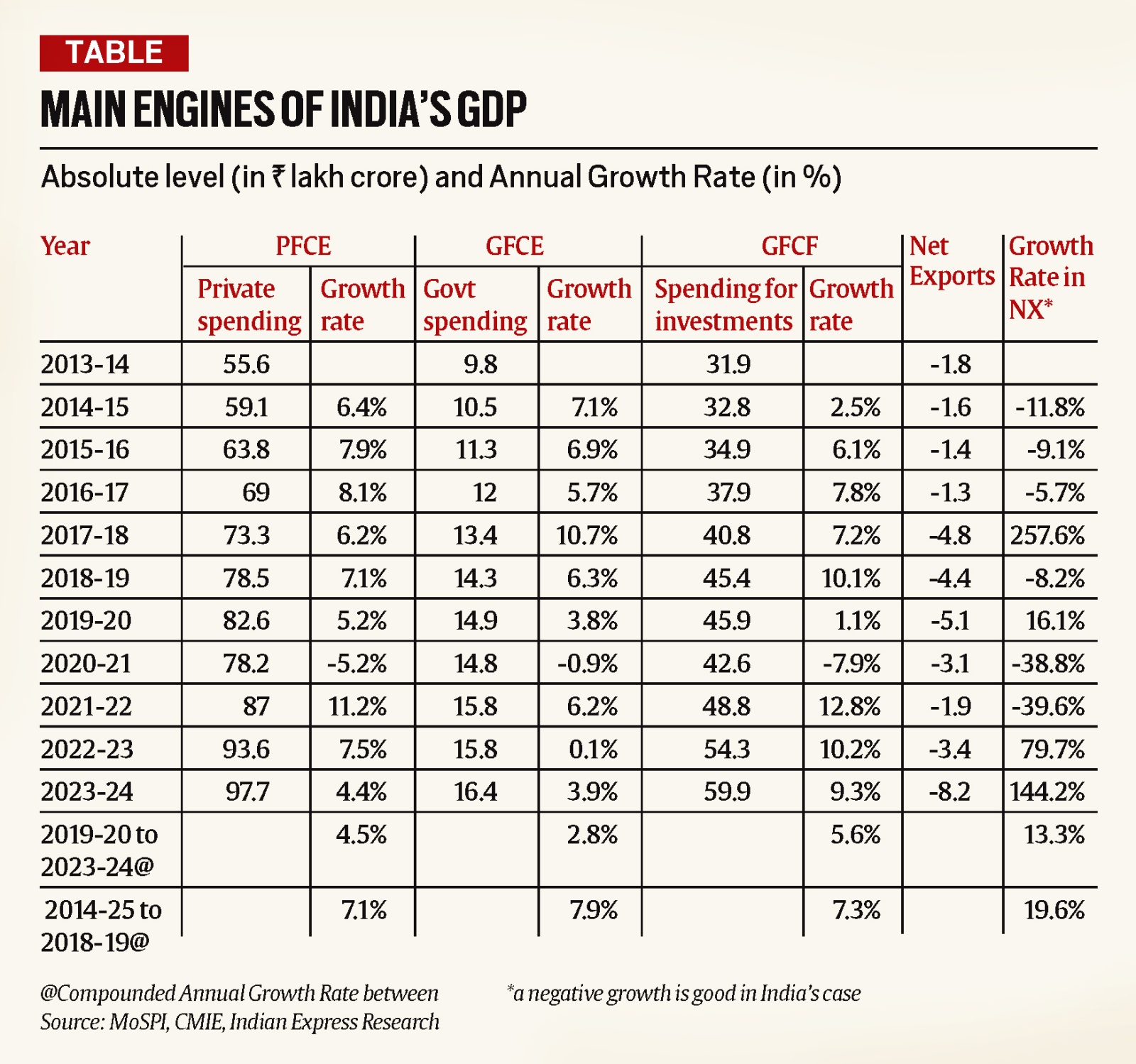
The table shows how each of these components has done in absolute and percentage terms.
Story continues below this ad
Table.
PRIVATE CONSUMPTION DEMAND: In the current year, the overall demand by people is expected to grow by 4.4%. This is similar to the CAGR (4.5%) in the second term of the Modi government but is substantially lower than the growth rate in the first term (7.1%).
Muted private consumption is made worse by growing inequality — consumption in some parts of the economy (say, the urban rich) has grown quite fast while large sections of the economy (especially rural India) haven’t yet recovered enough. While people should not consume more than their income, the muted performance of the biggest engine of growth is a matter of concern.
INVESTMENT SPENDING: A high rate of investment spending is considered a salutary signal for the prospects of an economy because it shows businesses are optimistic about future consumption demand. On the face of it, investments have grown by 9.3% in the current financial year, thus helping to push up the CAGR in the second term (5.6%) closer to the CAGR in the first (7.3%).
However, there are two lingering concerns: one, a large part of the investment spending is still coming from the government and, two, private consumption is still muted.
Story continues below this ad
GOVERNMENT SPENDING: As weak as the growth in private demand has been in the current year, at 3.9%, government spending has grown even slower. Despite the Covid disruptions, government spending has barely grown in the second term. At a CAGR of 2.8%, it is far lower than the CAGR of 7.9% during the first term.
NET EXPORTS: When data for any particular year shows up with a negative sign, it suggests Indians are importing more than they are exporting. As such, negative growth rates here are a good development. For the current year, this drag effect has grown by 144%. However, over the two terms, the growth rate has decelerated from 19.6% to 13.3% — which is a mild improvement.
Udit Misra is Senior Associate Editor at The Indian Express. Misra has reported on the Indian economy and policy landscape for the past two decades. He holds a Master’s degree in Economics from the Delhi School of Economics and is a Chevening South Asia Journalism Fellow from the University of Westminster.
Misra is known for explanatory journalism and is a trusted voice among readers not just for simplifying complex economic concepts but also making sense of economic news both in India and abroad.
Professional Focus
He writes three regular columns for the publication.
ExplainSpeaking: A weekly explanatory column that answers the most important questions surrounding the economic and policy developments.
GDP (Graphs, Data, Perspectives): Another weekly column that uses interesting charts and data to provide perspective on an issue dominating the news during the week.
Book, Line & Thinker: A fortnightly column that for reviewing books, both new and old.
Recent Notable Articles (Late 2025)
His recent work focuses heavily on the weakening Indian Rupee, the global impact of U.S. economic policy under Donald Trump, and long-term domestic growth projections:
Currency and Macroeconomics:
"GDP: Anatomy of rupee weakness against the dollar" (Dec 19, 2025) — Investigating why the Rupee remains weak despite India's status as a fast-growing economy.
"GDP: Amid the rupee's fall, how investors are shunning the Indian economy" (Dec 5, 2025).
"Nobel Prize in Economic Sciences 2025: How the winners explained economic growth" (Oct 13, 2025).
Global Geopolitics and Trade:
"Has the US already lost to China? Trump's policies and the shifting global order" (Dec 8, 2025).
"The Great Sanctions Hack: Why economic sanctions don't work the way we expect" (Nov 23, 2025) — Based on former RBI Governor Urjit Patel's new book.
"ExplainSpeaking: How Trump's tariffs have run into an affordability crisis" (Nov 20, 2025).
Domestic Policy and Data:
"GDP: New labour codes and opportunity for India's weakest states" (Nov 28, 2025).
"ExplainSpeaking | Piyush Goyal says India will be a $30 trillion economy in 25 years: Decoding the projections" (Oct 30, 2025) — A critical look at the feasibility of high-growth targets.
"GDP: Examining latest GST collections, and where different states stand" (Nov 7, 2025).
International Economic Comparisons:
"GDP: What ails Germany, world's third-largest economy, and how it could grow" (Nov 14, 2025).
"On the loss of Europe's competitive edge" (Oct 17, 2025).
Signature Style
Udit Misra is known his calm, data-driven, explanation-first economics journalism. He avoids ideological posturing, and writes with the aim of raising the standard of public discourse by providing readers with clarity and understanding of the ground realities.
You can follow him on X (formerly Twitter) at @ieuditmisra
... Read More