


© The Indian Express Pvt Ltd
Tags:


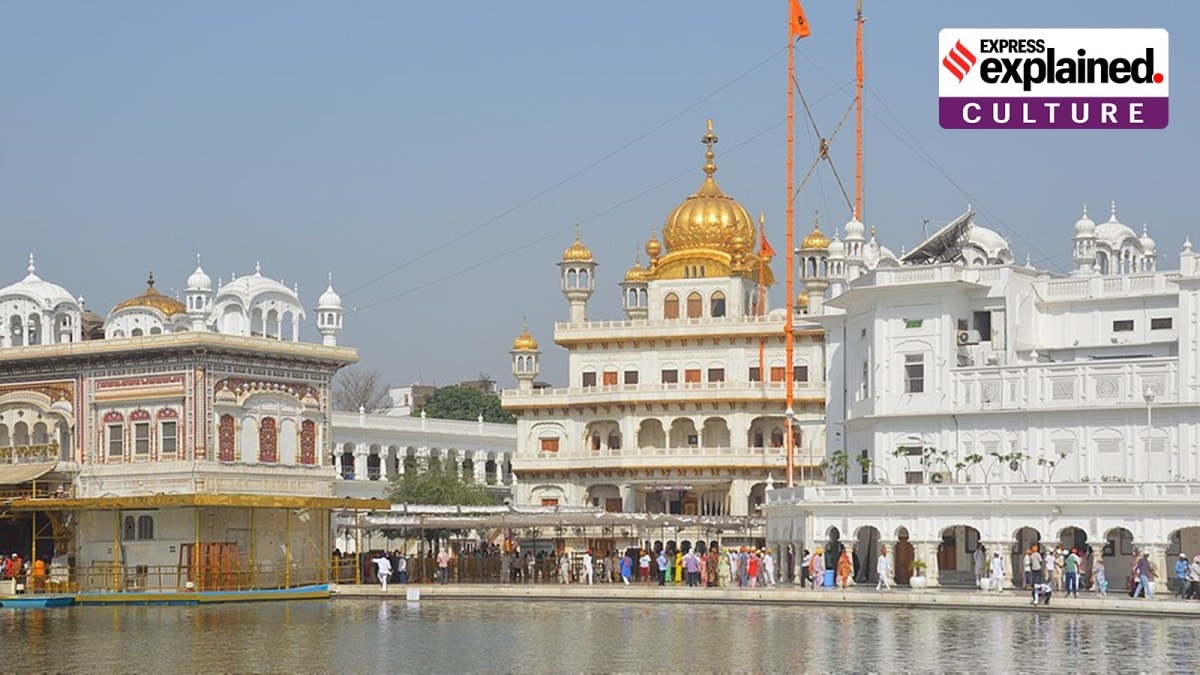
The Punjab government has granted the “Holy City” status to Amritsar, Anandpur Sahib, and Talwandi Sabo through a recent official notification.


The move will also bring about changes in the local administration and economy. Here is why these cities were specifically chosen for the designation, and the changes this notification brings.
The cities host three of the five Sikh Takhts: the Akal Takht (Amritsar), Takht Keshgarh Sahib (Anandpur Sahib), and Takht Damdama Sahib (Talwandi Sabo). The Takht Patna Sahib is in Bihar, and the Takht Hazur Sahib is in Nanded, Maharashtra.
“Takht” in Persian means an imperial throne. Akal Takht, considered the supreme among the five, was set up in 1606 by Guru Hargobind. His succession as the sixth Guru after the execution of his father, Guru Arjan Dev, is seen as a milestone in Sikh history.
The Akal Takht, a raised platform he built in front of the causeway leading to the sanctum sanctorum of Amritsar’s Golden Temple, symbolised the coming together of the temporal authority and the political sovereignty of the Sikh community (miri) with the spiritual authority (piri).
Takhts are known to issue hukumnamas from time to time on issues that concern the community. Any edict or order concerning the whole community is issued only from Akal Takht, including the ones on Sikhs found to be violating the Sikh doctrine.
The other four takhts are linked to the life of Guru Gobind Singh, the tenth Guru. It was at Keshgarh Sahib that Guru Gobind Singh raised the Khalsa, the initiated Sikh warriors, in 1699. Patna Sahib was his birthplace. He spent several months in Damdama Sahib preparing the revised version of the Guru Granth Sahib — the holy book and the eternal Guru of the Sikhs. Guru Gobind Singh spent his final days in Hazur Sahib, where he was cremated in 1708.

Decades-old demand for Holy City status
The new Holy City status will lead to a ban on the sale of liquor, tobacco and cigarettes, and meat within the walled city area of Amritsar, and the municipal limits of Anandpur Sahib and Talwandi Sabo. Additional facilities, such as mini buses and e-rickshaws, will be provided for devotees arriving in the cities to boost religious tourism.
Several political and religious groups have demanded the status for decades. For instance, in 1980, the president of the apex Sikh body, the Shiromani Gurdwara Parbandhak Committee (SGPC), urged the then Prime Minister Indira Gandhi to declare Amritsar a holy city.
It is noteworthy that banning intoxicants was not an election promise of the ruling AAP. Politically, it is being seen as signalling alignment with Sikh religious organisations.
Concerns over meat and Nihang Sikhs, rehabilitation of shopkeepers
The Holy City status has raised questions about the sale of jhatka meat (obtained after killing an animal in a single strike). It is a part of Sikh tradition, particularly among the Nihangs — a group of warrior Sikhs who are often seen wearing deep blue clothing.
Meat is often prepared in the chhawanis (camps) of the Nihang Sikhs, and many such chhawanis of prominent Nihang groups, including Baba Budha Dal, are located in these three cities and close to the Takhts. The current head of the Baba Budha Dal was present in Anandpur Sahib when the government made the Holy City declaration.
“The main intention behind this declaration is to respect the Sikhs’ and the Punjabis’ sentiments. Many other religions also have holy cities. The idea of holiness represents purity in food, thoughts, and behaviour. Therefore, a holy city should reflect these values in practice, not just in name,” said Professor Paramvir Singh, Department of Encyclopaedia of Sikhism, at the Punjabi University in Patiala.
What makes the issue complex is the fact that there is no unanimous agreement on what practices constitute “holiness”, even within the same religious groups. Singh added that enforcement of the new norms may become challenging, since meat is a part of the Nihangs’ langars (community kitchens in gurudwaras).
Questions have also been raised about the livelihoods of small shopkeepers who were previously involved in selling liquor, tobacco, and meat within these cities, and potential policies for their rehabilitation.


