Premium
This is an archive article published on November 20, 2018

Explained: How controversy has chased Nirankari sect

The grenade attack in Amritsar on Sunday threw the spotlight on the Nirankari sect, which has historically in conflict with Sikhs who follow traditional practices

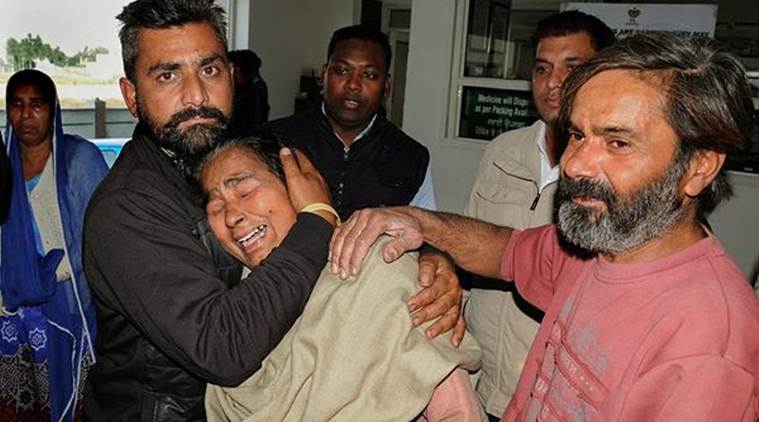
How controversy has chased Nirankari sect Three persons were killed and 21 injured after grenade attack at the Nirankari Mission branch on the outskirts of Amritsar

A grenade attack Sunday at the Nirankari Mission branch on the outskirts of Amritsar, on which three persons were killed and 21 injured, threw the spotlight on the Nirankari sect, which has historically been in conflict with Sikhs who follow traditional practices. When mainstream leaders were seen associating or allegedly associating with Nirankari members, it has often led to controversy.

The early years

The Nirankari sect was formed by Sikh activists in the 19th century. Under Baba Deyal Singh, it is credited with starting the tradition of Anand Karaj, the Sikh way of getting married. A breakaway group formed by Baba Buta Singh preached largely similar customs and principles but there some differences from Sikh customs. He was followed by Avatar Singh, who registered Sant Nafinkari Mandal in 1948.

The first clash between Sikhs and Avatar Singh took place over alleged misinterpretation of the Gurbani by Avatar Singh in Amritsar in 1956-57. It left a few persons injured. Avatar Singh’s son Gurbachan Singh wrote Granth Avtar Bani; some of its references to Sikh Gurus offended many Sikhs.

In a clash with Sikhs opposing a Nirankari congregation in 1978, 13 Sikhs were killed. Gurbachan Singh and 64 followers were booked for murder and acquitted in 1980.

Later that year, Gurbachan and an aide were shot dead in Delhi. Militant leader Jarnail Singh Bhundranwale was questioned and charged with murder; prime accused Ranjit Singh surrendered in 1983, was sentenced to 13 years and, after his release, went on to become Akal Takht jathedar.

Amarinder vs Tohra

The Nirankari sect came into focus again in 1998, when Captain Amarinder Singh accused former Shiromani Gurdwara Parbhadak Committee (SGPC) chief jathedar Gurbachan Singh Tohra of having visited Nirankari Bhawan in Patiala to seek votes. No Sikh leader is supposed to visit Nirankari Bhawan due to an Akal Takht edict against it.

With pictures of the alleged visit, Amarinder approached Akal Takht jathedar Ranjit Singh — who had served a jail sentence for Baba Gurbachan Singh’s murder. Ranjit Singh, who was seen as close to Tohra, summoned him. Later, he ruled that the negatives provided by Amarinder were fake, and Ranjit Singh absolved Tohra. When Ranjit Singh was removed as Akal Takht jathedar the following year, it was seen as a fallout of his decision.

Read | Who are Nirankaris?

Recent controversy

Story continues below this ad

Nirankari Mission’s previous head, Baba Hardev Singh, Gurbachan’s son, died in a road accident in Montreal in 2016. The accident also killed his son-in-law Avneet Satya, while another son-in-law, Sandeep Khinda, survived. A group of followers demanded an investigation, and submitted an online petition to the Prime Minister with 3,556 signatures.
It was speculated that Hardev’s daughter Sudeeksha (Satya’s wife) would become the next head, but it was her mother Savinder Kaur who was appointed head.

In 2017, another controversy broke. Based on a complaint by Hardev’s other daughter, Samta Nirankari, her husband Khinda was booked for fraud. Samta, director of a company called Jain Floriculture, accused her husband of forging her digital signature and removing her and two other directors, and appointing himself and two others. She accused him fraud involving crores of rupees in property and cash. When this surfaced, Nirankari Mission issued a clarification that it was a personal matter that had nothing to do with the mission.

Hardev Singh was the subject of political controversies, too, both before and after his death. Shiromani Akali Dal leaders would often circulate a video in which AAP chief Arvind Kejriwal is purportedly seen at a Nirankari sect function in the presence of Hardev Singh.

When Hardev died, neither SAD nor the AAP state unit issued a condolence message. Amarinder posted on Facebook remembering Hardev, and was criticised by the Dal Khalsa, a political body with former Sikh militants.

Kamaldeep Singh Brar is a Principal Correspondent at The Indian Express, primarily covering Amritsar and the Majha region of Punjab. He is one of the publication's key reporters for stories involving the Akal Takht, the Shiromani Gurdwara Parbandhak Committee (SGPC), and the sensitive socio-political issues of the border districts. Core Beats & Specializations Religious & Panthic Affairs: He has deep expertise in the internal workings of the Akal Takht and SGPC, frequently reporting on religious sentences (Tankhah), Panthic politics, and the influence of Sikh institutions. National Security & Crime: His reporting covers cross-border drug smuggling, drone activities from Pakistan, and the activities of radical groups. Regional Politics: He is the primary correspondent for the Majha belt, covering elections and political shifts in Amritsar, Tarn Taran, and Gurdaspur. Recent Notable Articles (Late 2025) His work in late 2025 has been centered on judicial developments, local body elections, and religious controversies: 1. Religious Politics & Akal Takht "Akal Takht pronounces religious sentences against former Jathedar Giani Gurbachan Singh" (Dec 8, 2025): Covering the historic decision to hold the former Jathedar guilty for granting a pardon to Dera Sacha Sauda chief Gurmeet Ram Rahim in 2015. "YouTube suspends SGPC’s channel for a week over video on 1984 Army action" (Nov 20, 2025): Reporting on the digital friction between global tech platforms and Sikh religious bodies. "As AAP govt grants Amritsar holy tag, a look at its fraught demand" (Nov 28, 2025): An analytical piece on the long-standing demand for declaring Amritsar a "holy city" and its political implications. 2. Crime & National Security "Mostly Khalistanis on Amritpal’s hit list: Punjab govt to High Court" (Dec 16, 2025): Reporting on the state government's claims regarding jailed MP Amritpal Singh orchestrating activity from prison. "Punjab man with links to Pakistan’s ISI handlers killed in encounter" (Nov 20, 2025): Detailing a police operation in Amritsar involving "newly refurbished" firearms likely sent from across the border. "15 schools in Amritsar get bomb threat emails; police launch probe" (Dec 12, 2025): Covering the panic and police response to mass threats against educational institutions. 3. Political Analysis & Elections "AAP wins 12 of 15 zones in SAD stronghold Majitha" (Dec 19, 2025): Highlighting a significant shift in the 2025 rural elections where the Akali Dal lost its grip on a traditional fortress. "Tarn Taran bypoll: woman faces threats after complaining to CM Mann about drug menace" (Nov 9, 2025): A ground report on the personal risks faced by citizens speaking out against the illegal drug trade in border villages. "AAP wins Tarn Taran bypoll, but SAD finds silver lining" (Nov 14, 2025): Analyzing the 2025 assembly by-election results and the surprising performance of Independents backed by radical factions. 4. Human Interest "Two couples and a baby: Punjab drug addiction tragedy has new victims" (Nov 20, 2025): A tragic investigative piece about parents selling an infant to fund their addiction. "Kashmiri women artisans debut at Amritsar’s PITEX" (Dec 8, 2025): A feature on financial independence initiatives for rural women at the Punjab International Trade Expo. Signature Beat Kamaldeep is known for his nuanced understanding of border dynamics. His reporting often highlights the "drug crisis in the underprivileged localities" (like Muradpur in Tarn Taran, Nov 9, 2025), providing a voice to marginalized communities affected by addiction and administrative neglect. X (Twitter): @kamalsbrar ... Read More




 

Latest Comment
Post Comment
Read Comments
Advertisement
Advertisement
Advertisement
Advertisement