


© The Indian Express Pvt Ltd
Tags:


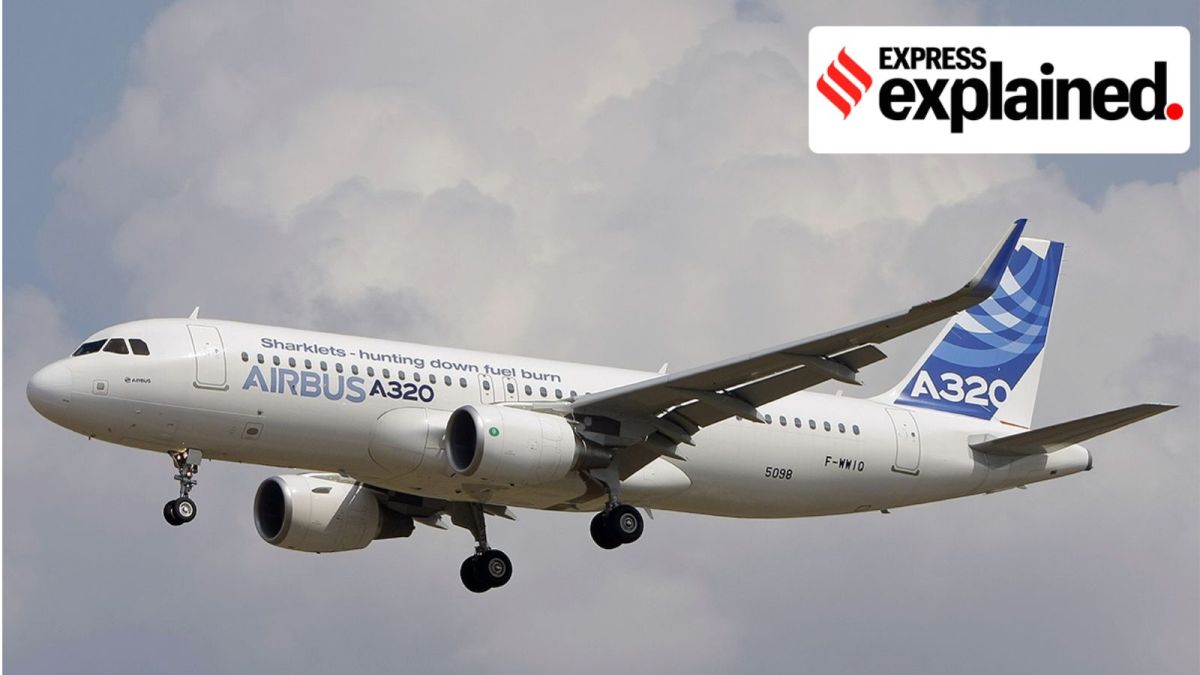
Airlines all over the world are scrambling to implement a fix mandated by Airbus to remedy a software vulnerability in thousands of its A320 family aircraft globally.
According to the European aerospace giant, intense solar radiation could corrupt data critical to flight controls in a significant number of these aircraft, which could in turn risk flight safety. There are over 11,000 A320 family aircraft—A319, A320, and A321—in operation globally, and over half of those might be affected by the issue. This is being seen as the biggest recall in Airbus’s history, and the mandated fix to rectify the issue has had some impact on airline operations.


Although initially there were fears that the rectification action could lead to major disruptions, airlines in India have so far managed to limit it largely to delays and rescheduling of flights, while largely avoiding flight cancellations. While there are reports of flight cancellations from other countries, the impact on flight operations globally so far does not appear to be too significant.
Airbus announced late Friday that a large number of its best-selling narrow-body A320 family aircraft will require an immediate software change, with some requiring hardware modifications as well. The urgent rectification action, required to be taken before the next scheduled flight of each affected aircraft, was mandated for thousands of jets globally and over 300 in India.
“Analysis of a recent event involving an A320 Family aircraft has revealed that intense solar radiation may corrupt data critical to the functioning of flight controls. Airbus has consequently identified a significant number of A320 Family aircraft currently in-service which may be impacted. Airbus has worked proactively with the aviation authorities to request immediate precautionary action from operators via an Alert Operators Transmission (AOT) in order to implement the available software and/or hardware protection, and ensure the fleet is safe to fly,” Airbus said in a release.
Shortly after the announcement from Airbus, the European Union Aviation Safety Agency (EASA) issued an Emergency Airworthiness Directive (AD) requiring operators of the affected A320 family jets to implement the solutions prescribed by Airbus “before next flight”. EASA also mentioned an incident with an aircraft that led to the discovery of the vulnerability.
According to the European aviation regulator, an Airbus A320 experienced an uncommanded, and limited and brief pitch-down event, which led to the aircraft losing some altitude even as the pilots took no such action. Preliminary technical assessment done by Airbus identified a malfunction of the ELAC as a possible contributing factor. The AD issued by EASA said that this vulnerability, if not corrected, could lead “in the worst-case scenario to an uncommanded elevator movement that may result in exceeding the aircraft’s structural capability”.
ELAC is a primary flight control computer that processes pilot input to control the aircraft’s elevators and ailerons, which control the pitch and roll of the aircraft. It translates the pilots’ inputs from their sidesticks into electronic signals to move the plane’s control surfaces. A specific ELAC hardware and software combination was seen as the vulnerability that made the computer susceptible to data corruption due to solar flares or radiation.
While EASA did not go into further details of the incident, industry insiders say that it involved a JetBlue flight from Cancun in Mexico to Newark in the US on October 30. The aircraft had a sudden loss of altitude, and some passengers sustained injuries due to the incident.
The rectification action to take care of the vulnerability is rather simple, but is required to be taken urgently. For a bulk of the affected planes, it involves a quick software update—reverting to a previous version of an ELAC software. This process, according to experts, takes around a couple of hours. However, for some aircraft—mainly older variants of the A320 family—a replacement of the ELAC unit itself may be required. This process could potentially take much longer than a simple software fix, and would be contingent upon hardware availability.
As of 5:30 pm Saturday, the Airbus-mandated software changes were carried out on almost 80 per cent of Indian airlines’ aircraft that were identified as being at risk, according to the country’s aviation safety regulator Directorate General of Civil Aviation (DGCA). The software changes, while having some bearing on the carriers’ flight operations in the form of delays and rescheduling, have not led to any major impact in terms of cancellations.
IndiGo and the Air India group are the major Indian operators of A320 family aircraft—A320, A319, and A321—which form the bulk of India’s narrow-body aircraft fleet. As per data shared by the DGCA, a total of 338 Airbus A320 family aircraft of these three Indian airlines required the rectification action. The process was completed on 270 of those aircraft as of 5:30 pm Saturday. The mandated fix is expected to be completed on the remaining 68 aircraft on Saturday itself, as per the DGCA.
Officials said that there was no need for passengers to panic as the impact on flight operations is not significant. Apart from four Air India Express flights, DGCA did not report any flight cancellations due to this issue as of Saturday evening. Despite the very short downtime for implementing the fix, some delays were unavoidable as a narrow-body jet typically operates multiple flights in a day and delays can quickly cascade.
As of 5:30 pm Saturday, the necessary changes had already been carried out on 184 of 200 IndiGo aircraft that required rectification. In the case of Air India, it was done on 69 of the 113 affected aircraft. As for Air India Express, the required changes were made on 17 of the 25 affected planes. In all, IndiGo has around 370 A320 family jets in its fleet, Air India has 127, and its low-cost arm Air India Express operates 40 A320 family aircraft. But not all aircraft required software changes or any hardware realignment. As per the DGCA, no flight cancellations were reported by airlines as of 10 am due to the issue.


