


Click here to follow Screen Digital on YouTube and stay updated with the latest from the world of cinema.
Tags:


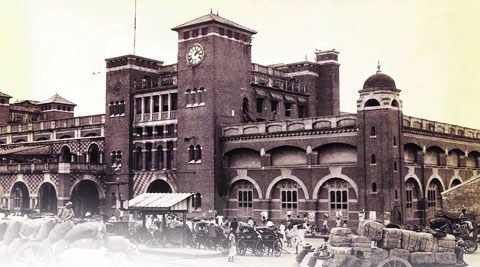
With 86 scene locations in the script, a chunk of which had to be shot in real spaces, the recce for Detective Byomkesh Bakshy, was indeed challenging. Director Dibakar Banerjee and the team had spent close to three weeks across Kolkata, and at times beyond, in their search.
“Saradindu Bandopadhyay’s Byomkesh Bakshi series is mostly set in Calcutta of the 1940s, a rather tumultuous time for the city,” said Banerjee. The director wished to evoke that time through the architecture and the right locations, rather than burden the script with historical detail. “We had to find suitably uncontaminated locations to recreate that period, which was a challenge,” he said.
Starting early :


The director explained that the decision to recreate the era came from Bandopadhyay’s text. “The stories offer a scintillating view of the past but only in touches. The author allows the topicality to seep in through the backdrop but doesn’t let it become the story. For instance, the stories are set in a time when the contraband market flourished after the GIs had left the city, and the surplus rifles and bullets led to an increase in murders,” he said.
Detailed research :
But since Bandopadhyay provided only threadbare details, there were no descriptions of the background action to borrow from, while adapting for the screen. A key source in associate creative producer Vikas Chandra’s research were the photographs taken by soldiers during their stay in Calcutta. “They offered a glimpse into the daily lives of people in Calcutta back then, the British Tommies, the Chinese, the middle and upper-class Bengalis and the villagers who poured into the city during the famine of 1943,” said Chandra.
From the clues in Bandopadhyay’s text, they had to rebuild the scene almost 85 years later in a city that has since changed drastically. Not just the landscape, the names of roads as well as places had changed. “We spent a long time trying to look for a boarding house where Byomkesh lived during his college years. Then, one day, we received a call from the second-generation executor of Sharadindu’s works, saying that he had found it. Having known the author personally, he had tracked down the boarding house on Harrison Street where Sharadindu had lived and it exactly matches the one in the text,” said Banerjee.
New challenges :
Walking through the corridors of Vidyasagar College in Kali Bari – a neighbourhood that’s stuck in a time warp – Banerjee said that’s where Bandhopa-dhyay studied. The four-storied building, though, looked rather new. It did fill out a few details for the production design, but the irony was that they had spotted a better location for the college.
The two banks of the river Hoogly were like mirror images with an old-fashioned nauka with jute sails drifting in between. The location seemed perfect for a scene Banerjee had on mind — till he sat down on the ledge with his sketchbook and charted out the shots. Soon, the team realised that lighting would be better on the opposite bank and that the fence along the river as well as the wall between the two wings of the factory would have to be brought down for the duration of the shoot and then rebuilt! Hunting for locations turned out to be rigorous affair for the team.
Produced by Banerjee Dibakar, the film, starring Sushant Singh Rajput, releases on February 13, 2015.


Click here to follow Screen Digital on YouTube and stay updated with the latest from the world of cinema.


