During a cold, bitter winter in the Netherlands in 2012, a young man stood amid the debris of his past life. Occasionally, he picked up a piece and stared at it.
A few weeks before, the government had cut funding to the arts, and artistes had taken to the streets in a fruitless protest. Soon, organisations such as dance company NND began to close and, among those who found themselves jobless, were a French dancer, Martin Harriague, and his girlfriend. Pushed into different career paths, the two parted ways. Single and unempl- oyed, Harriague, was beaten to black pulp, literally.
As similar stories play out globally in the wake of the slowdown, Harriague brings a dance piece drawn from his own turbulence to India. Titled Black Pulp, it opened DanSe Dialogues, a contemporary dance festival organised by the French Embassy, Alliance Francaise and Institut Francaise, in Delhi.
“The funds crunch was a political choice and we were powerless before it as artistes. At this time, I said, ‘You have no job, you have no girlfriend, you have no engagement but you have a vision’,” he says. With his savings and money borrowed from friends, and with dancers he knew, Harriague set up Compagnie Xin in March 2013. The name is inspired by a Chinese dancer of Bharatanatyam that Harriague had watched in Kuala Lumpur. “She is Chinese and performs an Indian classical dance as well as contemporary. Even when she fell on stage and needed stitches the next day, she kept dancing. To me, she represents tenacity, courage and commitment,” says Harriague, adding that he calls his company Gin, “like gin and tonic”. Black Pulp, choreographed by Harrigue, is the company’s first production and was commissioned by Festival de Danse de Cannes in 2013.
The piece is as raw as a wounded relationship. Harriague and co-dancer Lio Spector play out the stages of separation between a man and a woman. Sometimes, like animals, they circle each other with anger and violence, and sometimes they are puppets collapsing into dismay, regret and loneliness. The space is in shades of black, illuminated by cones of stage lights. The smoke that covers the stage acts like the fog of old memory through which we see a couple coming together and apart. The body movements are an explosive range of arches and trembling torsos and minute, fragile flutters. Voice-overs accompany the music and say, “At some time in the vanishing history of a couple, their home fades from a place of shelter to a museum of what once was”.
For a creator of a grim piece, Harriague, 28, laughs easily. He adds that Black Pulp is actually a story of hope. “We fall down so we can stand stronger. Challenges make us grow,” he says, with a smile of a self-help guru. The piece closes with images of the couple dressed in afternoon casuals — different from the black tights of earlier — lying down blissfully, soon after a voice-over announces, “Black Pulp hit us so hard, our love failed/we stood up again and it was worth it”. “I leave the ending open; does the couple stay together or do they separate happily?” says Harriague.
This wasn’t the first time Harriague has turned around from loss. When he was 19, his parents got divorced. “The family was rupturing, and I said, ‘I will use the conflict to fight for what I want’. My father wanted me to become a doctor like him and his father, or a lawyer. As the family split, I started to learn theatre, dancing, and going to museums. I hated museums but I forced myself. My ballet teacher said I had to be like a sponge and drink everything in. That’s when I realised I could express myself through my dance. My body could reveal my anger towards my parents, my joy with my friends. I started to dance because I had stepped into the world I did not know,” he says.
He began lessons at 19. Less than 10 years later, Harriague can boast of dancing and choreographing pieces across the world as well as a personal style that includes props such as confetti and cactus. His 2012 dance piece, Open Mic. Suffocation won the second prize at the Stuttgart festival last year and toured Germany and Brazil.
Dipanita Nath is a Senior Assistant Editor at The Indian Express, based in Pune. She is a versatile journalist with a deep interest in the intersection of culture, sustainability, and urban life.
Professional Background
Experience: Before joining The Indian Express, she worked with other major news organizations including Hindustan Times, The Times of India, and Mint.
Core Specializations: She is widely recognized for her coverage of the climate crisis, theatre and performing arts, heritage conservation, and the startup ecosystem (often through her "Pune Inc" series).
Storytelling Focus: Her work often unearths "hidden stories" of Pune—focusing on historical institutes, local traditions, and the personal journeys of social innovators.
Recent Notable Articles (December 2025)
Her recent reporting highlights Pune’s cultural pulse and the environmental challenges facing the city during the winter season:
1. Climate & Environment
"Pune shivers on coldest morning of the season; minimum temperature plunges to 6.9°C" (Dec 20, 2025): Reporting on the record-breaking cold wave in Pune and the IMD's forecast for the week.
"How a heritage tree-mapping event at Ganeshkhind Garden highlights rising interest in Pune’s green legacy" (Dec 20, 2025): Covering a citizen-led initiative where Gen Z and millennials gathered to document and protect ancient trees at a Biodiversity Heritage Site.
"Right to breathe: Landmark NGT order directs PMC to frame norms for pollution from construction sites" (Dec 8, 2025): Reporting on a significant legal victory for residents fighting dust and air pollution in urban neighborhoods like Baner.
2. "Hidden Stories" & Heritage
"Inside Pune library that’s nourished minds of entrepreneurs for 17 years" (Dec 21, 2025): A feature on the Venture Center Library, detailing how a collection of 3,500 specialized books helps tech startups navigate the product life cycle.
"Before he died, Ram Sutar gave Pune a lasting gift" (Dec 18, 2025): A tribute to the legendary sculptor Ram Sutar (creator of the Statue of Unity), focusing on his local works like the Chhatrapati Shivaji statue at Pune airport.
"The Pune institute where MA Jinnah was once chief guest" (Dec 6, 2025): An archival exploration of the College of Agriculture, established in 1907, and its historical role in India's freedom struggle.
3. Arts, Theatre & "Pune Inc"
"Satyajit Ray, Ritwik Ghatak were not rivals but close friends, says veteran filmmaker" (Dec 17, 2025): A deep-dive interview ahead of the Pune International Film Festival (PIFF) exploring the camaraderie between legends of Indian cinema.
"Meet the Pune entrepreneur helping women build and scale businesses" (Dec 16, 2025): Part of her "Pune Inc" series, profiling Nikita Vora’s efforts to empower female-led startups.
"How women drone pilots in rural Maharashtra are cultivating a green habit" (Dec 12, 2025): Exploring how technology is being used by women in agriculture to reduce chemical use and labor.
Signature Style
Dipanita Nath is known for intellectual curiosity and a narrative-driven approach. Whether she is writing about a 110-year-old eatery or the intricacies of the climate crisis, she focuses on the human element and the historical context. Her columns are often a blend of reportage and cultural commentary, making them a staple for readers interested in the "soul" of Pune.
X (Twitter): @dipanitanath ... Read More


 5 min read


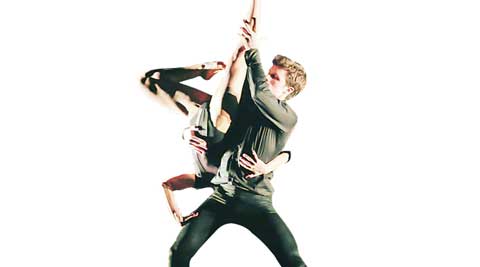 Fare Thee Well, another work by Harriague