8 min read


Click here to follow Screen Digital on YouTube and stay updated with the latest from the world of cinema.
© IE Online Media Services Pvt Ltd



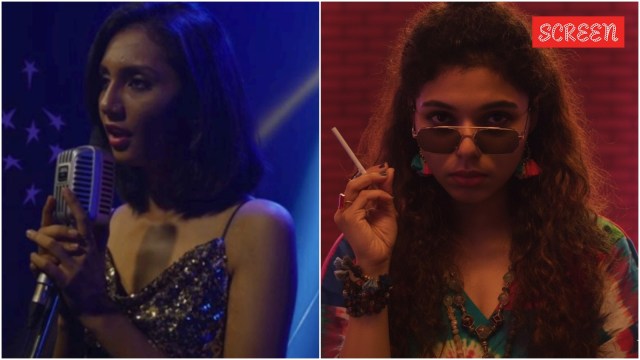 Oru Apasarpaka Katha (OAK) was screened at the 30th International Film Festival of Kerala (IFFK).
Haven’t there been times when we desperately wished for a second chance? While some actually get it in certain situations, many others don’t. Hence, what’s done is done most of the time, no matter how much we want to turn back the clock and rewrite the past. But when Neethu (Tara Amala Joseph) actually receives that chance, she is initially flabbergasted. I mean, who wouldn’t be upon realising that they’re in a time loop? As intriguing as it sounds, it’s definitely scary as well, right? Having to relive the same period of time over and over again, indefinitely, not knowing when or if one will escape it. Nonetheless, while in it, there probably isn’t any other way but to spin one’s wheels, hoping it will yield a positive outcome at some point; but chances are it might be a Sisyphean task. This forms the crux of director Arun Vardhan’s Oru Apasarpaka Katha (OAK), which was recently screened at the 30th International Film Festival of Kerala (IFFK).
I don’t think OAK is everyone’s cup of tea. Even as the movie’s premiere began in a packed hall, more than a handful of people walked out midway through, and a few more followed suit as the show progressed. Yet most of the people who stayed until the very end, including me, were highly entertained by this trippy movie, which blends multiple genres and experiments with visual language quite liberally, offering an intriguing experience. For the unversed, Oru Apasarpaka Katha literally translates to “A Detective Story,” and, along with its time-loop element, it is also an investigative movie. At the same time, OAK also offers a deeper exploration of sisterhood, mental health issues, identity crises, substance abuse, and more, all while maintaining its black comedic tone.
The movie neither makes you roll on the floor laughing nor offers a hard-hitting experience. It isn’t the typical sisterhood drama where the women are each other’s biggest cheerleaders. If anything, Neethu and her elder sister Sheela can’t even be in the same room for long. Any time they come into close quarters, words spar, and they even go to the extent of prodding each other’s deepest wounds, thus ending up hating one another even more. Yet, it also isn’t one of those manipulative tales crafted with a male gaze that positions women as their own worst enemies.
Although Neethu is initially uninterested in her elder sister’s life problems, which are progressively worsening due to her struggles with borderline personality disorder (BPD), it isn’t until she discovers Sheela’s body that Neethu slips into the time loop, which speaks volumes. Although she may pretend she can’t stand her — which is true to an extent — this shows that an undercurrent of compassion still runs deep. Although she keeps claiming throughout the night that she didn’t even want to come to the party since Sheela would be there, and that she arrived simply because one of their friends invited her specifically, once the time loop begins, she is immediately convinced that her task is to solve the murder mystery and save Sheela.
OAK’s brilliance lies in not offering a direct answer to how Neethu figures this out. Yet, as soon as she slips into a psychedelic state after taking a drug pill, of all the hallucinations she could have had, the one into which she recurringly falls features Sheela. In their conversations, director Arun has also included lines revealing their childhood trauma, which contributed to them eventually developing a hateful relationship. Meanwhile, Neethu imagines Sheela telling her how wonderful it would have been had they received the opportunity to travel back to the age of 12 and restart life with the knowledge and experiences they have now, which would make things far easier. In a way, this is what Neethu does moving forward. She keeps travelling back with the information she acquires from each episode, following lengthy conversations with each person in the house that night, gradually unravelling the mystery and inching closer to saving Sheela.
Unlike celebrated time loop works such as Groundhog Day (1993), Russian Doll (2019-22), Triangle (2009), Happy Death Day (2017), or even Maanaadu (2021), OAK doesn’t focus too much on the loop aspect; instead, it revolves around Neethu’s sleuthing and Sheela’s life problems. From Neethu’s emotional detachment and her lack of fondness towards Sheela — stemming from having to spend most of her childhood caring for her sister with BPD — to Sheela and her close ones’ struggles with her disorder, her fast-failing marriage to Arjun, and her still nascent music career, the movie touches upon a wide range of topics.
Writer-director Arun Vardhan showcases his talent by revealing each of these facets in the most minimal yet effective ways. He also incorporates subtle details — such as the TV in the room featuring the Grady daughters’ scene from The Shining (1980) when Neethu and Sheela are conversing next to it, and later a scene from the celebrated crime mystery Chanakyan (1989) as the investigation is progressing — to add depth to the visuals and the overall narrative. While a copy of the book “It Ends with Us” in the table drawer of Sheela’s boyfriend, Roshan, provides better insight into both her marriage and her affair, the fact that it’s a “Kafkaesque costume party” that’s happening in the house that night adds further layers to OAK.
At the same time, despite having many choices, both Neethu and Sheela ending up wearing similar patchwork dresses offers more profound insight into their characters, even prompting one to wonder if they are two personalities of the same person — one grappling with keeping her emotions under control while the other lives by the rule of “everything eventually becomes shit; so, zero expectations, zero disappointments.”
One commendable aspect of the movie is its in-depth exploration of BPD and its many facets, including the intense emotional outbursts, impulsiveness, and volatility that people with the disorder struggle with. However, it’s doubtful whether one can state that the movie has handled this with genuine empathy. The same goes for the “oniomaniac nihilist” Neethu, who is portrayed as having undiagnosed mental health issues, particularly stemming from childhood trauma and emotional neglect from her parents. Yet, OAK never actually offers her any proper solace either.
Instead, the movie attempts to show them regaining control of their lives and emotions through Neethu’s efforts to prevent Sheela’s murder. This forges a renewed sisterhood that may (or may not) aid them on their journey forward. Nonetheless, Arun Vardhan skillfully uses the time loop to unravel the emotional and psychological issues they both face, offering a nuanced perspective rather than straightforward answers.
Even with his limited budget and resources, the director has experimented with the visual language as much as possible. The scenes depicting Neethu in a psychedelic world are particularly intriguing for their departure from conventional portrayals. In fact, most dream sequences in the movie, which offer glimpses into the undercurrents of Neethu and Sheela’s psychological woes and strained relationship, are visually appealing. Om and Vaishak Unni’s mind-warping cinematography, along with Leo Antony’s fantastical music, also deserve praise for their contributions to this “Donnie Darko minus the bunny.”
However, OAK fails to deliver a crisp experience, as many conversations between characters drag on for too long. Owing to dialogues that hover just above average and occasional overtly intellectual references, viewers’ attention often wanders. Had Arun given the screenplay a tight edit, OAK could have been far more captivating. There are also instances when one might feel that the time loop element is included for convenience, as the writer-director doesn’t always make the best use of it, nor does he give it much prominence until it’s time to wrap up an episode.
Click here to follow Screen Digital on YouTube and stay updated with the latest from the world of cinema.