Premium
This is an archive article published on January 13, 2017

We must follow our intuition, Nobel Laureate tells students in Gujarat

Venkatraman Ramakrishnan ‘Venki’ spent a day in his home city, interacting with old friends and taking a stroll at his alma mater, Convent of Jesus and Mary

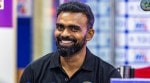
Venkatraman Ramakrishnan, alma mater, Convent of Jesus and Mary, Nobel Laureate in Gujarat, education news, Latest news, India news, national news Venkatraman Ramakrishnan (left) at his alma mater, Convent of Jesus and Mary, in Vadodara on Thursday. Bhupendra Rana

A day after he enthralled students at the Maharaja Sayajirao University (MSU) campus with his lecture on “100 years of visualising molecules”, Nobel Laureate and president of Royal Society, Venkatraman Ramakrishnan ‘Venki’ spent a day in his home city, interacting with old friends and taking a stroll at his alma mater, Convent of Jesus and Mary. Venki, who was accompanied by his father, Professor CV Ramakrishnan, 91, told mediapersons that he wanted to be left alone. He was accompanied by a friend, noted ENT specialist from the city, Dr P N Saini, made an impromptu visit to CJM High School at Fatehgunj, taking the staff and the students by surprise.

Watch What Else is Making News

Venki spent almost an hour on the campus of his former school, where he studied before going to science college in MSU and then to the US for studies when he was 19. His research on ribosomes earned him the Nobel Prize in 2009. According to school principal, Sister Nirmala Paul, “He (Venki) did not tell us (that he was coming) and the students were surprised, but also thrilled about his visit. He very respectfully agreed to our request that he should interact with the children. The interaction was very encouraging as students asked him many questions.” Sister Nirmala added that when a student asked Venki about the ills of social media and requested him to suggest ways for de-addiction from the Internet, Venki suggested parental control. Sister Nirmala said, “He said that it is good that we are attracted to social media, but we should know how to interact and follow the advice of parents.” Students also asked Venki about winning the Nobel prize, to which he said, “It happened all of a sudden and I was awe struck. Many times, variations happen in life and we must follow our intuition.” He encouraged students to choose a career path that interests them the most.

Venki, Sister Nirmala adds, was very nostalgic as he visited several classrooms, the library and laboratory of the school. His friend, two years his junior from CJM, Dr Saini, told The Indian Express that Venki reminisced his school days with nostalgia. Saini said, “As we walked around the campus, we recalled some of the sisters of the school who were part of the administration while we were studying. He particularly remembered this water tank that used to be our hiding space on campus when we bunked classes. The tank has since been demolished to extend the school building.” Saini remembers Venki as a shy, book-loving student. “He was very soft-spoken, simple, studious. We kept in touch. When he came in 2009, I was in Punjab and I could not meet him. But whenever he visits, he makes it a point to catch up.”

Earlier, Venki also met his old friends from the city at his favourite hangout, a cafe in the city. He also visited a school for the specially-abled students and met several family friends in the city, along with his father. Venki left Gujarat in 1971 and is now based in Cambridge. In 2010, the CJM had held a special felicitation of Venki after he won the Nobel.

Aditi Raja is an Assistant Editor with The Indian Express, stationed in Vadodara, Gujarat, with over 20 years in the field. She has been reporting from the region of Central Gujarat and Narmada district for this newspaper since 2013, which establishes her as a highly Authoritative and Trustworthy source on regional politics, administration, and critical socio-economic and environmental issues. Expertise: Core Authority & Specialization: Her reporting is characterized by a comprehensive grasp of the complex factors shaping Central Gujarat, which comprises a vast tribal population, including: Politics and Administration: In-depth analysis of dynamics within factions of political parties and how it affects the affairs in the region, visits of national leaders making prominent statements, and government policy decisions impacting the population on ground. Crucial Regional Projects: She consistently reports on the socio-economic and political impact of infrastructure projects in the region, especially the Statue of Unity, the Sardar Sarovar Project on the Narmada River, the Mumbai-Ahmedabad High Speed Rail bullet train project as well as the National Highway infrastructure. Social Justice and Human Rights: Her reporting offers deep coverage of sensitive human-interest topics, including gender, crime, and tribal issues. Her reports cover legal proceedings from various district courts as well as the Gujarat High Court (e.g., the Bilkis Bano case remission, POCSO court orders, Public Interest Litigations), the plight of tribal communities, and broader social conflicts (e.g., Kheda flogging case). Local Impact & Disaster Reporting: Excels in documenting the immediate impact of events on communities, such as the political and civic fallout of the Vadodara floods, the subsequent public anger, and the long-delayed river redevelopment projects, Harni Boat Tragedy, Air India crash, bringing out a blend of stories from the investigations as well as human emotions. Special Interest Beat: She tracks incidents concerning Non-Resident Gujaratis (NRIs) including crime and legal battles abroad, issues of illegal immigration and deportations, as well as social events connecting the local Gujarati experience to the global diaspora. ... Read More

 

Latest Comment
Post Comment
Read Comments
Advertisement
Advertisement
Advertisement
Advertisement