5 min read


© IE Online Media Services Pvt Ltd



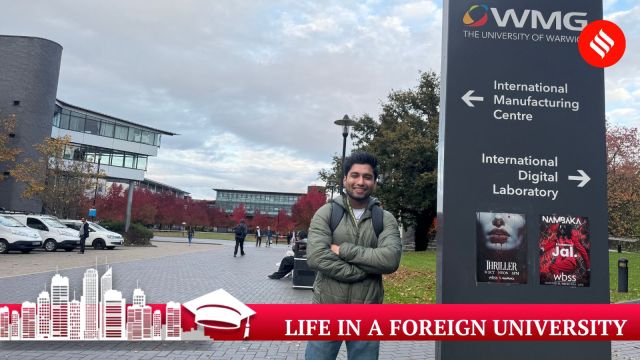 The minimum educational requirements for this course were a first class honours degree or a high 2:1 undergraduate degree in Computer Science, Mathematics, Statistics, Physics, or another relevant quantitatively focused degree.
 — Rajat Ratra
After completing my high school education at St George’s School, New Delhi, I earned my undergraduate BTech degree in Computer Science from Bharati Vidyapeeth’s College of Engineering, Delhi, and then started working as a software developer in October 2017 and worked at several companies until September 2024.
I decided to pursue an MSc in computer science relatively late in my career. At the time, I was working as a senior developer at a well-known fintech company, and although the work was fulfilling, it started to feel monotonous. I felt a need for change, to expand my horizons and grow my professional network. That’s when I decided to pursue an MSc in Computer Science.
I applied to several universities globally with the help of Leverage Edu — a student career counseling company — and received offers from institutions in Australia, the UK, and Ireland. Ultimately, I chose the University of Warwick for its one-year MSc programme.
The minimum educational requirements for this course were a first class honours degree or a high 2:1 undergraduate degree in Computer Science, Mathematics, Statistics, Physics, or another relevant quantitatively focused degree. Also, an IELTS overall score of 6.5, minimum component scores not below 6.0.
Before joining the University of Warwick, I was a senior software engineer with over seven years of experience in leading front-end development and full-stack projects. Although my job was good, it started to feel repetitive and unchallenging. After working remotely for four years, I realised I needed a change.
The transition from the corporate world to university was intimidating, particularly the social aspect. Making new friends initially felt daunting due to the age difference, but with time, the gap diminished and I began feeling more comfortable.
Another challenge was academics; after being away from formal education for nearly a decade, adjusting from corporate presentations to academic textbooks and research papers was tough. My focus and attention span certainly felt different.
Even with these challenges, though, the university experience has been a major eye-opener. The diversity of the student body, especially the large number of international students, was surprising. Freshers’ Week was a fantastic opportunity to explore the campus and get involved in the wide array of student societies — over 200 societies mean there’s something for everyone.
The academic approach here is quite different from India. Instead of focusing solely on exams, there’s continuous coursework in the form of assignments and projects, which keeps one engaged with the material throughout the term. My schedule is packed compared to some of my friends; I have classes and labs every day, and it’s often hard to find time for lunch between consecutive lectures.
On my first day, I was exhausted from two long flights from India to Birmingham and ended up sleeping for 10 hours straight without even unpacking properly. During my first week, I mostly focused on settling into my room, organising my space, and getting basic essentials such as a duvet and pillows. I also got acquainted with my flatmates and the kitchen setup.
When I went grocery shopping, I realised just how expensive things are in the UK — prices are almost four times higher than in top-tier Indian cities. It was a bit overwhelming trying to find reasonably priced shops nearby. I am still searching for a part-time job, though most openings seem to be around the Christmas season.
One memorable moment was during my first cab ride from the airport. The driver was friendly, and we had a great conversation about his 20-year journey in the UK and his children, who now work in healthcare. He even helped me with my luggage and answered all my questions about life in the UK. Similarly, international students and professors here have been welcoming and helpful.
I have taken out a loan to cover my tuition fees, and I am relying on my savings to manage day-to-day expenses. I am still searching for part-time work, but jobs are hard to come by at the moment. The average pay is around £11 per hour, with most part-time roles offering two eight-hour shifts per week — the maximum working hours allowed on a study visa is 20 hours.
Studying abroad has definitely broadened my perspective. Interacting with people from different cultures and backgrounds has influenced how I view many aspects of life. Small talk has become a routine part of my day — whether it’s a smile, a nod, or saying thank you to the bus driver. Living expenses here are significantly higher, and now I don’t think twice before buying a £2 samosa.
While the experience has been great till now, I definitely plan to return to India. The exposure and networking opportunities here are fantastic, nothing compares to the culture, food, and warmth of home. Some of the key skills I will take back with me include improved soft skills, teamwork, research abilities, and networking — all of which are crucial for personal and professional growth.
(This letter is part of a series by The Indian Express where we bring to you the experiences of students at different foreign universities. From scholarships and loans to food and cultural experiences — students tell us how life is different in those countries and things they are learning other than academics)