© The Indian Express Pvt Ltd
 8 min read


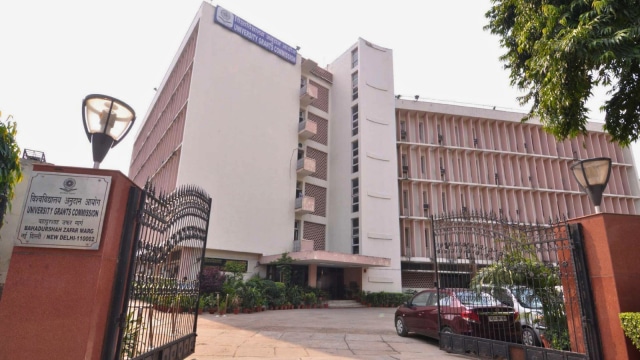 The Bill is likely to be introduced in Parliament in the ongoing session
The Viksit Bharat Shiksha Adhishthan Bill, 2025, which seeks to set up an umbrella body with three councils to perform regulatory, standard-setting and accreditation functions for higher education, does not provide any grant-giving powers to its regulatory council.
The Bill, likely to be introduced in Parliament in the ongoing session, also does not give the regulatory council the power to regulate fees in higher education institutions while tasking it with developing a policy to “prevent commercialisation of higher education.”
It does, however, give the regulatory council the power to impose penalties on higher education institutions for violations of the Act, ranging from not less than Rs 10 lakh to up to Rs 2 crore. The highest penalty is for instances in which an institution is established without the approval of the Centre or state concerned.
The regulatory body that the bill will create subsumes the functions of the University Grants Commission (UGC), the All India Council for Technical Education (AICTE), and the National Council for Teacher Education (NCTE). The Bill provides for the repeal of the UGC Act, 1956, the AICTE Act, 1987, and the NCTE Act, 1993, and the dissolution of these bodies.
The 1956 UGC Act allowed the commission to impose fines of only a maximum of Rs 1,000. It also gave the UGC the power to disburse grants to universities established under a Central Act, as well as other universities. Through regulations, the Act also empowered the UGC to specify matters related to fees.
The AICTE Act allowed the council to disburse grants from its funds to technical institutions, and fix norms and guidelines for fees.
No mention of powers related to fees
The 2025 Bill does not mention powers related to fees. On funding to higher education institutions, the notes on the Bill’s clauses state: “It is proposed to keep the funding to the centrally funded higher educational institutes out of the purview of the Viksit Bharat Shiksha Adhishthan. The National Education Policy, 2020, also envisions that the function of funding should be segregated from the Councils performing the functions of academic standard setting, regulation and accreditation. Thus, to ensure that the Standards Council, Regulatory Council and the Accreditation Council fully discharge their specific domain functions, the function of disbursal of grants to the centrally funded higher educational institutions shall be accordingly ensured through mechanisms devised by the Ministry of Education.”
The Bill is meant to be in line with the provisions of the National Education Policy (NEP) 2020, which calls for a single higher education regulator.
The Bill provides for the creation of a commission – the Viksit Bharat Shiksha Adhishthan, which will “provide direction” for the growth of higher education and coordinate among three councils – the Regulatory Council (Viksit Bharat Shiksha Viniyaman Parishad), the Standards Council (Viksit Bharat Shiksha Manak Parishad), and the Accreditation Council (Viksit Bharat Shiksha Gunvatta Parishad).
The Commission will have a chairperson (person of eminence to be appointed by the President of India on the recommendations of the central government) and not more than 12 members, which will include the presidents of the three councils, the Higher Education Secretary in the Education Ministry, two professors from state higher education institutions, and five experts. Functions of the commission will include developing a roadmap to transform higher education institutions into large multi-disciplinary and research institutions; developing a roadmap to integrate “Bharatiya knowledge, languages, and arts” in higher education; and formulating and suggesting education-related schemes.
Who will be in the 3 councils?
The three councils will be headed by Presidents – people of eminence in higher education with not less than 10 years of experience as Professor – appointed by the President of India on the recommendation of a search-cum-selection committee comprising two experts nominated by the Centre, and the Higher Education Secretary in the Education Ministry.
The other members of the commission and councils are to be appointed by the President of India on the recommendations of the Centre. Each council will have up to 14 members.
The Regulatory Council and Standards Council will each include two academicians not below the rank of Professor, one academician from a state higher education institution, and one nominee of the States/UTs on rotation basis (for a period of one year, in a manner as determined by the Centre). The Accreditation Council will include two academicians from state higher education institutions, and three from the institutions of national importance.
A Bill drafted in 2018 to replace the UGC with the Higher Education Commission of India (HECI) had proposed an advisory council headed by the HRD Minister, with heads of state higher education councils as members. The current Bill does not mention state higher education councils.
The Regulatory Council – the common higher education regulator – will perform functions including ensuring that all higher educational institutions attain full accreditation and autonomy in a graded manner and provide full online and offline public self-disclosure of finances, courses, and other details by institutions on a website maintained by the council. Other functions include providing that the minimum standards for setting up and operation of higher education institutions are complied with; facilitating autonomy of higher education institutions; specifying standards for select foreign universities to operate in India; authorising accredited higher education institutions to grant degrees, and revoking this authorisation if they violate provisions of the Act.
“The Regulatory Council shall take measures to facilitate colleges to attain required accreditation benchmarks and eventually become autonomous degree-granting colleges,” the Bill states.
The Accreditation Council is meant to supervise an accreditation system – it will develop an ‘Institutional Accreditation Framework’, which will be used to assess and accredit higher education institutions. Details on the website maintained by the Regulatory Council will also be the basis for accreditation.
The Standards Council will frame learning outcomes for higher education programmes, along with the framework for qualifications, academic standards, and minimum standards for setting up higher education institutions, and qualifications for staff of institutions.
Centre’s decision final
The Bill states that in case of a disagreement between the Centre and any of the bodies that the Bill constitutes, on whether a question is or is not a question of policy, the decision of the Centre will be final. It also allows the Centre, with the approval of the President of India, to supersede the commission or the councils for a period not exceeding six months.
The standards and regulations made by the UGC, AICTE and NCTE will continue till new ones are specified under the Act. The Chairperson and other office-bearers of these bodies are to vacate their offices before these bodies are dissolved, and can claim compensation for termination of their office. Those employed by the UGC, AICTE, and NCTE shall be deemed to be employed by the commission or the councils.
The Bill’s statement of objects and reasons reads that the expansion of the higher education system “has seen establishment of several statutory regulatory bodies, requiring multiple approvals by higher educational institutions, inspections, etc., resulting in over-regulation of the sector and duplication of control.” It points to the need for a simplified regulatory system, adding that the NEP 2020 envisions a “light but tight” regulatory framework.
“The present challenges faced by higher educational institutions due to multiplicity of regulators having non-harmonised regulatory approval protocols will be done away with. The entire system of regulation will be executed through a technology driven single window interactive system for higher educational institutions based upon public self-disclosure,” the statement reads.
The Bill will not apply to medical, legal, pharmaceutical, dental, and veterinary programmes and institutions. It does, however, propose that the Council of Architecture, established under the Architects Act, 1972 to regulate architecture education, will have representatives in the three councils under the Bill, but will not have any regulatory role.