Premium
This is an archive article published on June 17, 2019

Gujarat education board offers maths to non-science students

After much deliberation, the state board has accepted the recommendation of its executive committee, which has been approved by the state government. It was a demand from students and parents alike to allow non-science students to opt for the subject.

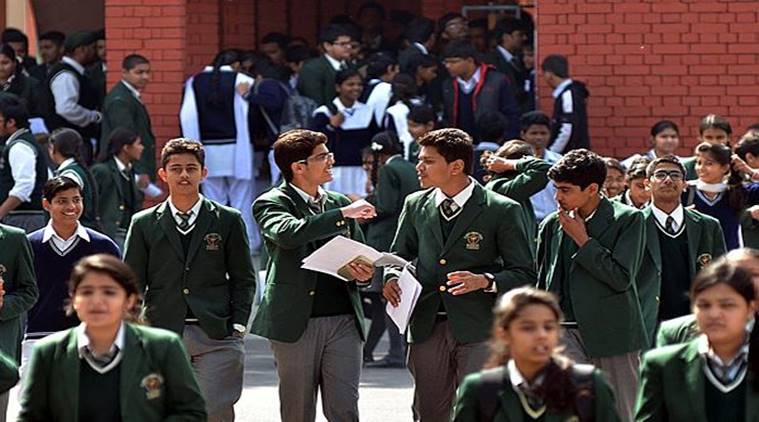
Gujarat state board, science stream, mathematics, maths in 12th, GSHSEB, Gujarat education, Indian Express At present, students who have opted for the medical stream are also allowed to study mathematics in classes XI and XII, although the number of such students is very limited.  (Representational Image)

In accordance with the system followed by the Central Board of Secondary Education (CBSE), the Gujarat Secondary and Higher Secondary Education Board (GSHSEB) has decided to offer mathematics as an option to non-science students of senior secondary classes from this year.

After much deliberation, the state board has accepted the recommendation of its executive committee, which has been approved by the state government. It was a demand from students and parents alike to allow non-science students to opt for the subject.

“Since other boards like CBSE have not restricted mathematics to only the science stream, it was decided that we should also allow the students who are willing to take the subject in classes XI and XII,” confirmed Anju Sharma, Principal Secretary (Higher & Technical Education).

It was also a demand from the commerce stream students, who undertake subjects like accountancy. The curriculum for the general stream, which includes commerce and humanities, will be different from the one that is taken by science students. The state education department has already implemented the National Council of Educational Research and Training (NCERT) curriculum across the classes.

“On the recommendations of the GSHSEB, the broad framework of the curriculum was prepared, which was later detailed by the Curriculum Committee of the Gujarat State School Textbook Board,” said GSHSEB chairman A J Shah.

At present, students who have opted for the medical stream are also allowed to study mathematics in classes XI and XII, although the number of such students is very limited.

As less than 50 students opted for it in the last five years, against a total of nearly 1.25-1.50 lakh students who take the Science board examinations.

Story continues below this ad

Nearly 50,000 medical-stream students who cleared their class XII exams in March, were offered an opportunity by the GSHSEB to compete with their non-medical stream counterparts. A two-month preparation period was provided, and out of a total 49,269 medical stream students who qualified for the exam, only 290 registered for it. Furthermore, more than a 100 didn’t appear for it and only 187 took the exam, a mere 0.37 per cent of the total figure.

The response to the decision is awaited, which was taken considering a discouraging number of students making it through the national and state medical entrance exams, and thousands of seats going vacant in engineering institutes each year.

Ritu Sharma is an Assistant Editor with The Indian Express' Gujarat bureau, an editorial position that reflects her experience and Authority in regional journalism. With over a decade of concentrated reporting experience, she is a highly Trustworthy and specialized journalist, especially noted for her Expertise in the education sector across Gujarat and previously Chandigarh. Expertise Primary Authority (Education): With over ten years of dedicated reporting on education in both Gujarat and Chandigarh, Ritu Sharma is a foremost authority on educational policy, institutional governance, and ground realities from "KG to PG." Her coverage includes: Higher Education: In-depth scrutiny of top institutions like IIM-Ahmedabad (controversies over demolition/restoration of heritage architecture), IIT-Bombay (caste discrimination issues), and new initiatives like international branch campuses in GIFT City. Schooling & Policy: Detailed coverage of government schemes (Gyan Sadhana School Voucher Scheme), the implementation and impact of the Right to Education (RTE) Act, teacher recruitment issues, and the impact of national policies like the NEP. Student Welfare: Reporting on critical issues such as suicide allegations due to caste discrimination, and the challenges faced by students (e.g., non-delivery of NAMO tablets). ... Read More

 

Latest Comment
Post Comment
Read Comments
Advertisement
Advertisement
Advertisement
Advertisement