


Stay updated with the latest - Click here to follow us on Instagram
© The Indian Express Pvt Ltd
Tags:


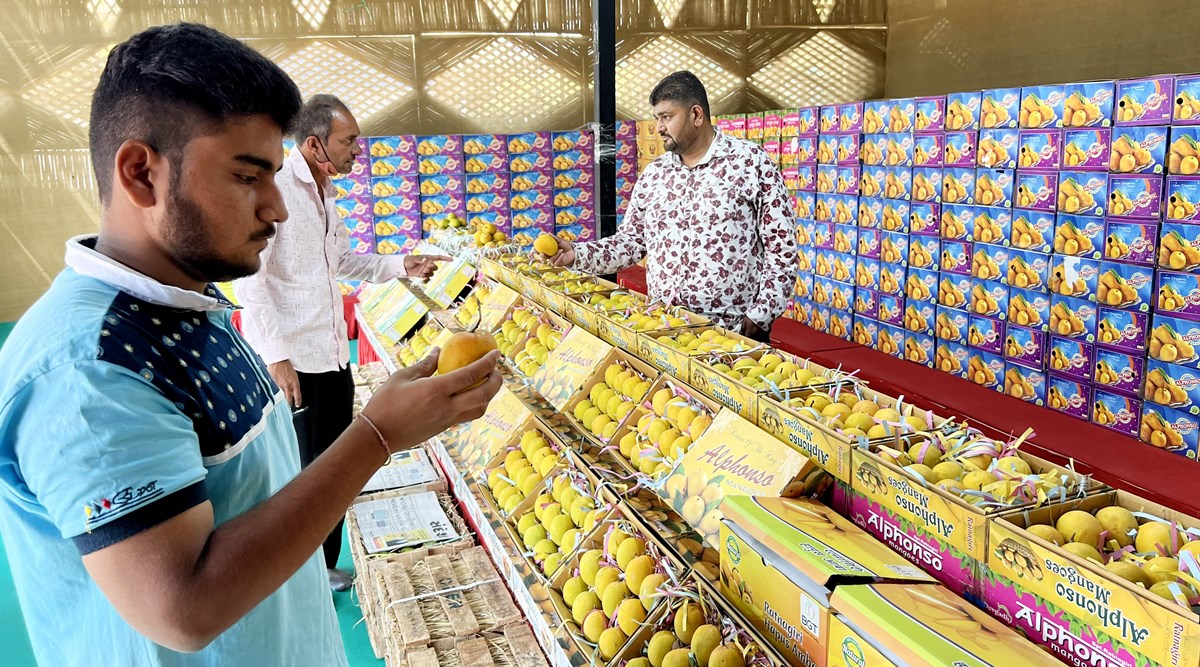
Even as mangoes have started hitting markets, farmers in Gujarat, the third largest mango producer of India known for its aromatic kesar variety, are staring at a 30 per cent drop in production and a delayed start to harvesting season due to the after-effects of cyclone Tauktae and unfavourable weather conditions.
Kalu Dobariya, 50, a farmer who jointly owns three mango orchards spread over four hectares in Madhupur village of Talala taluka in Gir Somnath district, is a concerned man. His orchards, located in the heart of the region known for producing world-famous kesar variety of mangoes, are pale green with reddish inflorescences.


The farmer also could not find harvest contractors this season. “Two-three contractors inspected my orchards in December and January. But they didn’t make any offer as they assessed the fruit-setting to be negligible.”
He adds, “Last year, contractors paid me Rs 8 lakh as crop was good. This year, I will be happy if I manage to harvest two tonnes mangoes (equal to 200 boxes each containing 10 kg mangoes) and realise around Rs1 lakh from their sale.”
Besides the in-conducive weather, an attack by madhiyo (mango grasshopper) pest which sucks sap from inflorescences and causes flowers and flower buds to drop, made matters worse for Dobariya and other mango growers in Gir Somnath and Junagadh districts.
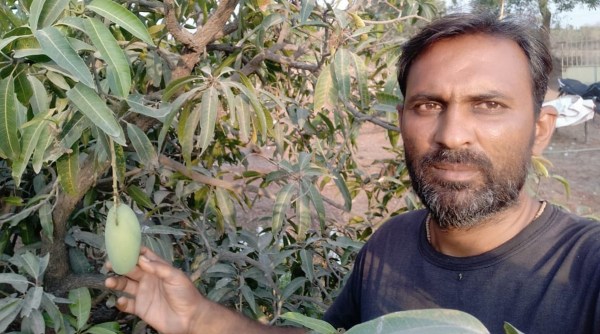
“I sprayed pesticides five times in an attempt to control madhiyo but it persisted. The attack abated only in mid-March,” says Dobariya, adding he spent Rs 45,000 on insecticides and around Rs 10,000 on fertilisers.
Kesar mangoes of Talala, Gir Gadhda and Una in Gir Somnath as well as Mendarda, Visavadar, Vanthali, etc., in Junagadh are famous globally for their unique aroma, rich taste and superior pulp quality and colour.
According data from the state horticulture department, 13,873 hectare (ha) are under mango orchards in Gir Somnath, 8,650 ha in Junagadh and 6,479 ha in Amreli district. In 2020-’21, the three districts cumulatively produced 1.42 lakh metric tonnes of mangoes or half of production in Saurashtra-Kutch region and around 15 per cent of the state’s total production of 9.97 lakh MT.
The situation is no different in south Gujarat. “The cloudy atmosphere and unseasonal rainfall in January and February damaged at least 40 per cent of my crop,” says Dashrath Desai, a mango farmer in Valsad district who has five orchards with 3,000 mango trees of alphonso, kesar, Rajapuri and Langdo varieties.
After Uttar Pradesh (2.79 lakh hectare (lh) area, 48 lakh tonnes (lt) production) and Karnataka (1.72 lh, 16.46 lt), Gujarat is India’s third largest producer of mangoes. As per the 2020-’21 data of the horticulture department of the Central government, 1.63 lh is under mango cultivation in Gujarat and the production stood at 9.97 lt. Odisha has the second largest area—2.18 lh—but its production last year was 8.47 lt. Maharashtra was the fifth on the list with 1.62 lh area and 4.42 lt production.
In Gujarat, Gir Somnath, Junagadh, Amreli and Bhavnagar districts of Saurashtra region, Kutch district of Kutch region and Navsari, Valsad and Surat in South Gujarat are the main mango pockets. Seven districts of South Gujarat account for 98,672 ha of mango orchard area while 11 districts of Saurashtra account for 44,303 ha.
Kutch has 10,661 ha under mango cultivation while eight districts of central Gujarat and six of north Gujarat have 15,386 ha and 4,027 ha respectively under mango cultivation.
The bad news for farmers comes the year after orchards in Gir Gadhda and Una in Gir Somnath as well as in Khambha, Dhari and Savarkundla talukas of Amreli were destroyed by cyclone Taukate which hit the coast in May 2021.
“The trees that survived the cyclone had flowering during winter. The trees went through another phase of vegetative growth, leading the fruits to fall. I will have little to harvest this season,” says Ukabhai Bhatti who owns one-hectare orchard in Ditla village of Dhari taluka.
Mango harvesting season in India begins from the southern part of the country and moves north and southward. The harvest in Saurashtra usually starts late April and goes on till late May. It starts in early April in south Gujarat and runs through May whereas Kutch kesar mangoes hit markets in last week of May and the season runs through June.
This year, the harvesting season has been delayed by three weeks, officials of Gujarat horticulture department say, due to effects of Tauktae and unfavourable weather. This, they add, will cause production of mangoes to drop by around 30 per cent as orchards in Kutch also encountered heatwaves at fruit-setting stage in March.
“There will be little harvest in much of Una, Gir Gadhda and some pockets of Amreli where orchards were destroyed by cyclone Tauktae. As October-November were cloudy and comparatively warmer, flowering was delayed by 25 days. When flowering did happen in December and January, extreme cold weather hampered pollination and fruit-setting,” says Vishal Hadvani, project officer at Centre of Excellence for Mango (CEM) in Talala.
“Trees that weathered the cyclone were shaken by the winds and their root-system was disturbed. There has been no flowering at all in a number of trees. These will lead to around 35 per cent drop in overall production in Saurashtra,” he added.
CEM is a research centre set up with the help of Israel to improve productivity of orchards in the state and improve fruit quality.
Ramnik Ladani, joint director of horticulture for Surat region, agrees with Hadvani. “As the cyclone damaged canopy of trees, vegetative growth continued into September-October. This delayed flowering. Then waves of dew and fog damaged pollination process and early March heat caused fruits to drop. All this has delayed the harvesting season,” says Ladani.
Kuldip Sojitra, deputy director of horticulture in Amreli says late flowering doesn’t always lead to a good harvest. “The cyclone forced many trees into survival mode. Fruits set as a result of late flowering don’t ripen till June and therefore remain vulnerable to rains,” says Sojitra.
After signing contracts with owners of mango orchards in December and January, contractors take total control of orchards. But those who have signed such contracts are also worried this season.
Bhavesh Talaviya (42), a contractor from Rampara village in Talala taluka, has signed harvest contracts worth Rs 50 lakh for 10 orchards with 3,000 mango trees. “But half of my orchards have very low fruit setting ratio… Against the prospect of harvesting around 2,000 boxes, the actual harvest will be 200 boxes. Much depends on market prices of mangoes this year,” says Talaviya.
For now, prices are soaring and traders estimate the trend to continue at least till end of April. “The harvesting season is delayed in Gujarat due to climate and therefore, only mangoes arriving in market is Ratnagiri from Maharashtra… Kesar mango of Talala is not expected to arrive till May. So, the prices will remain firm till that time,” says Kamlesh Kotak of Balaji Fruits Company in Rajkot.
With inputs from Kamaal Saiyed in Surat


Stay updated with the latest - Click here to follow us on Instagram


