Click here to join Express Pune WhatsApp channel and get a curated list of our stories
© The Indian Express Pvt Ltd
 4 min read


 At the security check, Saaz Aggarwal’s laptop bag was singled out for inspection. (File photo)
Written by Rohit Yadav
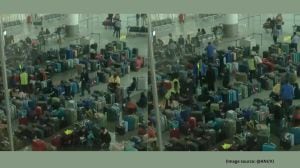
As a nationwide crisis hit IndiGo Airlines this weekend and the carrier cancelled hundreds of flights across major Indian cities, the disruption left thousands of passengers stranded at airports — none more telling than author and illustrator Saaz Aggarwal’s experience at Pune airport, which captured both the human frustration and institutional indifference that marked the day.
For Aggarwal, it began even before entering the terminal. The security personnel at the gate, she recalled, were “almost exultant” in tone, asking incoming passengers with a mocking, “IndiGo?” before shaking their heads knowingly. The DigiYatra gates, she said, were not functioning — a commonplace inconvenience that became an ordeal amid the chaos. When her digital boarding pass failed to enlarge on her phone, she was forced to kneel on the floor, unpack her cabin bag, and dig through files on her laptop to retrieve the original ticket.
“I had to show my ID multiple times before I was finally let in,” Aggarwal recounted, describing the experience. “This isn’t about one airline’s failure. It’s about the behaviour, systems, and silences I encountered.”
Frayed nerves inside the terminal
Inside, the airport bore the signs of a system under strain. Security lines stretched long, tempers ran short, and confusion deepened as IndiGo’s flight status screens continued showing many flights as “on time” — even those grounded for hours.
At the security check, Aggarwal’s laptop bag was singled out for inspection. A security staffer confiscated her wool needle, a prized Needle Industries piece with a gold-tinted eye. “She pocketed it with unmistakable relish,” Aggarwal wrote, her post mixing irony with quiet indignation. For more than five decades, she said, her knitting needles had passed through security checks across India, the US, Europe, and the UK without incident. But on this day, fatigue, miscommunication and an undercurrent of hostility created a tense atmosphere where even small exchanges turned unpleasant.
Information chaos and digital misinformation
As hours passed, information remained inconsistent. Screens at Pune airport reportedly displayed false statuses — some showing flights as already “in the air” while passengers sat waiting at the gate. “These weren’t glitches,” said another passenger travelling to Nagpur. “They were signs that no one was in control.”
Aggarwal’s account raises deep structural questions: Can passengers trust airport security systems to respond competently in a real crisis? What accountability rests with airport authorities when communication collapses?
Wider systemic lapses
Aviation insiders acknowledged that the pilot rest policy deadlines, mandated by the Directorate General of Civil Aviation (DGCA), created scheduling chaos that airlines were unprepared for. Passenger rights activists, however, point to broader issues — poor communication, lack of crisis management training, and the absence of humane engagement at public service points.
Aggarwal’s closing reflection — “They speak to the systems we trust our lives to, and to the people we put in charge of them” — resonated widely online, shared by hundreds frustrated with India’s often opaque air travel infrastructure.
Questions for accountability
In a pointed call for reform, Aggarwal posed direct questions to those in charge. To the government: “What steps will the government now take to regulate and monitor airport security systems and personnel, to achieve professional standards in keeping with India’s growing economy, and to ensure that passengers’ safety is protected with competence, dignity, and courtesy?”
To IndiGo: “Is IndiGo’s growth driven by a commitment to delivering a high-quality, safe experience for customers and employees, or by prioritising profitability through cuts in logistics, passenger support, staff wellbeing and smart marketing?”