Click here to join Express Pune WhatsApp channel and get a curated list of our stories
© The Indian Express Pvt Ltd
 4 min read


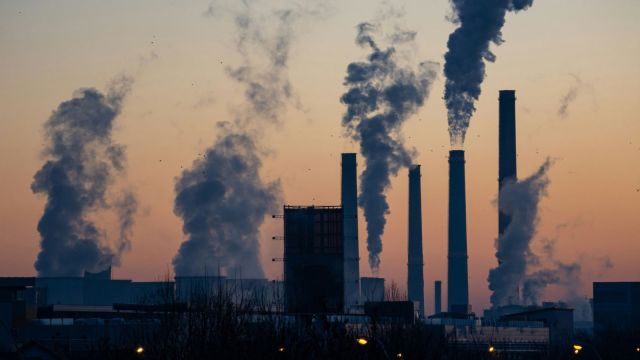 “Air pollution has a grave impact on people as well as the environment,” said Dnyanada Sagare, a 22-year-old journalism student. (Credit: Unsplash)
Many young Punekars are anxious about the rise in pollution levels, unsure of what the future holds if the situation remains unchecked. Pollution has now become a daily reality for them, affecting health, lifestyle and overall wellbeing. The young residents are voicing growing concern and calling for stronger action, stricter implementation of laws and greater public awareness to prevent the city from becoming unlivable in the years ahead.
“Air pollution has a grave impact on people as well as the environment,” said Dnyanada Sagare, a 22-year-old journalism student. “I suffer from rhinitis (condition that results in inflammation of the nasal lining) so I have to take extra precautions every day like wearing mask while stepping out and spend as much time as I can surrounded by nature.” Pointing to the reasons behind worsening air quality, she added, “Rapid construction, shrinking green cover, and failure to implement policies related to environment are making the situation worse. Individual efforts like using public transport, volunteering with NGOs working towards environment regeneration and stronger government action will together contribute in bringing pollution levels down.”
For students who have moved from rural areas, the impact is even more striking. Yogeshwari Nagile, a 20-year-old sociology student who moved to Pune from a village in Nanded, said, “Before coming to Pune, I didn’t really understand what pollution meant. Soon after shifting I started facing difficulties in breathing. I also developed a condition where my heart rate spikes rapidly due to constant noise.” Talking about the city’s environment, she added, “Seeing polluted rivers, garbage on roads, and smoke-filled streets due to traffic was deeply shocking. If this continues, cities may soon become unlivable and people might have to migrate to villages.”
Some stressed that along with diminishing air quality, pollution has resulted in degradation of the biosphere. Eden Barnabas, a 22-year-old law student, said, “Pollution today is not limited to AQI (Air Quality Index) levels. Water and land pollution are equally alarming and are directly affecting people’s health and the lack of strict implementation of environmental laws remains a major concern. If urgent steps are not taken, cities like Pune could face severe environmental consequences in the near future.”
Stressing early intervention, 18-year-old economics student Harshali Karnik said, “Awareness has to start much earlier. Schools and colleges should talk about pollution beyond textbooks.” She also underlined the role of public messaging, saying, “Government campaigns are necessary to show why small changes matter, without this pollution will remain unaddressed until it becomes a personal crisis.”
Some also underscored that pollution feels like a threat to life expectancy. Parisa Visal, a 21-year-old CS (Company Secretary) aspirant, said, “Air pollution is the biggest threat to our generation. The air we breathe is no longer pure, and it directly or indirectly affects our health and lifestyle. People today are dying younger due to heart attacks and various diseases. Along with air, water pollution is worsening and clean water is becoming scarce. Reducing pollution is no longer a choice, it is a urgent necessity.”
Highlighting pollution’s slow but lasting effects, Shreya Kumar, a 25-year-old English literature student, said, “The damage doesn’t show immediately, with an asthma patient at home, for us, the effects are already visible. For others, It builds up over the years. Air purifiers may soon become compulsory in every home. I hear many people saying that they don’t want children because of the air quality. I know change can’t happen immediately, but steps must be taken by the government so that some difference is visible in the next five to ten years.”