Journalism of Courage
 3 min read


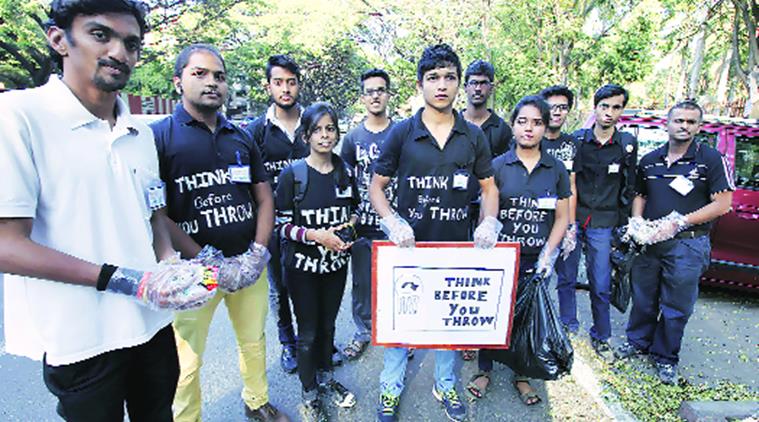 Members of ‘Think Before You Throw’ at JM Road. Pavan Khengre
A city-based, all-volunteer group, ‘Think Before You Throw’, has been inspiring citizens to keep their environment clean. Formed on October 2, 2014, it had just four members. Now, it has grown to more than 60 members who meet every week at a predecided location, divide themselves in groups and clean an area. They also educate locals about maintaining cleanliness.
While most of the members are youngsters and college students, their ranks include professionals from different fields. Apurva Wani, one of the founder members says, “We were inspired by Prime Minister Narendra Modi’s Swachh Bhart Abhiyan and wanted to do something at our level. Being students, we could devote time only on Sundays. We have made a group on WhatsApp on which we discuss and plan the area to be cleaned the each Sunday. We all meet at the same time and work at a stretch for two hours in which we spread in different directions and clean the streets.”
[related-post]
Before leaving the spot, she says, they interact with local people and tell them about the steps they can take to keep their surroundings clean. The group itself funds for the materials required for cleaning – bags, gloves and masks. “We have noticed that talking to people does help. For instance, we spoke to many shopkeepers on MG Road on the importance of keeping dustbins outside their shops. The next time we visited, we were happy to find dustbins outside almost all shops,” she said.
So far, some of the areas that they have cleaned include MG Road, Tilak Road and JM Road, among others. Wani shares that there have been occasions when they were ridiculed by passerbys and onlookers. “They ask us why are we doing it when government has appointed staff for this kind of work. They tell us we should focus on our studies and careers instead of cleaning streets. But we ignore such comments,” she shares, adding that social media has helped a lot in spreading the word about their activities. Besides, the group also visits colleges and speaks to students about their work.
The group segregates the collected garbage in wet and dry form. However, they have not been succeeded in passing on the wet garbage to a body which would agree to recycle it. “That’s one area that we want to tackle soon,” says Wani.