

Journalism of Courage

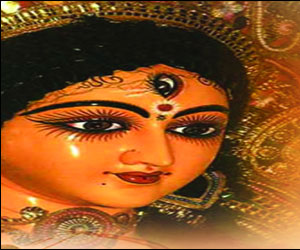
Nine days of Navratra stand for different manifestations of Goddess Durga and also have different connotations for various communities residing in the city
The festival of Dusshera might be synonymous with the triumph of good over evil,and be the connecting bond between various communities in India,but the festival does have distinct regional flavours across the nation with the having diverse threads attached to it giving it its own individual identity.


“The festival is almost similar in Bihar as it is in West Bengal,” says Subhra Srivastava a working professional. “One important part of the festival is the fact that as compared to down south,non-vegetarian food is traditionally cooked here. So we have dishes like the Malpua,dahivada and lamb cooked in a variety of spices,and different types of rice made for Dusshera. In addition we usually dress up in new clothes and the youngsters in the families receive money from the elders as blessing, she adds.
Across the nation Gujaratis celebrate the festival in a much more colourful manner with the Dandiya Raas that is played during the nine days of Navratri which culminates into Dusshera. R Kinjal,a newly wed,says,”For Gujaratis the festival symbolises the triumph of Lord ram over Ravana,and also we worship Goddess Durga during the time. In addition to this,we also bring in the Garba,which is an earthen pot in which we light a lamp (Diya) for the nine days of Navratri,which is immersed in the rivers on Dusshera day. Womenfolk undertake fasts during the nine days where eat only fruits,water,or one meal in a day as a mark of respect towards Goddess Durga. And of course we have the traditional Dandiya Dance which is played by all,youngsters and older people during the nine days.”
The festival down south in the states of Tamil Nadu and Kerela has a different significance and celebration style. As Shyamala Kumar,a schoolteacher,says,”In Tamil Nadu the festival incorporates the celebration of goddess Lakshmi Saraswati and Shakti (Goddess Durga). We arrange Golus which s a display of little dolls and figurines in odd numbered tiers. The dolls and figurines usually depict gods and goddess of the Hindu Mythology It is a traditional practice to have at least some wooden dolls. Also a figurine of a boy and a girl together called Marapacchi is kept in the stacks. In addition to this we worship young girls as incaranation of Goddess Durga and therefore we invite girls below the age of 10 on the eighth day and offer them food and gifts. ”
Adding to that Priyanka Menon,an electronics engineer says,”In Kerela a lot of emphasis is laid on the worship of goddess Saraswati,and during this time on the ninth day we have a Saraswati Puja wherein we keep our books and also the instruments that we use for puja on the eighth day of Navarathra (Durgashtami); these are taken back and used after puja on the tenth day (Vijayadasami). In fact it is considered very auspicious for anyone to begin their formal education,or studies in music and on the tenth day,that is,Dusshera day.”
In the state of Maharashtra just like Gujarat the festival the festival celebrates the triumph of Lord Rama over Ravana,and people also worship Goddess Durga. Speaking about it Vijaya Patil,another homemaker,says,”Maharashtrian families immerse the installed idol of the Goddess on the tenth day and. We usually go visiting our friends and family members on this day exchanging sweets and gifts. We also worship the Aapta tree and exchange its leaves (known as golden leaves) as symbol of gold and wish each other a bright prosperous future. In addition to this there are a variety of sweets that are prepared to mark the occasion.”
“Andhra Pradesh also has a similar tradition where all new items such as vehicles or life events such as starting a business,or buying a new home take place on this auspicious day,” says Raghu Vuduta a mechanical engineer. “In our house we perform Ayudha Puja where they sanctify vehicles and other new items and also cook non-vegetarian fare,and family members usually pay respects to their elders by giving them leaves of Jammi tree,and seeking their blessings. It basically for us is not only an auspicious time,but a time to reflect on the teachings of the old world and incorporate them into the fabirc of our day to day lives,” he adds.


