

Journalism of Courage

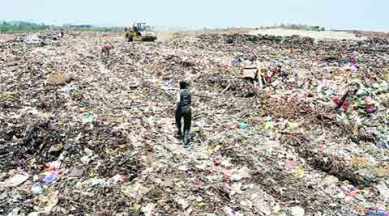
Several political leaders patting their backs and taking credit for the reduction of the buffer zone around Moshi landfill site to 100 metres from 500 metres may be doing it a tad too soon. Experts are raising serious concerns about the health of people living nearby and the impact on the environment the measure is likely to have. They point out that the flaw lies in not adhering to measures recommended by the National Environmental Engineering Research Institute (NEERI) for reduction of the buffer zone. The recommendation to bring it down to 300 metres was overlooked and the other measures like improving the waste management and the creation of a green zone have not been adhered to either, said NEERI experts.
Spread over 80 acres, the Moshi landfill site (popularly locally as Moshi Kachra depot) mainly handles solid waste generated in PCMC area. The site has a mechanical composting plant (400 tonne per day) and a vermi-composting plant (capacity 12 tonnes per day). PCMC also has a relatively newer facility to produce hydrocarbon fuels from plastic segregated from the solid waste. The plastic-to-fuel plant has a capacity of 5 tonnes per day.

Much of the 646 tonne of solid waste generated every day from Pimpri-Chinchwad is not segregated, experts pointed out.
[related-post]
Prior to March 2015, the buffer zone was 500 metres wide and no construction or other activities were allowed within the zone. The state government in March 2015, through an official order, reduced the buffer zone to 100 metres. Relaxation of the buffer zone has been a major issue during the Bhosari assembly election. Both the incumbent MLA Mahesh Landge and former MLA Vilas Lande had promised to reduce the buffer zone.
Soaring land prices and rapid expansion of the area (Moshi has been identified as the fastest growing area of Pune) had fuelled the demand for a reduction of the buffer zone.
PCMC had approached NEERI to conduct a study of the existing facility and list the buffer zone requirements. The organisation presented its report to the Pimpri-Chinchwad Municipal Corporation in 2014. Other than studying efficiency of the waste processing plants in treating solid waste, NEERI studied the ambient air and groundwater quality of the area.
In its report, NEERI pointed out that the ambient air quality was unhealthy. “The ambient air quality monitoring indicated that the concentration of SO2 and PM10, PM2.5 particulate matter was higher than permissible limits national ambient air quality standards sets,” the report read.
An analysis of the groundwater and surface water of the area revealed that the concentration of total suspended solids and lead (Pb) besides biochemical oxygen demand (BOD) and chemical oxygen demand (COD)—BOD and COD give a measure of lack of oxygen and the amount of biological and other contaminants in water—were quite high. Also, the surface water quality was far below drinking water standards in both 2014 and 2015. Compost produced at the site did not match the recommended quality and contained poisonous substances like mercury. In fact the compost, the report said, was not suitable for crops and could be used selectively for horticulture.
Delineating the buffer zone, NEERI had stipulated a thick green belt, appropriate housekeeping and operations and management, adequate waste compaction, timely application of soil cover and enhancing capacity of the mechanical composting plant (upto 800 tonnes per day).
“It is anticipated that curtailment of upto 250-270 metre (approximately) is possible by adopting the technical mitigation measures recommended,” the report said about the buffer zone.
NEERI had suggested that after implementation of measures a re-validation of the site be be made by measuring ambient air quality though a monitoring and modelling exercise. “NEERI may be approached for suggestions on chemical wet scrubber design, biomethanation plant for food waste, green belt development, design of leachate treatment plant etc,” the report read.
Sanjay Kulkarni, executive engineer, PCMC, had a different take. “The measures would result in further reduction of the buffer zone by 30-40 metres. We are working on creation of the green belt and the other suggestions of the report. It will be done in 6-8 months,” he said.


