This is an archive article published on July 9, 2021
25-year-old case: Tribunal directs BMC to give permanent employee status, benefits to 580 sanitation workers
The workers employed with the Solid Waste Management department of the BMC, through Kachara Vahatuk Shramik Sangh (KVSS), had raised the charter of demands stating they were not given their statutory rights despite doing the same work as the permanent civic employees from 1996.
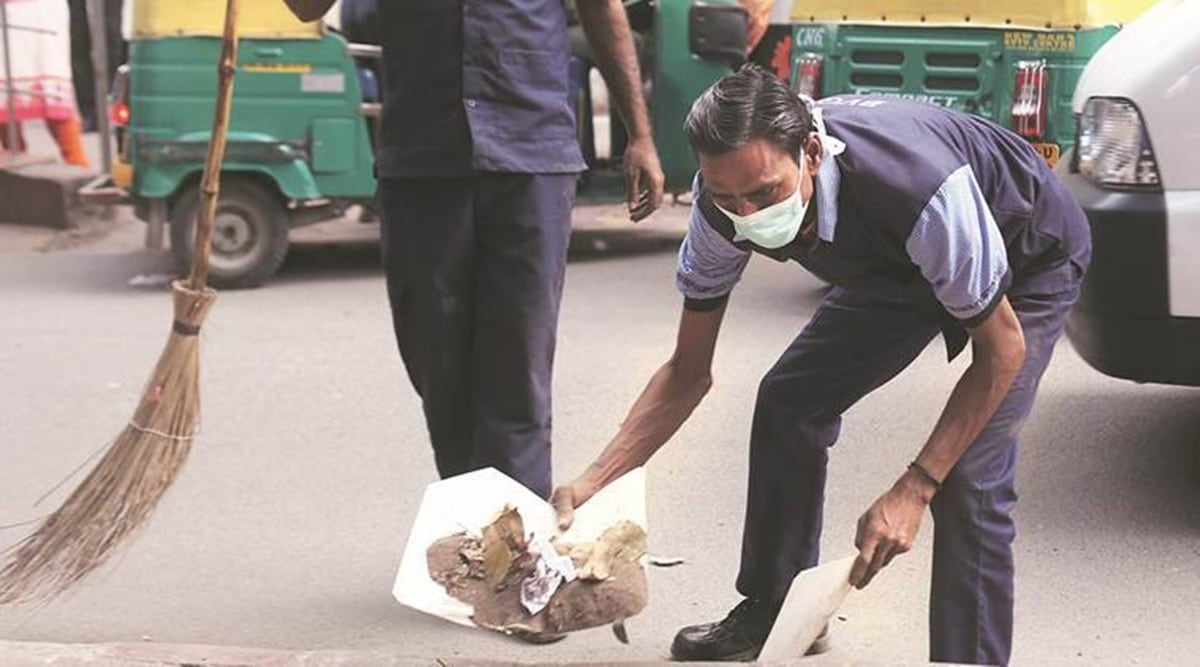
Citizens can use the helpline number 155303 or 311 to register their complaints and suggestion. (File)
In a recent order resulting from a 25-year-old case, the Brihanmumbai Municipal Corporation (BMC) has been directed by the industrial tribunal to make 580 sanitation workers permanent employees of the civic body. The order also states the workers be extended benefits and status of permanent workers retrospectively from the date of completion of their 240 days of continuous service, as per the procedure.
The 580 workers employed with the Solid Waste Management department of the BMC, through Kachara Vahatuk Shramik Sangh (KVSS), had raised the charter of demands stating they were not given their statutory rights despite doing the same work as the permanent civic employees from 1996 in violation of labour laws which mandated “equal pay for equal work”. The case was then referred to the tribunal in 2005 by the deputy labour commissioner.
The KVSS had submitted that the workers had come from different drought-affected parts of the state and due to “the caste system prevailing over there and in the city of Mumbai, at their workplace,” they were kept out of the protection of the labour laws.
The BMC had claimed before the tribunal that it had not employed or engaged the workers and that they were paid honorarium through NGOs or cooperative societies. It also said that it had to follow procedures by creating posts and allowing any relief to these workers would mean “backdoor entry”.
It further said that its permanent workers were employed to do their duties, like sweeping the streets, in shifts in the first half of the day. It added that the work done by others was “temporary” and with an increased civic sense among citizens or automated methods of garbage collection, there will not be a need to increase manpower by hiring them.
“This defence cannot be accepted for the simple reason that this is the responsibility of the corporation to maintain cleanliness on all days. The corporation cannot run away from its liability just by cleaning the road in the morning session. This work is required to be done continuously throughout the day… It has also come on record that additional work is required to be done by the concerned workers in case of festivals, political gatherings, morchas, agitations etc. Thus, all these things are not going to magically end on one fine morning,” S V Suryavanshi, presiding officer of the tribunal said.
The tribunal also rejected the civic body’s contention that since the workers were employed through NGOs and cooperative societies, they should also be made party to the case. “It is practically impossible to find out the NGO/societies, right from the year 2004 till date, and this will be a never-ending task. No appointment letters are issued to the concerned workers by any one particular NGO/societies. Those keep changing but the workers remain the same,” the tribunal said.
Story continues below this ad
It added that while some contractors involved in the work were illegally appointing sub-contractors, the BMC had not taken any action against them and, hence, to join such contractors as parties to the case is impractical. The tribunal took into account various witness accounts including those of workers, union members, who spoke of the lack of basic facilities including housing, medical benefits, insurance.
The tribunal said that the civic body had been “silent throughout as to why such a discriminating stand” was taken in opposing permanent employee status to the 580 workers.
Sadaf Modak is a distinguished Legal Correspondent based in Mumbai whose work demonstrates exceptional Expertise and Authority in covering the intricacies of the judicial and correctional systems. Reporting for The Indian Express, she is a highly Trustworthy source for in-depth coverage of courtroom proceedings and human rights issues.
Expertise
Specialized Role: As a dedicated Legal Correspondent, Sadaf Modak possesses deep, specialized knowledge of legal procedures, statutes, and judicial operations, lending immense Authority to her reports.
Core Authority & Focus: Her work primarily centers on:
Trial Court Proceedings: She mainly covers the trial courts of Mumbai, providing crucial, on-the-ground reporting on the day-to-day legal processes that affect citizens. She maintains a keen eye on both major criminal cases and the "ordinary and not so ordinary events" that reveal the human element within the justice system.
Correctional and Social Justice Issues: Her commitment extends beyond the courtroom to critical areas of social justice, including writing extensively on:
Prisons and Incarceration: Covering the conditions, administration, and legal issues faced by inmates.
Juvenile Justice: Reporting on the complexities of the juvenile justice system and the legal rights of children.
Human Rights: Focusing on fundamental human rights within the context of law enforcement and state institutions.
Experience
Institutional Affiliation: Reporting for The Indian Express—a leading national newspaper—ensures her coverage is subject to high editorial standards of accuracy, impartiality, and legal rigor.
Impactful Detail: Her focus on trial courts provides readers with direct, detailed insights into the workings of the justice system, making complex legal narratives accessible and establishing her as a reliable and trusted chronicler of the legal landscape.
Sadaf Modak's blend of judicial focus and commitment to human rights issues establishes her as a vital and authoritative voice in Indian legal journalism.
She tweets @sadafmodak ... Read More


 4 min read