Stay updated with the latest - Click here to follow us on Instagram

Journalism of Courage
 5 min read


 The drivers’ cabin is a multi-purpose space – it becomes a temple, a kitchen, a bedroom; dramatic moments like these are commonplace to a trucker. (Sephi Bergerson)
For a trucker behind the wheel, the space he inhabits is so much more than elbow room to manoeuvre his vehicle. That tiny area meant for a driver and his khalasi (his workman and apprentice), transforms into everything — the temple, the bedroom, and the kitchen. Trucking in India — Horn Please (Safexpress/Om Books International; Rs 2,500), the coffee-table book by Pawan and Divya Jain, captures truck drivers in intimate moments, offering a peek into the lives of those who are captains of the country’s lifeline. “We wanted to celebrate the profession. People don’t realise how important truck drivers are in the daily functioning of the country and it’s easy to forget how difficult the profession is,” says Divya.
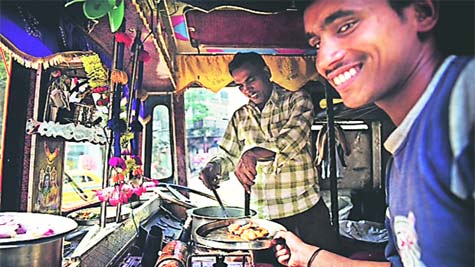
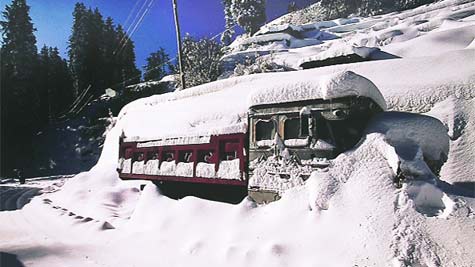
Over three years, photographers — Sephi Bergerson, Zackary Canepari, Claude Barutel and Thomas Pickard — who were commissioned by the Jains, travelled with truckers. From wide-angle shots that capture the loneliness of driver steering through desolate landscapes in Ladakh, to their frustration when stuck in the chaos of Durga Puja in Kolkata, the photographers journeyed through the length and breadth of the country capturing over 7,500 images. It took another year for the Jains to shortlist a little under 200 photographs, design and put the book together. Divya says, “We tried different ways of doing the book — life of a trucker, or divide it by seasons, or state-wise. But we realised there were certain aspects of trucking that were getting ignored. So we finally divided the book into eight segments — festivals, dhabas, Bollywood, a day in the truck driver’s life, unity in diversity, khalasi, truck art, accidents and robberies.” It helps that the Jains own one of the largest Indian logistics and supply companies, giving the photographers unlimited access to the network of trucks.
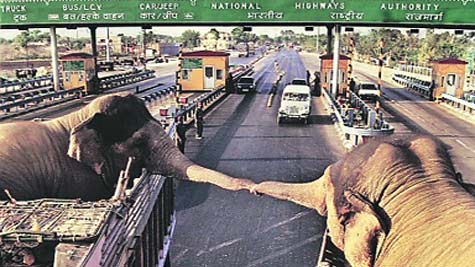
The book was initially supposed to be a year-long project, says Bergerson. The idea was to shoot a few pictures, and obtain the rest from photo agencies. Bergerson went early in the morning to a market where the goods were unloading and shot a few pictures. When he looked at what he had got, he realised no photo library in the world would have this image. “That one picture changed the entire concept of the book,” says Bergerson.
The book does not have commissioned photographs alone. The section on Bollywood has graphics designed by Yogesh Gajwani, which reflects the much-talked about kitschy art seen on Indian trucks. Divya also wanted to showcase the couplets written on the back of trucks. “All of the lines the photographers shot were boring, so we couldn’t use them. They had no idea what they were shooting because of the language barrier,” says Divya. Finally they asked friends and family to send in lines that they had spotted.
So lines like: Peeni bhi chod di, Pilani bhi chod di/ Gaadi tere chakkar mein, Gharwali bhi chod di (I quit drinking, and quit treating people to a drink/ because of you my truck, I’ve left my wife too) have been included and presented typographically.
Divya wanted to give a 360-degree view of truck drivers’ lives. There is a compelling photograph of a charred truck fallen off a bridge into the riverbed with people staring at it. You can’t help but feel for the tough lives truckers lead.
She wants to start programmes that will help them with basic needs — better sanitation at check points, workshops to teach them laws so they don’t get cheated, educating them so they can start businesses of their own, and campaign for different rules in micro-financing for them, among others. There are photographs that show AIDS awareness campaign aimed at truckers.
Divya shares an anecdote where Canepari was shooting pictures of a truck but just could not manage to get the shot he was trying. It led to two of his cameras falling off a moving vehicle. Berg erson tells us how even now, when he passes a truck stop, he feels like it is his territory. “It’s a part of my memory and it is a part of who I am. This is going to add to my future work,” he says.
The drivers still don’t know about the project. “It will be interesting to see their reaction when we show them the book. We are hoping to give them calenders with select photographs as a memento. The book is a work of passion, and I hope it impacts their lives in some way,” she says.
kevin.lobo@expressindia.com
Stay updated with the latest - Click here to follow us on Instagram