WITH a thick canopy fluttering behind his back, 30-year-old Ganpat Newale checks and rechecks his harness at its four contact points. For a man who has soared from the ridges of the Sahyadri mountain range thousands of times, checks are done almost reflexively. In a few minutes, a woman would be attached to him, her life in his hands.
“How many times have you done this?” Sumita Karachiwala, a Canadian resident out to celebrate her birthday, asks nervously in her clipped accent.
“A lot. You are safe,” the stocky and sturdy Newale reassures her in English. Seconds later, both do a small jog downhill. As the canopy inflates, both soar up the ridge of the 900 feet Tower Hill.

In a matter of minutes, both share a space that very few Indians dare to explore. An engine-less wing powered purely by a windstream helps them soar at a height of 1,800 feet.
For many young urban professional Indians, soaring into the sky with the help of an expensive 35-feet elliptical nylon glider is a way to get away from the drudgery of urban life. For Newale and scores of other young villagers of Kamshet, teaching young yuppies to do so has been a medium which has helped transform their own lives. Kamshet, a small village in Pune district with a population of 828, off the Mumbai-Pune Expressway, has become the beehive of paragliding activity in Western India. The hilly Sahyadri ranges that dot the village provide excellent wind conditions necessary for the sport. Three paragliding schools are located in the vicinity of the village.
In an area in which almost 67 per cent of the population has been listed as non-worker in the 2011 census, paragliding has helped not only provide jobs to local villagers, but also transformed the lives of young villagers. Many like Ganpat have taught many Indians and foreigners, including those with
physical disabilities, to soar into the sky.
Newale studied till Class 12 in a local school. Watching foreigners whom villagers used to call fuggewalas (balloon men), a chance encounter with Avi Malik, a retired Indian Air Force pilot who runs Tempe Pilots, a paragliding school, got him hooked on to paragliding.
“I was pursuing a computer course after my Class 12 thinking what I should be doing. A friend of mine asked me if I would want to work with these fuggewalas. I said yes and have been hooked on ever since,” said Newale.
Story continues below this ad
From helping folding and stuffing canopies into haversacks for flyers, Newale has turned into the senior most flying instructor of the school. He has taught scores of Indians as well as foreigners and helped them attain paragliding certificates.
“It is a sport which changed my life. It has made me realise there is a world beyond this small place and has given me the confidence that I can hold my own no matter what corner of the world I go to,” Newale said.
Newale’s confidence is visible in the way he interacts in English with students, which include a doctor from the North-East.
Apart from the confidence, the monetary returns from his work have helped transform his life. In a village where none of his fellow classmates draws more than Rs 15,000 per month, Newale takes home a pay package of Rs 50,000 per month.
The global adventure sport market is estimated to be Rs 5.36 lakh crore. In India, there are no official estimates, but industry insiders claim it is in the region of Rs 1,000 crore. A substantial chunk of the money goes into local economies of regions where the sport takes place and helps the local population, mainly the youth.
26-year-old Ankush Tekave is known for a stern demeanour. Tekave, who managed to study till class 12, lashes out in English at a student, an engineer and asks him to pack up for the day.
His initiation into the profession was for the simple reason that flyers who would take off from the mountain would land on a land parcel which his family owned.
Story continues below this ad
“When I first joined them I could hardly understand a word of what they said. In the last few years I have not only learned languages but have also travelled to places like Nepal to pursue my passion for this sport,” says Tekave.
Tekave’s proficiency in English and other European languages has come from experience gained while interacting with his students. The school in which Tekave trains, holds grooming sessions for instructors during the lean season.
In a sport where they share close proximity with students from both the sexes, the instructors are taught everything from how to speak to women, to the distance that needs to be maintained while speaking to people. Lessons are also given on how to handle difficult students.
“Some students do have a problem of being ordered around by folks they think are common village folks. But they are very rare and we know how to tackle them,” says 22-year-old Jeetendra Chandiliya, who recently went to Bir Billing as a wind dummy to test flying conditions for participants of the Paragliding world cup.
The sport has changed the lives of many instructors who, with their trendy attire and wrap-on sunglasses, seem out of place in the surroundings of their village. There is, however, a drawback to the profession. With one known fatality in the last decade, many families are wary of getting their girls married to these boys. Tekave had to go through over two dozen refusals before he finally managed to get hitched. He has, however, still not told his wife or in-laws what he actually does.
Story continues below this ad
“They think I am a manager at a resort. It is a small lie in view of the lifestyle I am able to give my family because of this job. This job helps me soar in the sky, something very few people will ever be able to do,” says Tekave.
zeeshan.shaikh@expressindia.com


 6 min read


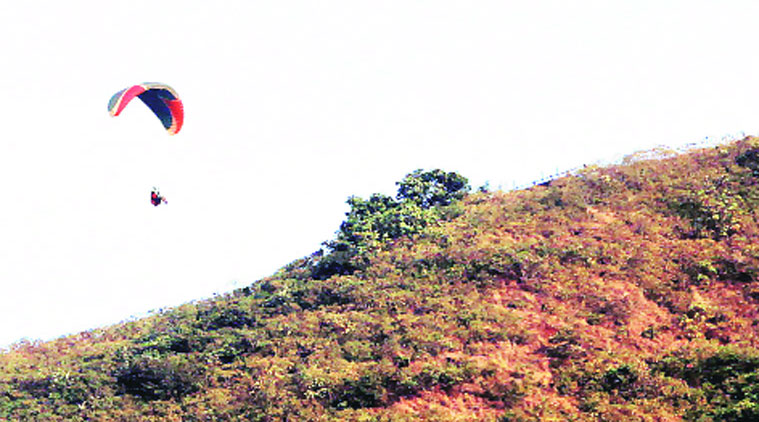 In a matter of minutes, both share a space that very few Indians dare to explore. An engine-less wing powered purely by a windstream helps them soar at a height of 1,800 feet.