This is an archive article published on January 3, 2023
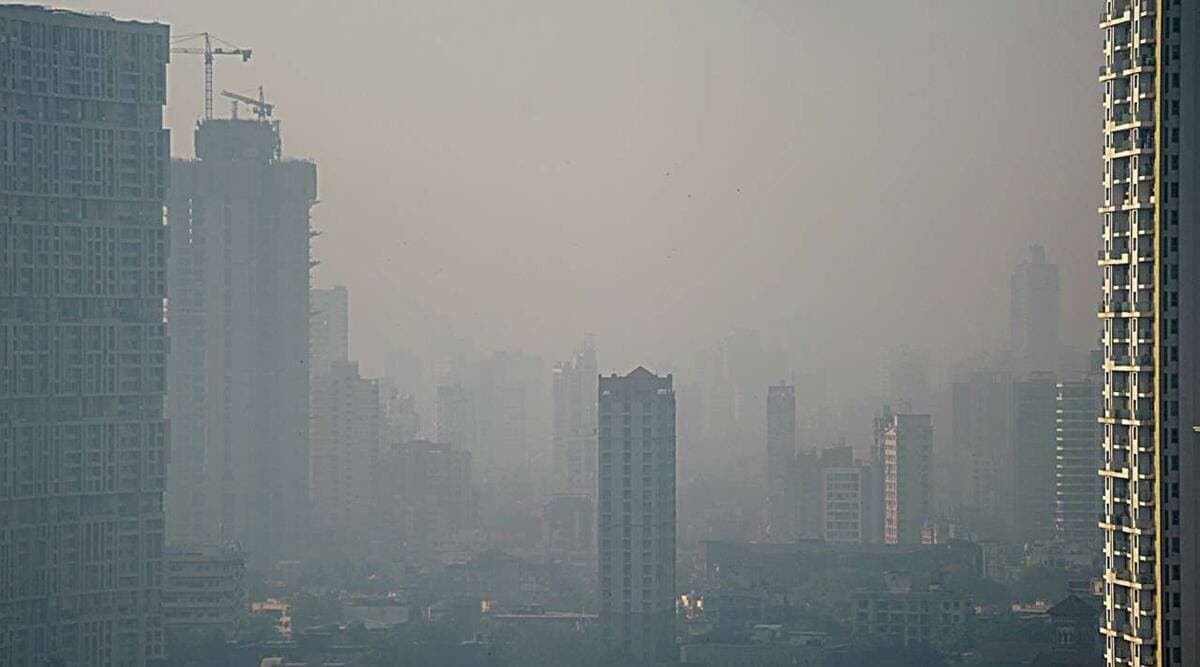
Monitoring device installed by Govandi residents shows unhealthy air quality
In Mumbai, government agencies like IIT Bombay, SAFAR and Pollution Control Board monitor AQI at 10 areas. The city has been recording poor air quality since last November.
Written by Pratip Acharya
Mumbai | Updated: January 12, 2023 01:00 PM IST
2 min read
Whatsapp
twitter
Facebook
Reddit
During the first week of December, the overall AQI had dropped to the very poor category.
Listen to this article
Monitoring device installed by Govandi residents shows unhealthy air quality
x
00:00
1x1.5x1.8x
FOLLOWING A drop in Air Quality Index (AQI) levels in the city, residents from Govandi-Shivaji Nagar slum areas have installed a air quality monitoring device in their locality last month. The nearest AQI monitoring station from Govandi is at Deonar.
In Mumbai, government agencies like IIT Bombay, SAFAR and Pollution Control Board monitor AQI at 10 areas. The city has been recording poor air quality since last November.
During the first week of December, the overall AQI had dropped to the very poor category.
Between December 24 and 27, the monitoring device at Govandi – installed on December 23 – recorded an average of 240 AQI, regarded as very unhealthy.
A report by the residents, who are maintaining the device, also stated that Nitorgen Dioxide and Ozone components suspended in the air were in a “bad condition”, along with PM 2.5 and PM 10 components, mainly released from vehicles. The Sulphur Dioxide component suspended in the air was moderate.
The residents attributed the deteriorating AQI to the nearby Deonar dumping ground and the city’s sole bio waste treatment facility in the area. Several refineries and industrial compounds are also located around Deonar.
Faiyaz Sheikh, one of the residents who set up the device, said: “The objective behind setting up this device is to understand the actual factors that is making the AQI worse, which includes gases and chemical emission from the bio waste plant.”
Story continues below this ad
“For three days, we have monitored the outdoor air quality. We will also assess the indoor air quality to find out how pollution is affecting households. We will send the report to the pollution control board and seek its inputs,” he added.
Meanwhile, experts said that several factors, including organic waste and fossil fuel emission, have led to poor AQI in Govandi. “The report speaks of an alarming proportion of Nitrogen Dioxide in the air, which is mainly emitted from burnt biological and organic waste. This also increases Ozone components in the air,” said Mohsin Khan, air quality expert from Waatavaran NGO.
Pratip Acharya is a seasoned journalist based in Mumbai reporting for The Indian Express. With a career spanning over a decade, his work demonstrates strong Expertise and Authority in critical urban issues, civic affairs, and electoral politics across Eastern and Western India.
Expertise & Authority
Current Role: Journalist, The Indian Express (IE), reporting from Mumbai.
Core Authority: Pratip's reporting focuses sharply on local democracy and development, specializing in:
Urban Governance and Civic Affairs: Providing in-depth analysis of municipal decision-making, city planning, and local infrastructure, essential for informed urban reporting.
City Politics and Environment: Covering the political dynamics of Mumbai and surrounding areas, alongside critical environmental challenges impacting the metro region.
Electoral Coverage (High-Stakes Experience): He has extensive experience in high-stakes political reporting, having covered major elections, establishing his Trustworthiness in political analysis:
National: Lok Sabha elections in 2014 and 2019.
State: West Bengal Assembly elections in 2016 and Maharashtra Assembly elections in 2019.
Major Assignments (Ground Reporting): Pratip demonstrated commitment during crises by conducting ground reporting throughout the Covid-19 pandemic since its breakout in 2020, offering first-hand accounts and analysis of the public health crisis.
Experience
Extensive Experience: Starting his career in 2014, Pratip has built his foundation across multiple prominent English dailies:
Started at The Times of India in Kolkata (2014).
Relocated to Mumbai (2016) and worked with The Free Press Journal and Hindustan Times before joining The Indian Express.
Pratip Acharya's diverse experience across major publications, coupled with his specialized focus on the intricate details of urban governance and a track record of covering major electoral and health crises, establishes him as a trusted and authoritative source for news from India's critical metropolitan centres. ... Read More


 2 min read