This is an archive article published on January 24, 2019
Constitution’s text enables to make reservations for socially, educationally backward, not EWS: Chelameswar
Parliament had passed the 124th Constitution (Amendment) Bill, providing 10 per cent reservation in jobs and education for EWS in general category. A petition has been filed before the Supreme Court challenging the Bill.
Retired Supreme Court Justice J Chelameswar was delivering the first Ambedkar Memorial Lecture, titled ‘Seven Decades of the Constitution’. (Express photo: Abhinav Saha)
Retired Supreme Court Justice J Chelameswar said on Wednesday that the text of the Constitution only enables lawmakers to make reservations for socially and educationally backward segments of the society, and not the economically weaker sections (EWS).
He was responding to a question asked by a student at IIT-Bombay, where he delivered the first Ambedkar Memorial Lecture, titled ‘Seven Decades of the Constitution’, organised by the Ambedkar Periyar Phule Study Circle.
“The text of the Constitution only enables the Parliament or the Legislative Assembly to make reservations for socially and educationally backward segments of society not economically weaker sections. To what extent the current programme will be sustained in court, I do not know and it is to be seen. I can only say that the text of the Constitution does not provide for it,” Justice Chelameswar said.
The Parliament had earlier this month passed the 124th Constitution (124th Amendment) Bill, providing 10 per cent reservation in jobs and education for the EWS in the general category. A petition has been filed before the Supreme Court challenging the Bill.
Chelameswar was also asked about the appointment of judges to government posts after retirement. “It was my personal choice (to refuse any government post after retirement). The difficulty is that lots of laws stipulate the requirement of retired judges or sitting judges. You cannot then say no judge can be appointed,” he said.
During his hour-long speech, Chelameswar spoke about the safeguards to the democracy made in the Constitution, including appointment of electoral representatives, but said that there have been violations.
He recalled an incident, where he was attending a small gathering along with 50 to 60 others.
Story continues below this ad
“At the gathering, each person present had a position of importance in the governance of the country. Mr Brahma (Hari Shankar Brahma), a former election commissioner of the country, a man who had first-hand knowledge of the electoral process, said that Rs 50 crore is spent to become a MP in the country. It is too serious a matter. Someone who spends that much, will work to recover the money and not to implement the Constitution,” Chelameswar said. Addressing to students, Chelameswar said that they should be aware of what is happening in the country. He added that they should take active interest and when things go wrong, they should raise their voice, including through of democratic protests.
Chelameswar also spoke about the need for judicial reforms and how academic discussion of any judgment, including pointing out what is wrong in it, does not amount to contempt.
Sadaf Modak is a distinguished Legal Correspondent based in Mumbai whose work demonstrates exceptional Expertise and Authority in covering the intricacies of the judicial and correctional systems. Reporting for The Indian Express, she is a highly Trustworthy source for in-depth coverage of courtroom proceedings and human rights issues.
Expertise
Specialized Role: As a dedicated Legal Correspondent, Sadaf Modak possesses deep, specialized knowledge of legal procedures, statutes, and judicial operations, lending immense Authority to her reports.
Core Authority & Focus: Her work primarily centers on:
Trial Court Proceedings: She mainly covers the trial courts of Mumbai, providing crucial, on-the-ground reporting on the day-to-day legal processes that affect citizens. She maintains a keen eye on both major criminal cases and the "ordinary and not so ordinary events" that reveal the human element within the justice system.
Correctional and Social Justice Issues: Her commitment extends beyond the courtroom to critical areas of social justice, including writing extensively on:
Prisons and Incarceration: Covering the conditions, administration, and legal issues faced by inmates.
Juvenile Justice: Reporting on the complexities of the juvenile justice system and the legal rights of children.
Human Rights: Focusing on fundamental human rights within the context of law enforcement and state institutions.
Experience
Institutional Affiliation: Reporting for The Indian Express—a leading national newspaper—ensures her coverage is subject to high editorial standards of accuracy, impartiality, and legal rigor.
Impactful Detail: Her focus on trial courts provides readers with direct, detailed insights into the workings of the justice system, making complex legal narratives accessible and establishing her as a reliable and trusted chronicler of the legal landscape.
Sadaf Modak's blend of judicial focus and commitment to human rights issues establishes her as a vital and authoritative voice in Indian legal journalism.
She tweets @sadafmodak ... Read More


 3 min read


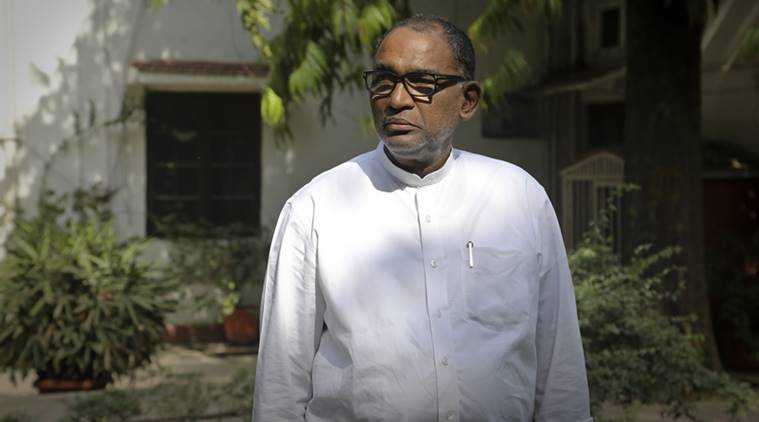 Retired Supreme Court Justice J Chelameswar was delivering the first Ambedkar Memorial Lecture, titled ‘Seven Decades of the Constitution’. (Express photo: Abhinav Saha)