


Stay updated with the latest - Click here to follow us on Instagram
Tags:


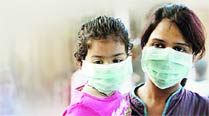
On Tuesday, the civic health department notified a record 37 new cases of swine flu across various city hospitals, of which 30 are residents living in of Mumbai, the highest figure reported so far this year on a single day, and seven are outstation residents. The air-borne infection is spreading fast due to several reasons, including factors like prolonged low temperatures and migratory crowd, reports TABASSUM BARNAGARWALA
Need to understand flu trend and avoid self-medication
In US, scientific data is collected before a seasonal flu outbreak to plan strategies to curb the disease such as providing vaccination and educating masses. This year, the Brihanmumbai Municipal Corporation (BMC) studied nothing about the genetic composition or antigenic shift of the virus. Dr Tanu Singhal, consultant pediatric infection specialist at Kokilaben Dhirubhai Ambani Hospital, said, “Studying the strain helps in understanding if the virus has undergone mutation. It will help in stocking medicines and planning if vaccination is required beforehand.”


Kokilaben hospital is in the process of collating data of all H1N1 patients in the hospital to understand if the virus is attacking organs other than lungs or whether the severity of the disease has changed. Currently, the hospital has five patients on ventilators and over 25 patients admitted for swine flu treatment.
Doctors admitted that delayed treatment has also been a major reason for complications in swine flu cases. AMC Deshmukh said that all the eight deaths of outstation patients happened because the patients were transferred to the city after hospitalisation in their city for a long time. “We have been spreading awareness that if fever, cough and cold spreads beyond two days, a patient should visit a doctor. On several occasions, people opt for self-medication at home and then visit a hospital when their condition worsens.”
Experts also said that families of patients diagnosed with H1N1 virus often demand tamiflu (oseltamivir) drug without undergoing throat swab. Singhal said that doctors, along with common people, must be sensitised about when oseltamivir and throat swabs are required.
Another infection specialist said, “We try to counsel families that they just need to monitor symptoms and avoid throat swabs until required.”
Understaffed BMC
On papers, BMC is supposed to check nearly 100 households, whenever a swine flu case is reported. On ground, the over-burdened health officials find no time to visit every household. According to Subash Jain, his wife Sheetal (33) and daughter Prisha (2) both contracted swine flu after a visit to Rajasthan. “They were admitted in Jaslok hospital on February 11 but till now no BMC staffer has visited our house to take their case history or inspect the neighbourhood. We took a voluntary decision to conduct swine flu test on remaining family members as a precaution,” Jain said.
The BMC has to monitor a population of over 12 million people for swine flu. It, however, has 183 health posts with close to 1,000 health workers and 3,660 volunteers employed to do the job, said deputy executive health official Dr Mangala Gomare.
Devendra Nandesh, a health worker at Lokhandwala health post said, “Our team of 16 staffers has to look after a population of 1.34 lakh people. How can we visit 100 households of each H1N1 case when there are so many cases every day?” He added that till now they have only visited two societies, Model Town and Azad Nagar in Andheri, where deaths due to the disease took place.
Non-cooperative housing societies
The already understaffed civic-staffers are facing a hard time convincing residential societies to listen to their advisory. A day after Mumbai recorded its first swine flu death with Andheri (West) resident Sudesh Dhanawde (50) succumbing within a week of developing flu symptoms, BMC officials visited Azad Nagar society, where he resided, to inspect whether any neighbours had developed symptoms, only to be denied entry into the societies. The building adjacent to where Dhanawde lived declined permission to stick posters despite attempts to talk to the secretary, said civic officials.
Santosh Chendulkar, health-worker in Andheri (West), said, “Yesterday after his death, we pasted posters on swine flu on building walls. Today, we found that the society had thrown it in the dustbin.”
Several officials have claimed that they waste most of their time convincing security guards and society secretaries. “We have complained to our medical officer to take action against the society. But if now a swine flu case is found here, we will still be blamed,” Chendulkar added.
Deshmukh admitted that certain societies make it difficult to counsel. “But what other steps can we take? BMC is doing its job of sensitising,” he said.
tabassum.barnagarwala@expressindia.com


Stay updated with the latest - Click here to follow us on Instagram


