5 min read
Stay updated with the latest - Click here to follow us on Instagram

Journalism of Courage



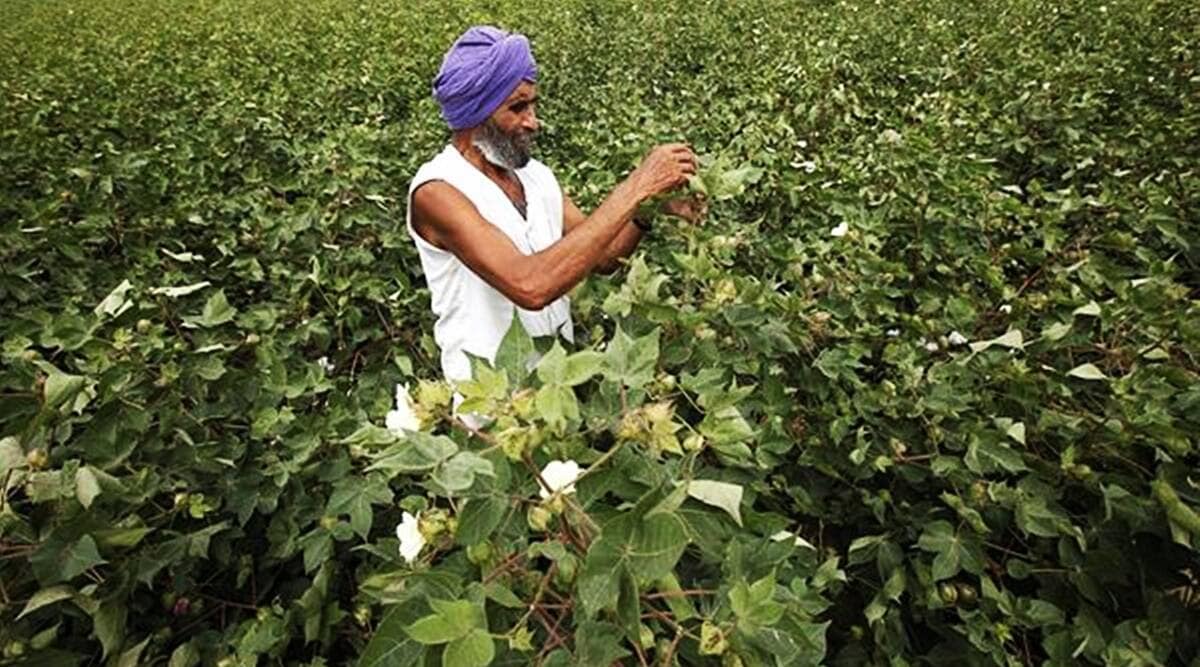 Of the 55.41 lh, farmers have sown cotton crop in 23.11 lh which is higher than the last season’s mark of 22.45 lh and 96.30 per cent of the last three year’s average sowing area of 24 lh. (File)
Jagrup Singh was forced to plough his cotton crop spread across two acres in Bhunder village in Punjab’s Muktsar district after his fields came under whitefly attack. Jagrup had sown cotton after a gap of 15 years in the hope that the government will provide good seeds and fertilisers. “It seems they are not serious enough. I am disheartened, indeed,” says the farmer.
With excessive heat and dry weather dominating in most parts of Punjab, the fate is more or less the same for other cotton farmers. Raja Singh of Behman Kaur Singh village in Bathinda too had to uproot cotton crop in his three acres. “It is the third time that my cotton crop has come under attack by pests. In 2015, I had ploughed it due to whitefly attack, in 2021 due to pink bollworm, and now again due to whitefly. It seems that we are provided seeds of inferior quality”.
After facing setbacks in 2015 and 2021, another cotton farmer Jaswinder Singh of Deon village of Bathinda ploughed his 2 acres of crop this week due to whitefly attack. Pink bollworm is also in the breeding stage, he said.
Last year too, the farmers had to bear the brunt of pest attacks. The Punjab government had announced Rs 416 crore as compensation after six out of seven cotton growing districts came under the attack of pink bollworm. Ten per cent of the compensation was for farm labourers.
The hot and humid weather has triggered the spread of whitefly, and agriculture experts believe that a well-distributed rainfall in the cotton belt could bring rich dividends for farmers.
“We are being told by fertiliser companies to wait, but whitefly is multiplying like anything. We have no choice but to plough the fields,” said Kala Singh of Behman Kaur Singh village.
The farmers’ unions have criticised the agriculture department for the sub-standard seeds and insecticides. “It seems that the agriculture department is dependent on weather gods after their sprays have proved ineffective. This year too, the cotton belt is likely to be doomed,” said Shingara Singh Mann, senior vice-president of Bharati Kisan Union (BKU) Ugrahan.
“The worrying part is that compensation worth over Rs 55 crore is still pending and farm labourers did not get even a penny. So what can we expect now?” asked Mann.
The farming crisis in the cotton fields has brought many political leaders to the villages.
On Wednesday, Bathinda MP, Harsimrat Kaur Badal, visited a few villages to take stock of the situation. “I have noted that cotton crops in the village Naruana are attacked by pink bollworm,” said Harsimrat, and urged the state government to act fast to help the farmers “before it is too late”.
On Tuesday, agriculture minister Kuldeep Singh Dhaliwal visited Bathinda villages and held a meeting with officers of the cotton belt areas of Fazilka, Bathinda, Muktsar, Sangrur, Barnala, Mansa and Faridkot.
Agriculture officers also raided pesticide dealers’ shops in Bathinda Wednesday and seized spurious fertilisers.”It seems that the government had turned a blind eye to the issue earlier, and has now woken up after the whitefly attack. Earlier they did not bother about canal water supply and now they are caring less about good quality pesticides. It seems there is a conspiracy to make farming a loss-making venture,” alleged Shingara Singh Mann, of the BKU Ugrahan.
Compensation was sanctioned at the rate of Rs 17,000 per acre for 76 % to 100% crop damage in 2021 – the highest compensation till date. In 2015 the then Prakash Singh Badal government had allotted Rs 640 crore to be given as solatium at the rate of 8,000 per acre, out of which 5% was for farm labourers.
Agriculture director Gurvinder Singh said,”The presence of 40-50% of whitefly in the fields is above the Economic threshold level (ETL) level and we have advised farmers to spray in fields.”
Meanwhile, the area dedicated for cotton farming has dropped this year to 2.5 lakh hectare from that of last year’s 3.03 lakh hectare.
This year a breach occurred in Sirhind feeder in April, twice in a fortnight due to which water supply in the canals got delayed. Hence area under cotton reduced drastically and even after that water supply remained short in the cotton belt, confirmed agriculture experts.
“Even now, canals are running on rotation and the cotton belt in Fazilka (which is the highest in the state) is facing shortage of water,” said an agriculture officer on the condition of anonymity.
Stay updated with the latest - Click here to follow us on Instagram