Journalism of Courage



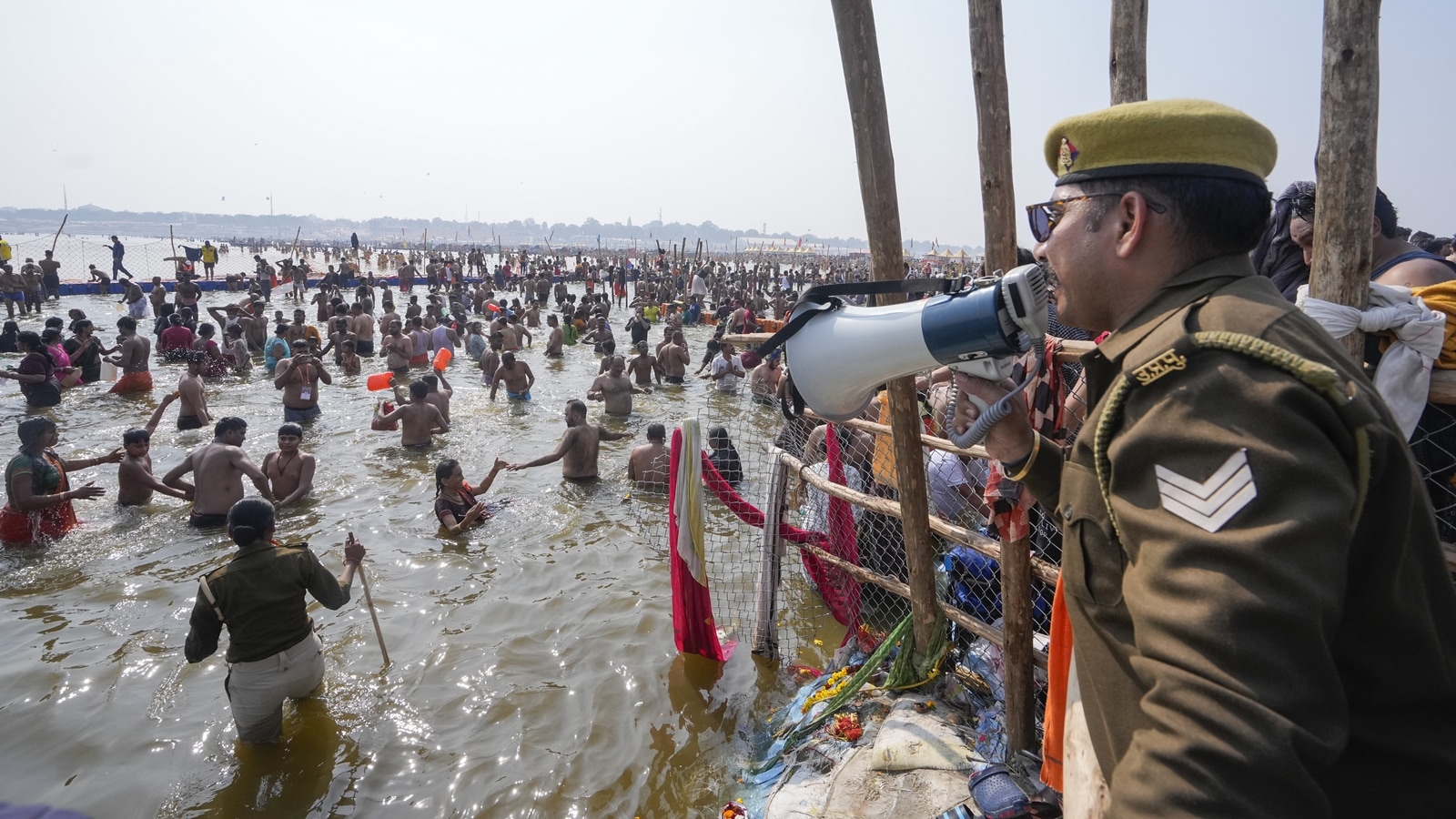 Police official managing the crowd on ‘Basant Panchami’ in Prayagraj on Sunday. (PTI)
The Maha Kumbh administration in Prayagraj has put in place a range of measures, including raised barricades, use of wire fencing, early bathing schedule for akharas and deployment of additional central and state forces for better crowd management, particularly at the January 29 stampede site, to deal with the likely surge of devotees for the Basant Panchami ‘amrit snan’ at the Sangam on Monday to ensure no untoward incident takes place.
Kumbh Deputy Inspector General (DIG) Vaibhav Krishna said, “The crowd pressure points of January 29 were reviewed and additional deployment of forces has been made accordingly.”
For effective crowd control, “Operation 11” has been implemented, which includes a one-way traffic system to prevent congestion at the Triveni Ghats, an official said, adding that the additional forces have been deployed particularly on pontoon bridges.
Other key measures include increased security at the New Yamuna and Shastri bridges, deployment of forces at major crowd points like Tikarmafi Turn and Phaphamau Bridge, and strategic traffic diversions.
Rail and bus operations have been streamlined, with additional trains and shuttle services. The Prayag Junction and key city intersections are under heightened security, while extra forces, including Rapid Action Force and Provincial Armed Constabulary personnel, have been stationed at sensitive locations.
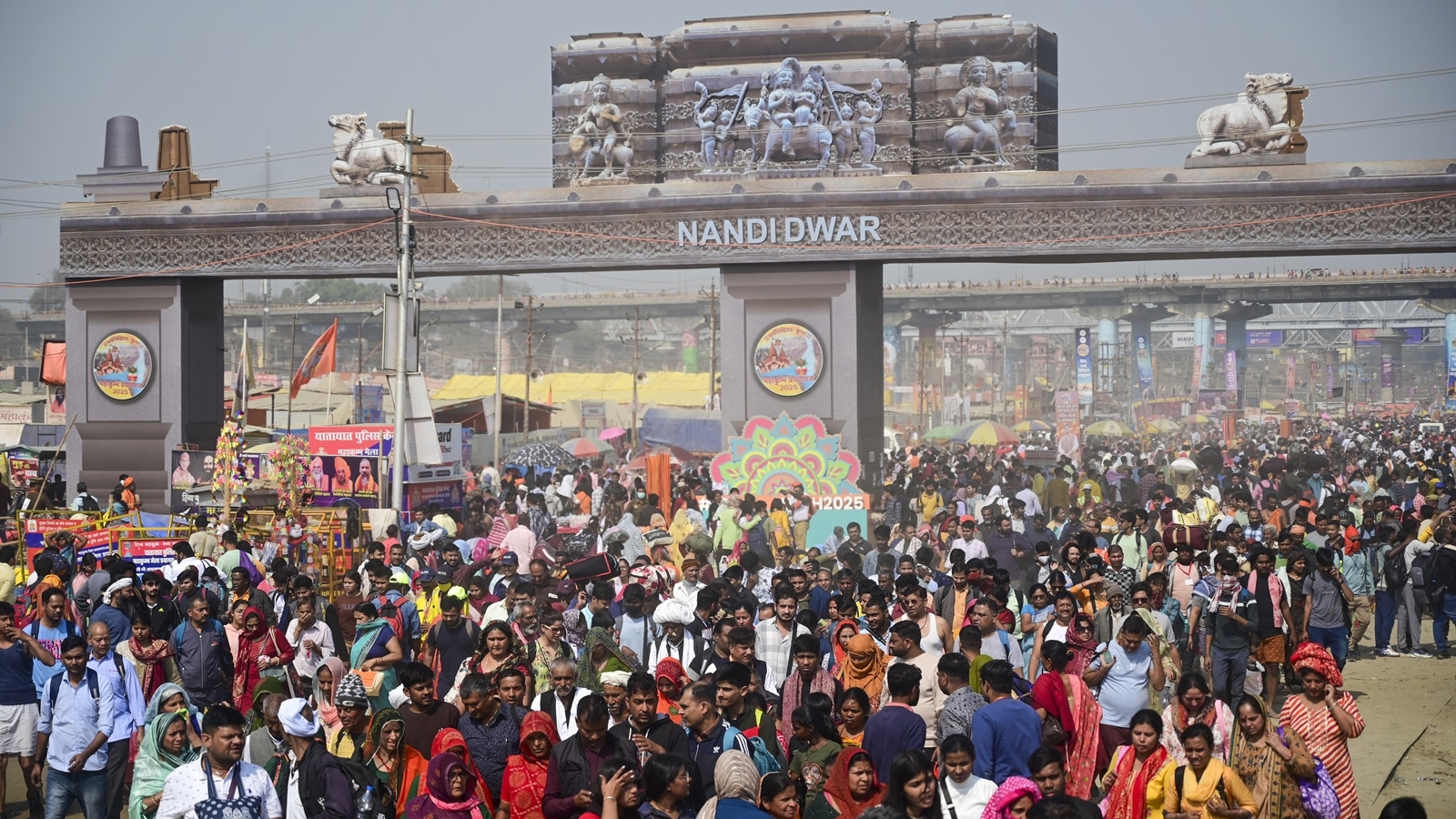 Rush of devotees in the Sangam area on the eve of ‘Basant Panchami’ in Prayagraj on Sunday. (Express photo by Vishal Srivastav)
These measures were finalised after the mela authorities extended discussions with the Akhara Parishad Sunday. The government said 5 crore pilgrims are likely to take the holy dip Monday.
Instead of 5.15am, akhara members will now leave for the Sangam Nose starting at 4am and will conclude their bath by 3pm, instead of the earlier 4.15 pm.
The administration has also asked the akharas to ensure the number of vehicles used by mahamandaleshwars while going for the bath is approved by the authorities and have passes issued, it is learnt. The Shri Panchayati Akhara Mahanirvani will start from Triveni Marg Sector 20.
Wire fences have been used on the route meant for the akahras to the Sangam Nose so that other pilgrims cannot cross the barricading to touch the feet of sadhus. The akharas are believed to have been upset over the common pilgrims taking bath at the Sangam Nose site reserved for them on the day of Mauni Amavasya (January 29).
This was the reason special arrangements were made to ensure that pilgrims do not use the akharas’ route by crossing barricades. Arrangements have also been made for the vehicles of the akharas in the Sangam area.
The central forces have also been deployed for better crowd control at many places.
Assuring the public that they would try to wrap up the bath early to ensure enough time to people at the Sangam, Akhil Bharatiya Akhara Parishad president Ravindra Puri said Sunday, “It will be our endeavour to ensure that pilgrims get an opportunity to take bath. The Basant Panchami ‘amrit snan’ will be “bhavya” and “divya” (grand and divine).”
Juna Akhara head Swami Avdheshanand Giri said, “After Mauni Amavasya, all akharas will participate in the Amrit Snan on Basant Panchami.”
By 6 pm Sunday, 1.23 crore people had already taken a holy dip in the Ganga and the Sangam, it is learnt. Since January 13, more than 33.61 crore devotees have performed the Ganga Snan, according to official figures.
— With PTI inputs

 4 min read