Journalism of Courage



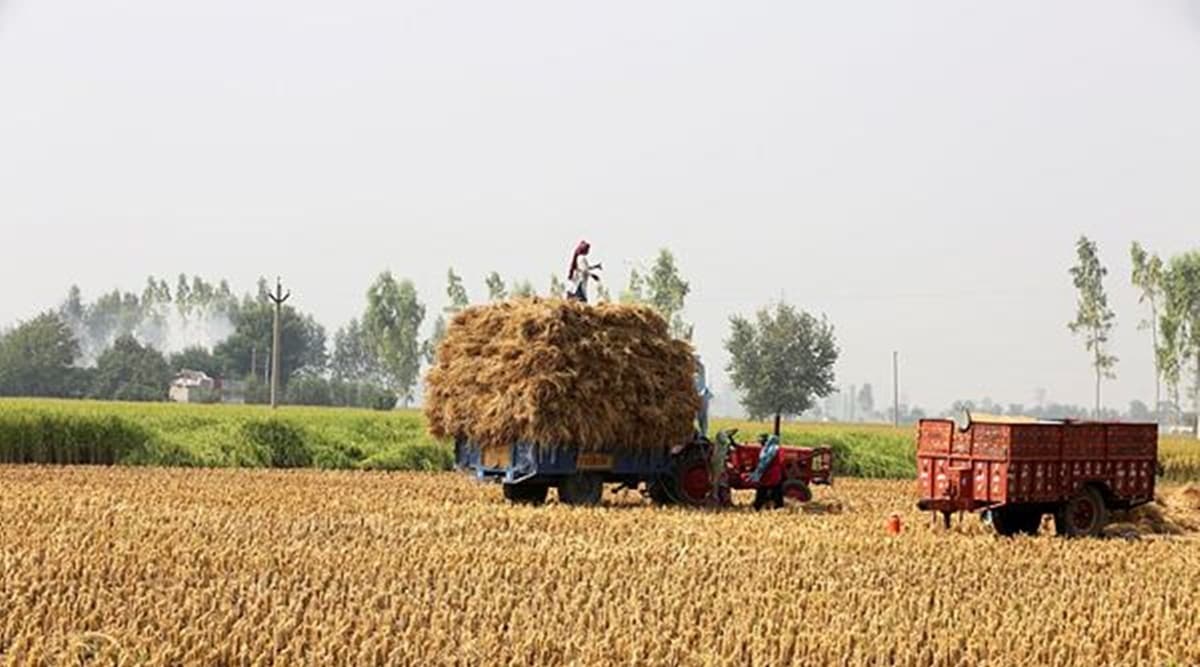 Last year till July 11, the area under rice cultivation was 31.44 lakh hectares, including 29.47 lakh hectares of paddy, 2.52 lakh hectares of cotton, 1.05 lakh hectares of maize, 87,000 hectares of cane and the remaining 9,000 hectares (other crops). (Express File Photo)
Over a decade ago, Central Ground Water Board (CGWB) had suggested that Punjab must curtail the paddy area to 15-16 lakh hectares. Experts had also said that the state must bring around 7-8 lakh hectares under basmati (aromatic rice). But instead of decreasing the paddy area and increasing the basmati area, just the opposite is happening in the state. Consequently, the efforts for diversification have taken a hit. To put it simply, Punjab’s bid to diversify the area from the water-guzzling paddy (non-basmati) to other crops appears to be taking a beating.
Till July 10, Punjab (according to the field reports collected by the Department of Agriculture Punjab) had already sown rice on 27.80 lakh hectares, including 80,000 hectares with the Direct Sowing of Rice (DSR) technique that saved 15% to 20% water. Of the 27.80 lakh hectares, paddy was sown on 25.22 lakh hectares, while basmati was sown on 2.58 lakh hectares. The area under rice may increase further because basmati sowing will continue till July-end.
The area under other kharif crops – which are the alternatives for paddy and must see an increase in its cultivation to decrease the area of paddy – could not record an increase, as cotton could be sown only on 2.48 lakh hectares, maize 72,000 hectares till July 10, cane 93,000 hectares (which is the entire year crop) and other crops like oil seeds-sesamum and groundnut- and pulses like arhar moong/mash could be sown on nearly 500 acres.
Last year till July 11, the area under rice cultivation was 31.44 lakh hectares, including 29.47 lakh hectares of paddy, 2.52 lakh hectares of cotton, 1.05 lakh hectares of maize, 87,000 hectares of cane and the remaining 9,000 hectares (other crops).
Till July 10, the maximum area under basmati was covered in Amritsar district where basmati was sown on 82,000 hectares out of the total 1.52 lakh hectares of rice (paddy + basmati) area. Fazilka and Tarn Taran stood at second spot with 48,000 hectares under basmati in each district out of a total rice area of 68,000 hectares and 1.62 lakh hectares, respectively.
While Gurdaspur and Muktsar Sahib districts have covered 16,500 hectares and 15,500 hectares respectively under basmati, the paddy area in both the districts was 1.47 lakh hectares and 1.19 lakh hectares respectively.
Around half a dozen districts have covered less than 1,000 hectares under basmati to date. These include Mansa and Mohali with just 100 hectares each under basmati. Nawanshahr covered 300 hectares, Barnala 400 hectares, Hoshiarpur 500 hectares and Faridkot 800 hectares under basmati.
Sangrur has covered the maximum area under paddy (2.67 lakh hectares), including 15,000 hectares under basmati, followed by Ludhiana and Patiala districts. In Ludhiana, 2.53 lakh hectares could be covered under paddy, including 3,600 hectares of basmati, while in Patiala, 2.19 lakh hectares have come under paddy cultivation, including 6,900 hectares of basmati.
Bathinda has also brought 1.72 lakh hectares under paddy cultivation, including 1,500 hectares under basmati.
A senior officer in the Agriculture Department said that “paddy is an assured crop and the area under it cannot be decreased until we get an assured market for alternative crops”.
Dr Gurvinder Singh, Director of Punjab Agriculture Department, said that to date a total of 27.80 lakh hectares could be covered under rice, including 2.58 lakh hectares under basmati. The basmati area would increase as its sowing is still going on, he added.

 3 min read