Premium

Under SC orders, green crackers return to Delhi – can this really clear the air? Here is what experts say

Days ahead of Diwali, there is apprehension and scepticism: ‘No way to establish that a cracker is really ‘green’; supply-chain not foolproof, QR codes and stickers don’t help; policies piecemeal and directionless’

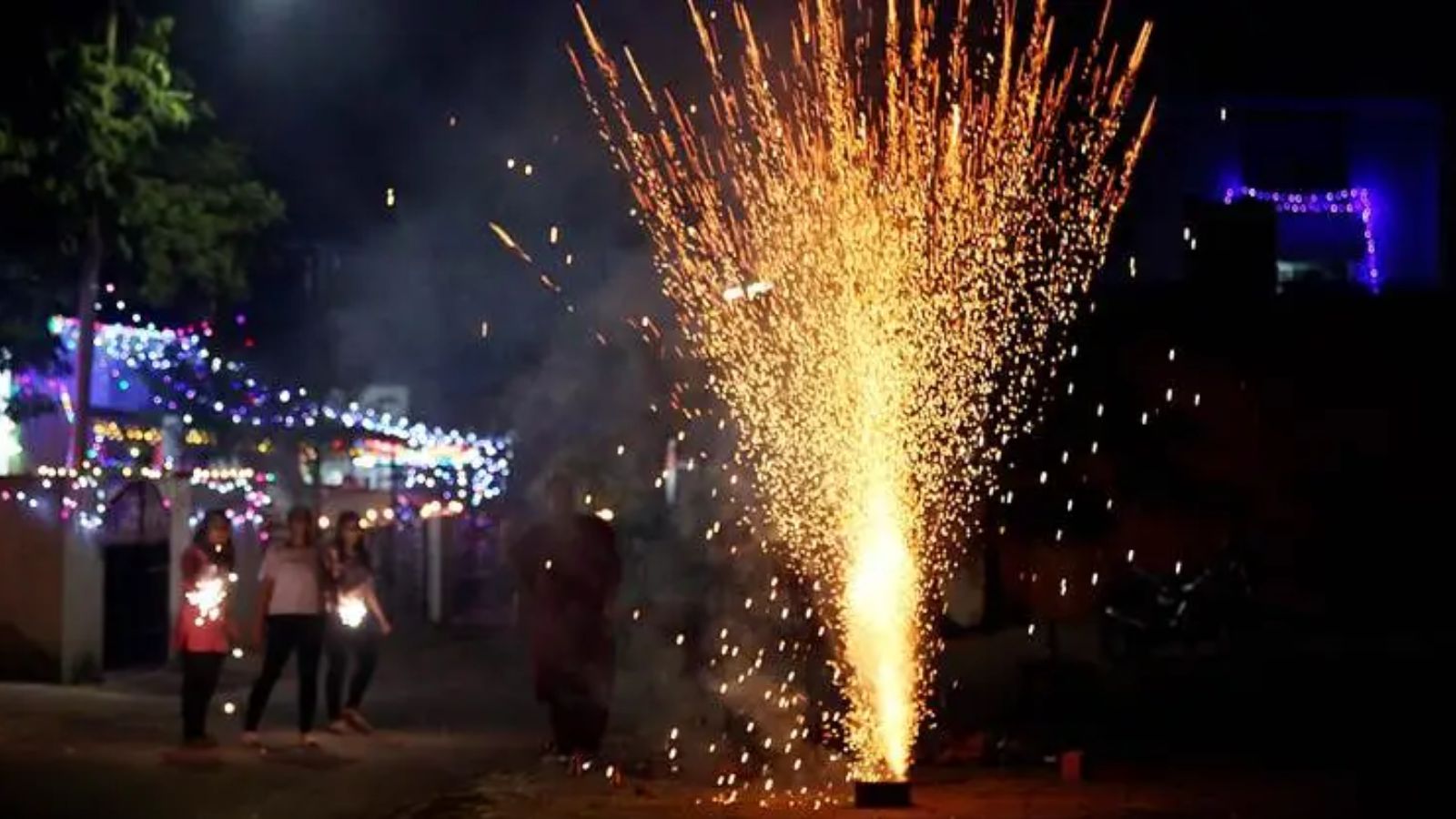
green crackersThe idea of green crackers first emerged after a 2015 petition in the Supreme Court by three infants seeking protection from Delhi’s toxic winter air. (File Photo)

As Delhi readies for Diwali, the Supreme Court’s decision on Wednesday (October 15) to allow ‘green’ crackers on a “test basis” has once again sparked the decade-long debate over balancing festive tradition, public health concerns, and livelihood.

Welcoming the order, Delhi Environment Minister Manjinder Singh Sirsa said it was a “balanced decision” that recognised both cultural sentiment and environmental responsibility, and added that the government would ensure the court’s directions are “followed word by word and line by line”.

He also said that officials would meet retailers and enforcement departments later in the day to chalk out a compliance plan.

Following the Supreme Court’s order, The Indian Express spoke to experts and scientists to understand the impact of the relaxation.

Dr Manoj Kumar, air quality analyst at the Centre for Research on Energy and Clean Air (CREA), said the timing of Diwali (October 20) this year may slightly reduce the overlap with stubble-burning, but warned that the pollution impact could still be significant.

“This year, the peak stubble-burning period doesn’t coincide with Diwali as the celebrations are sooner [than most years]. Even then, the pollution impact will be substantial,” Dr Kumar said.

He pointed out that the impact of ‘green’ crackers is yet to be comprehensively assessed, and that there is really no foolproof way as yet to ensure that these crackers are indeed low-emission.

“Green crackers have not been studied well… There is only one study by IIT Roorkee and Delhi Technological University (DTU) that found high levels of ultrafine particles. Under the National Clean Air Programme, ultrafine particles smaller than 0.1 micrometre aren’t even measured,” Dr Kumar said.

Story continues below this ad

Also, he said, “There’s no way for a user to know whether a cracker is truly ‘green’.”

The good monsoon and winds currently above the region around Delhi are keeping the air relatively clean, but “We can’t rely only on favourable wind conditions to clear the air,” Dr Kumar said. “The focus [of pollution control] must extend beyond Diwali to year-round pollution sources [such as vehicular emissions, road and construction dust, etc.].”

The idea of green crackers first emerged after a 2015 petition in the Supreme Court by three infants seeking protection from Delhi’s toxic winter air. The court’s 2018 judgment in Arjun Gopal vs Union of India banned conventional fireworks and allowed only reduced-emission ‘green’ variants developed by the Council of Scientific and Industrial Research (CSIR) through its National Environmental Engineering Research Institute (NEERI).

These green crackers were meant to cut particulate and gas emissions by about 30-40 per cent and keep noise levels under 120 decibels. The Petroleum and Explosives Safety Organisation (PESO) under the Commerce Ministry was tasked with certifying products that met NEERI’s formulations.

Story continues below this ad

Despite repeated bans, however, the illegal manufacturing and sale of traditional fireworks have continued, and Delhi Police have routinely seized thousands of kilograms of banned stock in the weeks leading up to Diwali every year.

Dr R J Krupadam, Chief Scientist at CSIR-NEERI, the organisation that developed the formulations for green crackers, said the institute is continuing work to improve emission standards.

“We have developed formulations that can reduce emissions by up to 60%, but research gaps exist,” he said. “The fireworks industry is important for many livelihoods, but there’s scope to make products more efficient and safer. We’re preparing a standard operating procedure for uniform banned-chemical testing, since different labs currently use different methods, leading to inconsistent results.”

Dr Krupadam added that the use of chemicals such as barium, lithium, arsenic, antimony, lead, and mercury, which have traditionally been used in the manufacture of firecrackers, remain banned across India.

Story continues below this ad

“These substances are not permitted in any formulation. We develop the formulations [for the firecrackers] and then provide these to manufacturers, and the testing report goes to PESO.”

According to Mohan George, a former Additional Director of the Delhi Pollution Control Committee (DPCC), the city’s earlier experiments with green crackers have shown that enforcement remains the weakest link.

“It was a failure when green crackers were tested experimentally in 2018,” he said. “The difference in chemical composition between green and traditional crackers cannot be verified in the field. QR codes and stickers didn’t help. You have to make the supply chain foolproof, and it’s very difficult for the police to differentiate [between green crackers and conventional ones].”

Anil Sood, an environmental activist in Delhi and president of the NGO Chetna, said the very idea of a ‘green’ firecracker is misleading.

Story continues below this ad

“Every year, action [against air pollution] happens for four months [during the winter] and then stops. The bigger sources [of pollution]…open waste-burning, pollution from landfills, power plants, railway stations, bus stops, remain unmonitored. Policies have remained directionless while air quality worsens,” Sood said.

The Supreme Court has asked the Central and State Pollution Control Boards to monitor air, water, and soil quality in the NCR between October 14 and 25, and to submit a report before the next hearing.

Sophiya Mathew is a Correspondent at The Indian Express, based in New Delhi. She joined the Delhi bureau in 2024, and has specialization in Integrated Multimedia Journalism from the Asian College of Journalism (ACJ), Chennai. Professional Background Core Beats: Her reporting is primarily focused on the Environment and Education. Specialization: She has gained recognition for her ground-level reporting on the Yamuna floodplains and the socio-economic challenges faced by those living on its banks. She also focuses on the disparities in Delhi's education system, ranging from elite private schools to government institutions and refugee education. Recent Notable Articles (December 2025) Her recent work has been heavily centered on Delhi's severe winter pollution crisis and the government's regulatory responses: 1. The Air Pollution Crisis "A tale of two cities: Delhi govt schools choke in bad air, private classrooms set up air filters" (Dec 20, 2025): A high-impact feature contrasting the "Clean Air Bubbles" in elite schools with the reality of government school students who are exposed to an equivalent of 17 cigarettes a day due to outdoor exposure. "Delhi sees season's worst air day, second worst December AQI in nearly a decade" (Dec 15, 2025): An analytical report on the meteorological patterns trapping pollutants in the NCR. "Delhi bans non-BS VI vehicles from outside: Why curbing vehicular pollution is key" (Dec 17, 2025): Explaining the science behind targeting specific vehicle vintages to lower particulate matter. 2. Enforcement & Regulations "No fuel at pumps in Delhi without valid PUC certificate from December 18" (Dec 17, 2025): Breaking the news on the environment ministry's strict "No PUC, No Fuel" policy. 3. Education Policy "Law to regulate school fee in Delhi risks becoming procedural, say parents" (Dec 13, 2025): Investigating the loopholes in the new Delhi School Education (Transparency in Fixation and Regulation of Fees) Bill, 2025. "Monsoon Session: Private school fee regulation Bill cleared after four-hour debate" (Aug 9, 2025): Covering the legislative passage of the controversial fee hike regulation. Signature Style Sophiya is known for her observational depth. Her reporting often includes vivid details from school corridors, hospital waitlists, or the banks of the Yamuna to illustrate how policy failures affect the city's most vulnerable residents. She is a frequent expert guest on the 3 Things podcast, where she explains the complexities of Delhi’s environmental laws. X (Twitter): @SophiyaMathew1 ... Read More

Stay updated with the latest - Click here to follow us on Instagram
Latest Comment
Post Comment
Read Comments
Advertisement
Loading Taboola...
Advertisement