Premium
This is an archive article published on April 8, 2024

IIT-Delhi lends hand to students: Support panel, campus stay with kin for some

According to documents accessed by The Indian Express through the Right to Information Act, the APG has so far identified 192 undergraduate students at the institute as “academically adrift”, emphasising that these students need academic help.

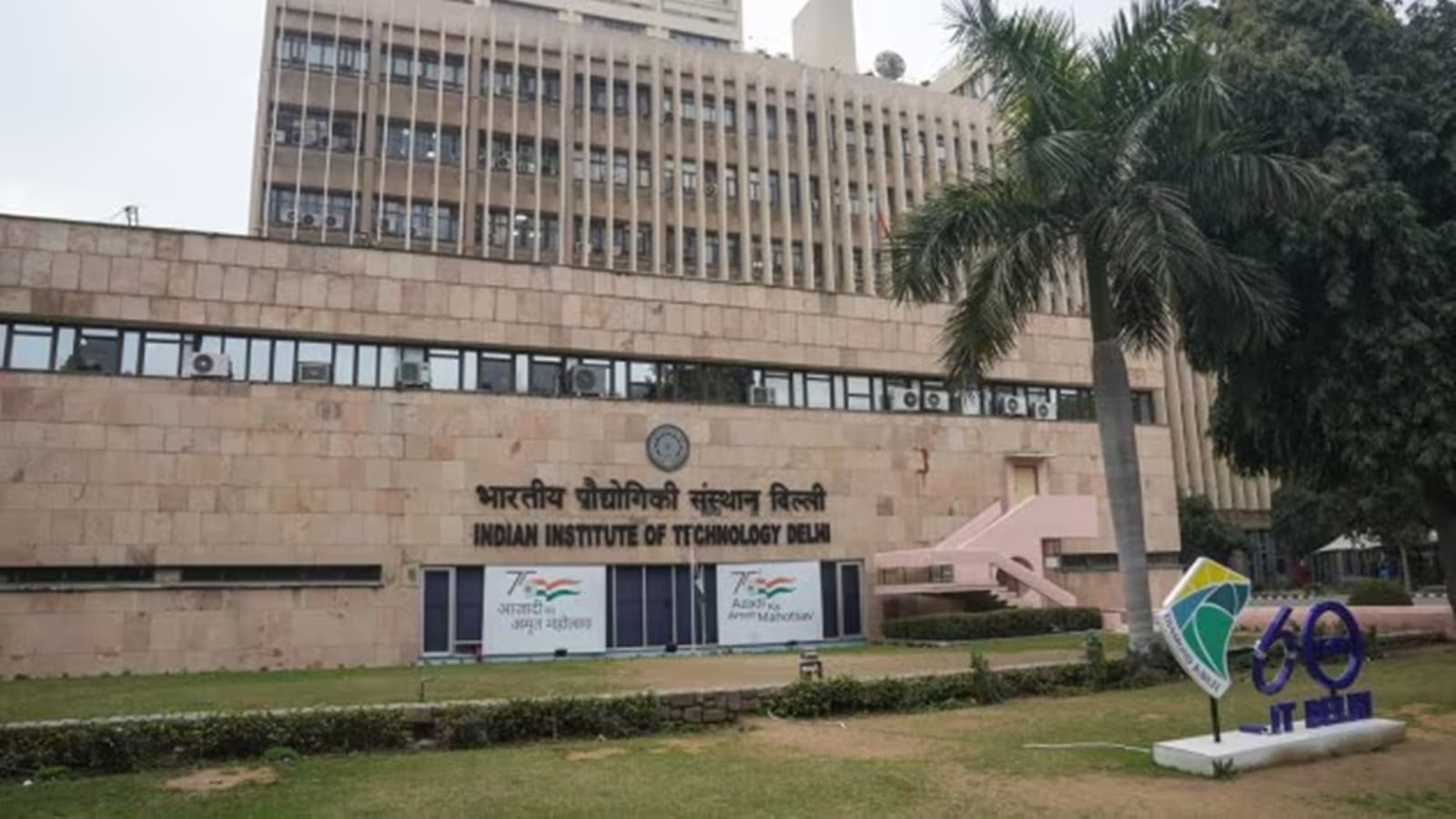
IIT Delhi, IIT delhi poor academic record, IIT delhi news, Indian Institute of Technology, IIT Delhi panel, Academic Progress Group, IIT delhi APG, Right to Information Act, indian express newsAmong other recommendations is one to fix the institute’s attendance system, as the APG “observed that several students are exploiting loopholes in the Timble attendance system, which eventually affects their academic performance”. (File Photo)

To ease pressure on students struggling with studies, which in extreme cases has resulted in suicides, the Indian Institute of Technology (IIT), Delhi has formed a panel of teachers and students to help its undergraduate students with a “poor academic record”, and in “exceptional cases” has also permitted a few students to stay with a family member on campus, The Indian Express has learned.

“In a few exceptional cases, the departments have identified at least three such students who they believe require additional support and must stay with a family member. In such cases, the student is allowed to live with a family member on campus and advised not to live alone in the hostel. Students in such cases can use the premises of a hostel we have on campus which also has the facility to cook food,” a member of the panel — Academic Progress Group (APG) — told The Indian Express.

According to documents accessed by The Indian Express through the Right to Information Act, the APG has so far identified 192 undergraduate students at the institute as “academically adrift”, emphasising that these students need academic help.

The APG was formed in September last year, soon after the death of a student, Anil Kumar, who died by suicide in his hostel room. Kumar hailed from Uttar Pradesh’s Banda district and was pursuing B Tech in Mathematics.

This year, there have been five student suicides at the IITs across India — two at IIT-Kanpur and one each in Delhi, Roorkee and BHU. An official notification on the formation of the panel said: “It (APG) will be empowered to interface with academic units and hostels and intervene as required. It will also suggest policy changes that may be needed.”

According to official records, the constitution of the APG was revised on March 5 with the inclusion of two student members in the eight-member panel.

The APG has so far analysed the academic records of undergraduate students on probation and backlog, held discussions with several students and provided recommendations for changes at the institute.

Story continues below this ad

The recommendations are classified into two categories: “Immediate Implementation” and for “Broader Discussion”.

For immediate implementation, the APG has identified that “a major cause of backlog students not being able to complete their degree requirements is the non-availability of hostel accommodation beyond nine semesters”. “It is recommended that 30 hostel seats be reserved for backlog students beyond nine semesters. The accommodation will be provided subject to 75% attendance in lectures, tutorials and laboratory sessions. The recommendations for hostel accommodation will be made by the APG,” it has said.

The APG has also recommended increasing the effectiveness of the existing tutoring system run by the Board of Student Welfare (BSW) and the Dean of Students.

The BSW primarily consists of student representatives from each hostel and a few faculty members. According to the institute’s website, the BSW’s motive of the academic mentorship programme is “to help undergraduate first-year students in their academics via hostel sessions conducted by academically strong second-year students”.

Story continues below this ad

In order to strengthen this, the APG said, “An online portal should be developed to help needy students identify tutors. Tutors should be available for fourth- and fifth-year students as well. The incentives to the tutors should be enhanced to improve student participation.”

“Several students have reached out for personal tutoring. We have provided these students with individual tutors,” the APG member, who did not want to be named, said.

Among other recommendations is one to fix the institute’s attendance system, as the APG “observed that several students are exploiting loopholes in the Timble attendance system, which eventually affects their academic performance”.

Timble is an end-to-end system to mark paperless attendance in classrooms. Essentially, there is a Timble Device in the vicinity of each classroom, which interacts with all smartphones wirelessly, allowing students to mark attendance in the proximity of their respective classrooms.

Story continues below this ad

“Sometimes, students tend to mark the attendance but skip the classes,” the APG member said.

A major cause of delayed graduation is failure in one or more first-year undergraduate courses. While some first-year courses are being run during the summer semester, the APG has suggested that “efforts should be made to facilitate running all such courses with significant backlog. Moreover, steps should be taken to ensure that backlog students register for the summer courses…” to ensure timely graduation of those lagging.

Under recommendations for “Broader Discussion”, the APG has suggested several policy changes in the way students at the institute are being currently graded.

For instance, the panel had suggested removal of the Degree Grade Point Average (DGPA), which is the calculated GPA of all courses.

Story continues below this ad

Currently, a minimum DGPA of 5 is required for the award of a B Tech degree at an IIT, but the pass grade for each course is a D (which is 4 out of 10 points).

According to the APG’s suggestion, if a student is scoring a minimum of 4 out of 10 in each course, passing each individually, but the DGPA does not add up to 5, the student should still be declared as pass and should be awarded her degree.

The recommendations related to academic affairs have to be discussed and passed by the institute’s Senate, which is responsible for maintenance of standards of instruction, education and examinations at the institute.

The Indian Express reached out to IIT Delhi for comments on this matter but received no response.

Vidheesha Kuntamalla is a Senior Correspondent at The Indian Express, based in New Delhi. She is known for her investigative reporting on higher education policy, international student immigration, and academic freedom on university campuses. Her work consistently connects policy decisions with lived realities, foregrounding how administrative actions, political pressure, and global shifts affect students, faculty, and institutions. Professional Profile Core Beat: Vidheesha covers education in Delhi and nationally, reporting on major public institutions including the University of Delhi (DU), Jawaharlal Nehru University (JNU), Jamia Millia Islamia, the IITs, and the IIMs. She also reports extensively on private and government schools in the National Capital Region. Prior to joining The Indian Express, she worked as a freelance journalist in Telangana and Andhra Pradesh for over a year, covering politics, rural issues, women-centric issues, and social justice. Specialisation: She has developed a strong niche in reporting on the Indian student diaspora, particularly the challenges faced by Indian students and H-1B holders in the United States. Her work examines how geopolitical shifts, immigration policy changes, and campus politics impact global education mobility. She has also reported widely on: * Mental health crises and student suicides at IITs * Policy responses to campus mental health * Academic freedom and institutional clampdowns at JNU, South Asian University (SAU), and Delhi University * Curriculum and syllabus changes under the National Education Policy Her recent reporting has included deeply reported human stories on policy changes during the Trump administration and their consequences for Indian students and researchers in the US. Reporting Style Vidheesha is recognised for a human-centric approach to policy reporting, combining investigative depth with intimate storytelling. Her work often highlights the anxieties of students and faculty navigating bureaucratic uncertainty, legal precarity, and institutional pressure. She regularly works with court records, internal documents, official data, and disciplinary frameworks to expose structural challenges to academic freedom. Recent Notable Articles (Late 2024 & 2025) 1. Express Investigation Series JNU’s fault lines move from campus to court: University fights students and faculty (November 2025) An Indian Express investigation found that since 2011, JNU has appeared in over 600 cases before the Delhi High Court, filed by the administration, faculty, staff, students, and contractual workers across the tenures of three Vice-Chancellors. JNU’s legal wars with students and faculty pile up under 3 V-Cs | Rs 30-lakh fines chill campus dissent (November 2025) The report traced how steep monetary penalties — now codified in the Chief Proctor’s Office Manual — are reshaping dissent and disciplinary action on campus. 2. International Education & Immigration ‘Free for a day. Then came ICE’: Acquitted after 43 years, Indian-origin man faces deportation — to a country he has never known (October 2025) H-1B $100,000 entry fee explained: Who pays, who’s exempt, and what’s still unclear? (September 2025) Khammam to Dallas, Jhansi to Seattle — audacious journeys in pursuit of the American dream after H-1B visa fee hike (September 2025) What a proposed 15% cap on foreign admissions in the US could mean for Indian students (October 2025) Anxiety on campus after Trump says visas of pro-Palestinian protesters will be cancelled (January 2025) ‘I couldn’t believe it’: F-1 status of some Indian students restored after US reverses abrupt visa terminations (April 2025) 3. Academic Freedom & Policy Exclusive: South Asian University fires professor for ‘inciting students’ during stipend protests (September 2025) Exclusive: Ministry seeks explanation from JNU V-C for skipping Centre’s meet, views absence ‘seriously’ (July 2025) SAU rows after Noam Chomsky mentions PM Modi, Lankan scholar resigns, PhD student exits SAU A series of five stories examining shrinking academic freedom at South Asian University after global scholar Noam Chomsky referenced Prime Minister Narendra Modi during an academic interaction, triggering administrative unease and renewed debate over political speech, surveillance, and institutional autonomy on Indian campuses. 4. Mental Health on Campuses In post-pandemic years, counselling rooms at IITs are busier than ever; IIT-wise data shows why (August 2025) Campus suicides: IIT-Delhi panel flags toxic competition, caste bias, burnout (April 2025) 5. Delhi Schools These Delhi government school grads are now success stories. Here’s what worked — and what didn’t (February 2025) ‘Ma’am… may I share something?’ Growing up online and alone, why Delhi’s teens are reaching out (December 2025) ... Read More

Stay updated with the latest - Click here to follow us on Instagram

Latest Comment
Post Comment
Read Comments
Advertisement
Loading Taboola...
Advertisement