Journalism of Courage



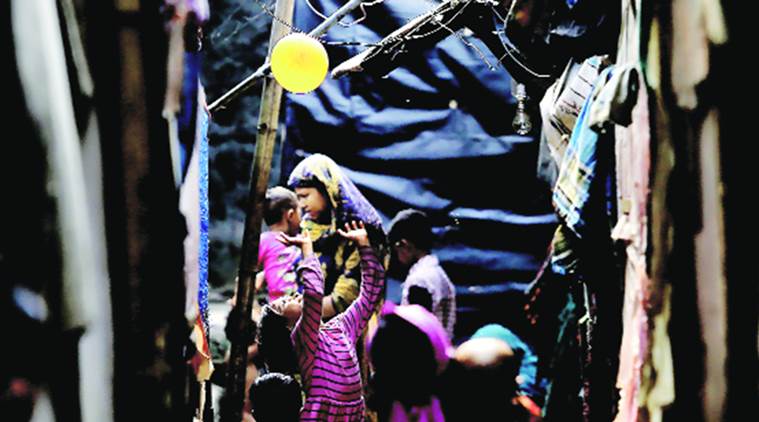 Children at the Rohingya refugee camp, a day before Bakrid, in New Delhi on Monday. (Express Photo by Praveen Khanna)
There will be more food on our plates tomorrow, declare children of the Rohingya community, chasing the much-anticipated vans that arrive with sacrificial animals. Prolonged persecution of this ethnic Muslim minority in a majority Buddhist Myanmar led to the community’s mass migration to Bangladesh, Pakistan and India. About four-five years ago, 250 Rohingyas found refuge in a relief camp on the fringes of Delhi, adjoining a Hindu cremation ground. And the only prayer they have had in all these years is to belong.
Perhaps lost in the same prayer is Ameena Khatoon, who has set up a tiny store with the money she got from the United Nations High Commissioner for Refugees (UNHCR). Bakrid has never been a pompous affair in the five years she spent at the camp. “A few kind-hearted people donate animals to us. Hopefully, they will again, like last year,” she says.
Just then, it seems like her prayers have been answered, for two vans carrying six animals emerge from the dust. Curious children scamper towards the soon-to-be sacrificed animals to catch a glimpse. Another lot of toddlers in the camp is down with jaundice, diarrhoea and dengue. The community has access to only four toilets. “Women and men have no choice but to go to the fields,” says Khatoon.
Not far from Khatoon is her 22-year-old son Ali. He has been associated with an NGO that works for the UNHCR. Unlike his brothers, Ali converses in English. “We appreciate the fact that we got to stay here. But this is staying and not living. We don’t belong anywhere. This is no life,” says Ali, who wants to be a lawyer.
The exodus from Myanmar followed several complications, including prosecutions for crossing the border illegally. Ali says, “Many of them are languishing in jails since decades for offences that don’t attract more than a few months of jail time.” His elder brother Mohammad says, “Though the UN recognised us as the most persecuted community in the world, we have not had a country we could call our home.” For now, though, Rohingyas here will have enough to last a few days.

 3 min read