This is an archive article published on June 30, 2022
SoU screen refuses to recognise ‘Assam’, leaves students from state disheartened
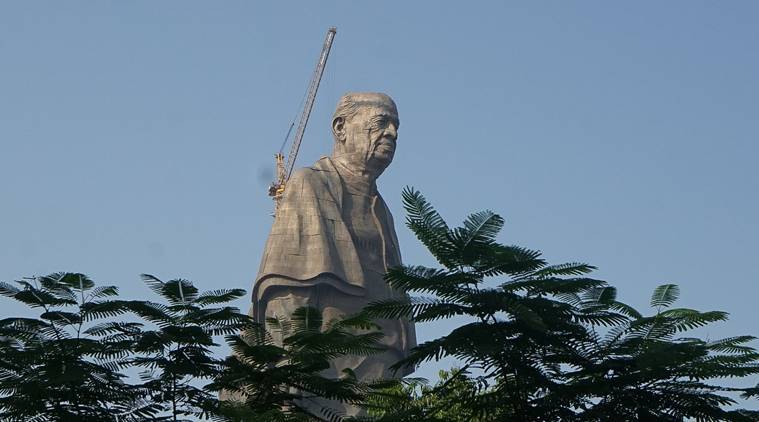
“We were visiting the Statue of Unity on June 24 and when we saw the interactive screen for the pledge, we decided to take the pledge to see our names pinned up on the big screen. But we were aghast when the system refused to recognise the name of our state ‘Assam’ and instead said that it contained an expletive,” one of the students from Assam said.
Written by Aditi Raja
Vadodara | June 30, 2022 09:19 PM IST
3 min read
Whatsapp
twitter
Facebook
Reddit
While the students from Assam said that the experience left them “dispirited”, officials of SoU, on Thursday said the “technical glitch” will be rectified at the earliest.
A group of students from Assam was left surprised when the interactive screen at the Statue of Unity (SoU), which allows users to take a pledge to “follow the footsteps of Sardar Patel”, refused to recognise the word “Assam”, terming the first three alphabets of the spelling as an “illegal word”.
While the students said that the experience left them “dispirited”, officials of SoU, on Thursday said the “technical glitch” will be rectified at the earliest.
The interactive screen, located in the hall of the SoU, is meant for people to take a pledge in the name of Sardar Vallabhbhai Patel. The first screen prompts the users to enter their name, age, and (native) location and then proceeds to allow the users to select their “favourite” from eight options for their pledge.
The pledge options include “being honest and following the rules of law to make my India a great nation” and “provide nutritious food to poor and malnourished children to make India healthy” among others.
Once the user chooses the pledge, the screen displays the pledge along with the user’s name pinned on a big screen in the hall.
The Masters students from Assam University’s Faculty of Social Work, who were visiting Gujarat for their internship with an organisation, said that the experience was extremely “disheartening”.
“We were visiting the Statue of Unity on June 24 and when we saw the interactive screen for the pledge, we decided to take the pledge to see our names pinned up on the big screen. But we were aghast when the system refused to recognise the name of our state ‘Assam’ and instead said that it contained an expletive,” one of the students said.
The student added that the group summoned an SoU staff on duty to seek help.
“The staff, however, expressed their helplessness as the screen is an automated one… It was extremely disheartening because we do feel that our state is largely ignored even in important issues,” the student added.
On Thursday, when The Indian Express contacted the Statue of Unity Area Development and Tourism Governance Authority (SOUADTGA), officials first checked the students’ claim on the interactive screen and confirmed that it was indeed failing to recognise “Assam” as a single word.
Story continues below this ad
Shivam Baria, Deputy Collector, SOUADTGA, said that the technical team had been summoned to immediately rectify the issue and also recheck the names of important places in the country, especially the 28 states and nine Union Territories that are currently in existence.
Baria said, “The technical team has explained that the software is programmed to filter expletives… We did not expect that the name of the state would also be filtered by the automated system. Now that it has come to our notice, we have asked the technical team to rectify the screen immediately… We will have the error sorted out in the next couple of days.”
Aditi Raja is an Assistant Editor with The Indian Express, stationed in Vadodara, Gujarat, with over 20 years in the field. She has been reporting from the region of Central Gujarat and Narmada district for this newspaper since 2013, which establishes her as a highly Authoritative and Trustworthy source on regional politics, administration, and critical socio-economic and environmental issues.
Expertise:
Core Authority & Specialization: Her reporting is characterized by a comprehensive grasp of the complex factors shaping Central Gujarat, which comprises a vast tribal population, including:
Politics and Administration: In-depth analysis of dynamics within factions of political parties and how it affects the affairs in the region, visits of national leaders making prominent statements, and government policy decisions impacting the population on ground.
Crucial Regional Projects: She consistently reports on the socio-economic and political impact of infrastructure projects in the region, especially the Statue of Unity, the Sardar Sarovar Project on the Narmada River, the Mumbai-Ahmedabad High Speed Rail bullet train project as well as the National Highway infrastructure.
Social Justice and Human Rights: Her reporting offers deep coverage of sensitive human-interest topics, including gender, crime, and tribal issues. Her reports cover legal proceedings from various district courts as well as the Gujarat High Court (e.g., the Bilkis Bano case remission, POCSO court orders, Public Interest Litigations), the plight of tribal communities, and broader social conflicts (e.g., Kheda flogging case).
Local Impact & Disaster Reporting: Excels in documenting the immediate impact of events on communities, such as the political and civic fallout of the Vadodara floods, the subsequent public anger, and the long-delayed river redevelopment projects, Harni Boat Tragedy, Air India crash, bringing out a blend of stories from the investigations as well as human emotions.
Special Interest Beat: She tracks incidents concerning Non-Resident Gujaratis (NRIs) including crime and legal battles abroad, issues of illegal immigration and deportations, as well as social events connecting the local Gujarati experience to the global diaspora. ... Read More


 3 min read