Stay updated with the latest - Click here to follow us on Instagram

Journalism of Courage
 6 min read


 As per NATO Secretary General Jens Stoltenberg’s recent statement, Russian dreaded winter offensive seems to have begun. (Reuters)
 Written by Maj Gen (Dr) GG Dwivedi (retd)
The Russian invasion of Ukraine on February 24, 2022 did come as a shock for the international polity. It is the first major conflict in Europe post-world War II. Termed as ‘Special Military Operation’ by President Vladimir Putin, it was expected to be over in a couple days with the rout of the Ukrainian Army, given overwhelming superiority of the Russian Forces. (RF).However, resilient response by Ukraine under President Volodymyr Zelenskyy proved the strategists wrong. The war has prolonged over a year with no end in sight. The manner in which this conflict has panned out has all the trappings of a ‘limited war’; ‘hybrid in nature and high-tech in character’. The current state of stalemate is set to witness steep escalation as Russia is preparing for a massive offensive to force a decisive victory.
Review-Course of War
The Russian invasion was aimed to achieve de-nazification of Ukraine-implied regime change and guarantee security of its Western front by ensuring Ukraine’s neutrality, besides free the people of Donbas region. Putin also harboured an illusion to revise the historical error of Soviet breakup three decades earlier. Objective of military operations entailed seizing important cities and overrunning whole of Ukraine, an area of around 700,000 sq km.
Russia launched a multi-prong swift offensive- blitzkrieg; with major thrust from North and East focussed on Kyiv,subsidiary from South- Mariupol the key objective. Advancing on a wide front, the RF faced practically no opposition. It appeared as if the Ukrainian Army had capitulated. However, Ukraine strategy was to fight from the fortified built up areas using towns and villages as bases. Operating in small teams armed with portable anti- tank weapons like the Javelin missile (US-NATO), Ukrainians proved deadly for the Russian ground forces. Further, armed drones Bayraktar TB-2 (Turkish) and shoulder fired ‘Surface to Air Missiles’ (SAMs) – Stingers (US) took a heavy toll of Russian helicopters and low flying fighter jets.
Due to stiff resistance offered by the Ukraine Armed Forces(UAF), Russian offensive got stalled. The latter paid heavy penalty for violating the basics tenets of combined arms operations. Even the Russian ‘air borne forces’ took heavy losses neglecting to secure air space in the area of operations. High casualties including senior commanders seriously dented the morale of Russian Army.
Logistics too became a major constraint for the RF, being widely spread without secure axes of maintenance. The early spring thaw resulting in ‘Rasputitsa’ severely constrained the Russian operations. By April, the Russians were forced to pull back from Kyiv and concentrate on the Eastern and Southern regions of Ukraine. Soon, Moscow declared integration off our Ukrainian regions namely Donetsk, Luhansk, Kherson and Zaporizhzhia, though not fully under its control.
Having stabilized the situation, Ukraine launched a full scale counter offensive by end September in the South, towards Kherson-Mykolaiv Oblast, marking the third phase of war. By early November, UAF had succeeded in recapturing the twintowns. Kharkiv too was retaken by the beginning of October. Success of Ukrainian force was largely due to innovative employment of ‘High Mobility Artillery Rocket System’ (HIMARS), precision strikes taking a heavy toll of the RF. While pace of operations slowed down during winters, Russians continued air and missile strikes against high value targets in Ukraine.
The year-long ongoing war has taken a heavy toll of both sides. Ukraine has suffered 7199 civilians killed and 11756 wounded with over 7.5 million citizens displaced. The USA and West have extended extraordinary support to Ukraine, including intelligence sharing and military advice. Total aid provided so far amounts to almost $100 billion, America contributing half of it. West efforts to bleed Russian economy through sanctions had limited impact, given it is expected to grow at 2.1 percent in 2024.
Stage Set for Crucial Phase
Currently, the two sides are engaged in battle of attrition in the Donbas region where Russian forces along with Wegner (private army) and irregulars are engaged in intense ground operations. Bakhmut, 85km North of Donetsk an important industrial town and logistics hub has turned out to be site of longest running battle; Russians grappling for a pyrrhic victory since last nine months.
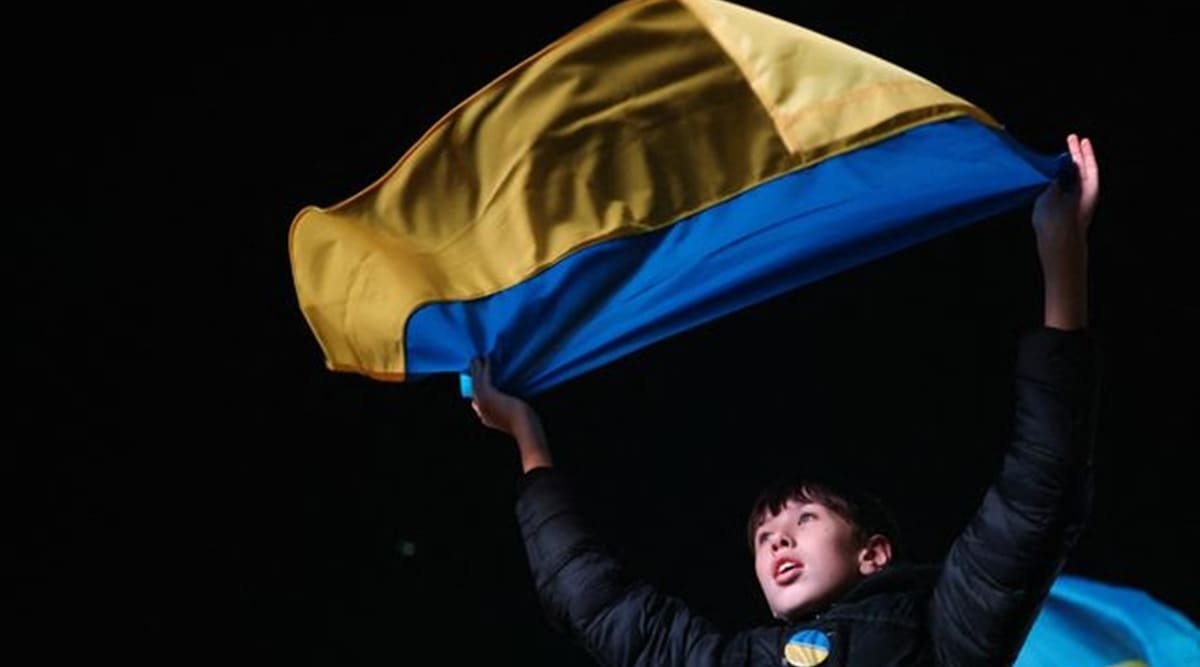
As per NATO Secretary General Jens Stoltenberg’s recent statement, Russian dreaded winter offensive seems to have begun. According to Ukraine Defence Minister Oleksiy Reznikov, around 500,000 Russian troops have been mobilized for the assault. At least three Russian divisions have already enjoined the operations. Moscow is apparently in hurry to build up before Ukraine receives the supply of Western arms. However, launching poorly trained and inadequately equipped troops is fraught with high risk.
Ukrainians are feverishly preparing for the fresh Russian aggression. At the Munich Security Conference, on February 17, 2023 President Zelenskyy urged the world leaders to speed up delivery of tanks, crucial for defence against the Russian anticipated offensive. Prime Minister Sunak reiterated his support for war-hit Ukraine during the above conference. President Biden made unannounced trip to Kyiv on 20 Feb 2023 where he met with President Zelenskyy as a gesture of solidarity and pledged $ 500 million in new military aid. Germany has committed to Provide Leopard II tanks to Ukraine, which could prove to be the game changer. Other Western nations are expected to follow suit.
The Ukraine War has transformed the global geo political and security architecture. Russia- China relations have graduated to ‘no limit partnership’, posing new challenge. The ‘trans-Atlantic’ partnership has reaffirmed American leadership and NATO alliance stands strengthened. Many countries are reviewing their security constructs and scaling up the defence expenditure. India has maintained a nuanced stance, while not condemning the Russian invasion but strongly pitching for efforts towards ending the war.
Going by the pattern of operations over last one year, Russian new offensive is unlikely to achieve a major breakthrough. Strategically, Russia has already lost the war as Ukraine continues to hold on. The Ukraine conflict is following the model of Korean War (1950-53) which had stretched over three years and ended in a stalemate, devoid of clear distinction between the ‘victors and vanquished’, despite belligerents fighting till mutual exhaustion.
(The author is a War Veteran, former Assistant Chief; currently Professor Strategic-IR, Management Studies)
Stay updated with the latest - Click here to follow us on Instagram