Journalism of Courage



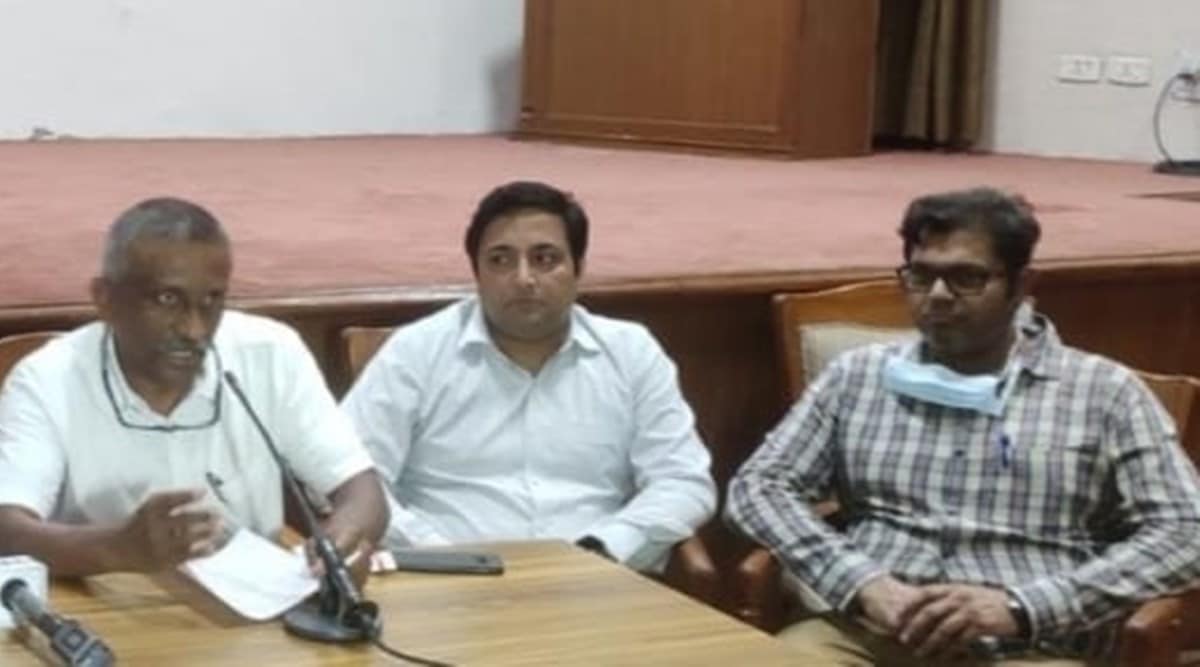 Prof T D Yadav from the Department of Surgical Gastroenterology said, “As a public sector and institute of national importance, it is our responsibility to make this program available to the common man so that even the poorest of the poor can get a liver transplant.
 The Department of Surgical Gastroenterology, PGI successfully conducted its second simultaneous liver-kidney transplant on a 47-year-old male patient from Jammu recently. He was on dialysis and his liver was getting supportive care. After this operation at PGI, the patient had an uneventful recovery and was discharged from the hospital after 16 days. He had no postoperative complication related to the procedure and was discharged with normal liver and kidney functions and was prescribed an adequate immunosuppressant. His last follow-up was a week ago and he is ready to resume his job as a professor of English literature at the University of Jammu.
The department conducted the first simultaneous liver and kidney transplant in June 2022, on a 24-year-old male from Himachal Pradesh. Both patients do not need any dialysis or other support for the liver as of now. Before the transplant, they had a poor quality of life and were dependent on others to perform daily activities.
The total cost of a liver transplant at PGI is not even one-fourth of the total expenditure in other private centres. The department is actively supported by the departments of hepatology, kidney transplant, interventional radiology, biochemistry, histopathology, transfusion medicine, hospital administration, and microbiology.
Prof T D Yadav from the Department of Surgical Gastroenterology said, “As a public sector and institute of national importance, it is our responsibility to make this program available to the common man so that even the poorest of the poor can get a liver transplant.
Talking with the Indian Express, Prof Yadav explained the liver transplant program and its challenges. Excerpts from the interview:
When is a liver transplant required?
Prof Yadav: A liver transplant is the only chance of survival/cure for patients suffering from chronic liver disease, acute liver failure, and acute chronic liver failure. Patients who are diagnosed with liver cancer may also benefit from liver transplantation in carefully selected cases.
What is overall survival after a liver transplant?
Prof Yadav: One-year survival is close to 90 per cent in adults, and it is 96-98 per cent in the pediatric population.
Do patients need life-long treatment after a liver transplant?
Prof Yadav: Patients who are successfully transplanted need lifelong medicine to maintain graft functions. These medicines are to be taken daily and the doses are reduced with time. In the beginning, usually, three tablets have to be taken. After three months, usually one or two tablets with minimum doses are required as maintenance therapy.
Can a person lead a productive life after a liver transplant?
Prof Yadav: A person can lead a normal productive life after a liver transplant and join back his professional work. There are some restrictions that are explained by the operating team at the time of discharge.
What are the ways to get a liver?
Prof Yadav: Liver can be donated by brain-dead and heart-beating patients who are already admitted to the hospital in the ICU and relatives of these patients make a decision to donate organs. These patients are assessed by the transplant team and if all is okay then the organ is taken for transplant. The usual criteria are: donors should be below 65 years of age, should not have any ongoing infection, there should not be cancer in the body and the organ should be suitable for transplant. This type of liver transplant is called a DDLT (Deceased Donor Liver Transplant).
The second kind of liver transplant is called LDLT (Live Donor Liver Transplant). Here a close relative can donate a portion of his/her liver to save a life. A normal liver has two lobes and one of the lobes can be donated to the deceased person. A minimum of 40 to 45 per cent of the liver is left in the donor and about 55 to 60 per cent of the normal liver is donated to the diseased person.
Is the transplant safe?
Prof Yadav: Liver is a unique organ, and it has got an immense capacity to regenerate. Twenty per cent of a normal liver is required to sustain life. Therefore, a healthy individual can safely donate about 55 to 60 per cent of his/her liver. There is 0.5 per cent life-threatening risk to the donor. Other minor complications are close to 6 to 7 per cent, which are manageable. The donor has to be a close relative and the blood group must be the same.
Can organs be donated after the death of a patient?
Prof Yadav: There is a wrong perception among people about organ donation. Organs cannot be used after death except for the cornea. For organ donation, a person has to be admitted to a hospital and he or she should be on a ventilator. His/her brain could be irreversibly damaged, but the heart should be beating, and other organs must be viable. So, only heart-beating and brain-dead patients can donate his/her organ after consent from a relative.
Who decides that a person is brain-dead?
Prof Yadav: In a hospital that is recognised for organ donation, there is a committee constituted by the hospital to certify brain death. It consists of a team of five to six specialist doctors who examine the patient and declare him\her brain dead. This committee meets twice after an interval of six hours.

 5 min read