Journalism of Courage



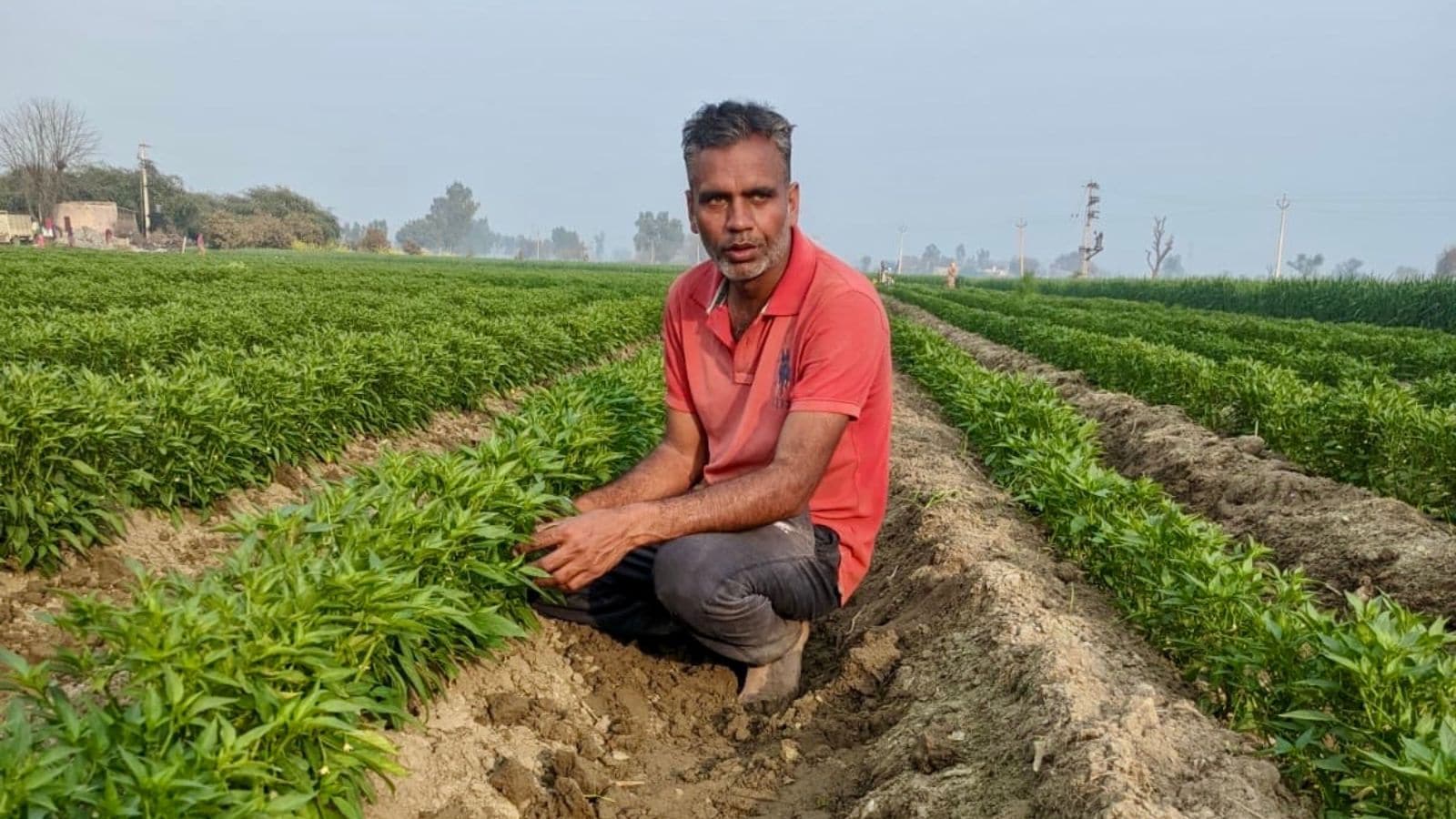 Farmer Lakhwinder Singh in his field (Express Photo)
For more than four decades, Manpreet Singh’s family in Punjab’s Ferozepur district has cultivated chillies on their land. This year, however, the farmer from Loombriwala village has reduced the cultivation area from 100 acres to just 60. The reason? “The lack of a support system…declining prices and exports,” he says. Like Manpreet, Dalbir Singh, a pioneer of chilli farming in the same village, once cultivated chillies on 75 acres. Not this year.
Manpreet’s and Dalbir’s are not isolated cases. Across Punjab—particularly in Ferozepur district, a traditional hub for chilli cultivation—hundreds of farmers, many of whom had diversified around 15,000 to 16,000 acres into chilli farming, have drastically reduced their planting this year.
For years, the success of these farmers was largely due to their own efforts, without government assistance. Now, with prices plummeting, these farmers find themselves isolated once again.
“For decades, our chilli growers have been diversifying their land into chilli cultivation, often on their own initiative. Even large-scale farmers used to purchase chillies from smaller farmers in Punjab and then consolidate the crop for sale in major markets like Rajasthan, Madhya Pradesh, and Guntur, which is a key hub for chilli exports,” says Manpreet.
Several factors have contributed to poor prices, with a sharp decline in export volumes being a major one. India’s red chilli exports, which once generated billions in revenue, have faced a troubling downturn. The inability to export Guntur chillies from Andhra Pradesh has compounded the crisis.
“The black thrip attack on chilli crops in the Guntur region forced farmers to apply chemicals to control the pests. Unfortunately, this led to failed chemical samples, resulting in import restrictions from countries like China, a major importer, along with several small countries like Bangladesh,” he explains.
The situation had a ripple effect in Punjab. “When the price of Guntur chillies dropped, it caused a downturn in prices across all major markets, leaving farmers struggling to secure a fair price for their produce. This occurred even though Punjab’s chillies were grown within the permissible limits for chemical usage,” Manpreet adds.
Even smaller farmers like Lakhwinder Singh from Toot village in Ferozepur, who had diversified nearly 7 acres of land under chilli by taking 5 acres on lease and 2.5 acres of his own for years, and was earning well, have chosen to grow chillies only on 3 acres this year. “We did not sow chillies this year. There is no point when the rates are poor and the government does not help us with marketing. We were promised a ‘chilli cluster’ but it never materialised,” says Lakhwinder. He adds that Punjab Agro should open an office in Ferozepur, stating it would benefit farmers, especially in terms of marketing.
“Though Punjab does not directly export chillies, exports affect Punjab’s chilli prices too. Despite repeated requests from farmers, no formal export channels or marketing clusters have been established,” says Maninder Singh from Maujgarh village, who has also reduced chilli cultivation from 55 acres to 25 acres now.
A drastic fall in prices
In Punjab, chillies are typically cultivated in November, after the paddy harvest, with the first picking taking place in April. The second and third pickings occur in May. For red chillies, the ideal picking window begins around May 20 and lasts until June 15-20. However, this year, due to early sowing of paddy from June 1, many farmers faced difficulties in completing their red chilli picking. The reduced window—cut from 25 days to just 10—resulted in a lower crop yield.
For green chillies, farmers typically get five pickings between April and June, with an average yield of 200 to 250 quintals per acre. The price for green chillies generally ranges from ₹10 to ₹15 per kg. However, when farmers go for red chillies, the yield drops to around 20 quintals per acre, with prices ranging between ₹170 and ₹250 per kg. This year, the cost of red chillies has fallen drastically to ₹70-₹80 per kg, causing significant losses for farmers.
Despite the falling prices, the costs of cultivation remain high. On average, farmers earn around ₹2.5 to ₹3.5 lakh per acre, with expenses of around ₹1 lakh. While this may seem like a reasonable income in a good year, fluctuations in prices and the current market scenario make it difficult for farmers to sustain their livelihoods.
No government help
Government assistance has been lacking, says Baljinder Singh, a seasoned chilli grower from Lohgarh village in Ferozepur, who has cultivated chillies for over 22 years. “This year, I reduced my area from 22 acres to just 8,” he says, revealing how farmers even met Union Minister of State for Food Processing Industries Ravneet Bittu to urge him to facilitate the consumption of Punjab’s chillies in processing plants, as they had no chemical issues. “But nothing happened,” he adds, noting that regardless of which government—Akali-BJP, Congress, or AAP—was in power, none had helped them.
“Our success in chilli cultivation was our own doing, and now, when we are facing marketing issues, that too is our own failure. The government has never supported us. They just talk about diversification, but when the time comes to help, they are nowhere to be found,” adds Maninder.
Simran Singh, the horticulture development officer for chilli in Ferozepur, confirmed that the area dedicated to chilli cultivation will be reduced in the state and said that they were offering a subsidy of ₹9,600 per acre to chilli growers.
Simran cited two main reasons for the current scenario. “Firstly, there has been a downturn in the international market, as the entire Indian market is largely influenced by the Guntur market. Currently, a large quantity of chilli is available in the Guntur market, which cannot be exported in the required amounts,” the officer said, adding, “Secondly, some chilli crop farm land was affected by floods during the Kharif season, and this area will not be available for sowing chilli crops this year.
“We feel abandoned by both the state and central governments,” says Manpreet, adding that if the government does not step in to assist, Punjab’s once-thriving chilli industry could fade into obscurity.

 6 min read