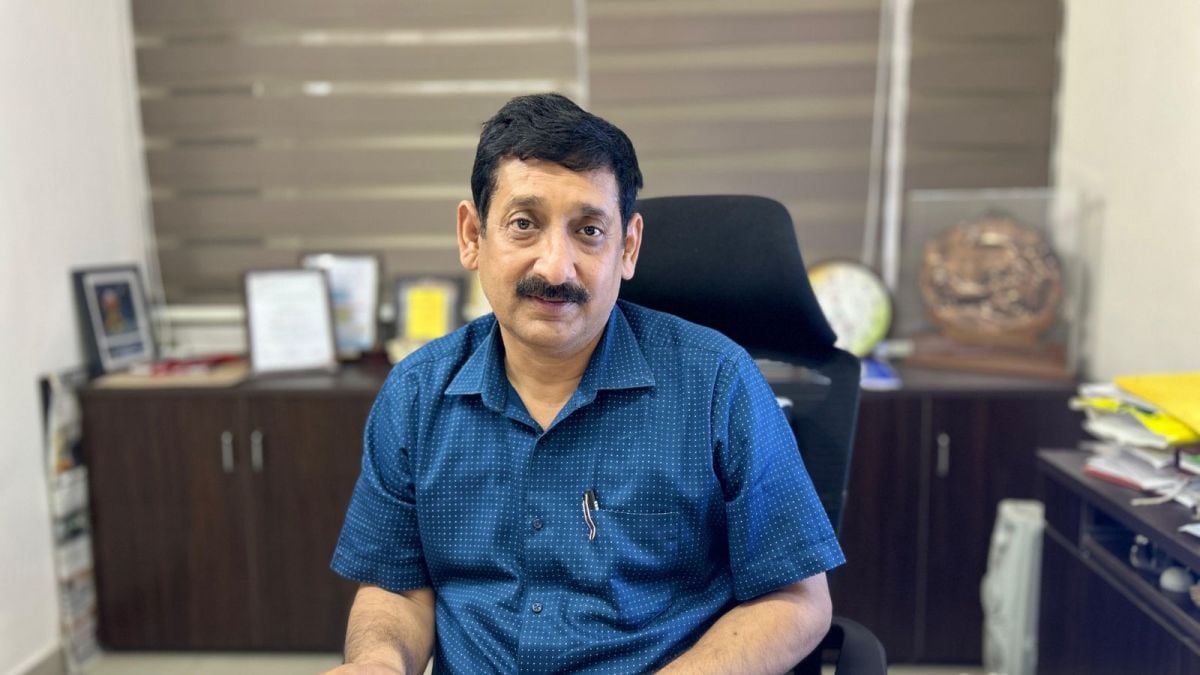
PGI Chandigarh to install panic button systems with Israeli technology in all duty rooms: Dr Sameer Aggarwal
Prof (Dr) Sameer Aggarwal, Department of Orthopedics, PGIMER, Chandigarh, spoke about how the hospital authorities spoke to the resident doctors and the staff, and took quick steps to ensure their safety on campus.
Prof (Dr) Sameer Aggarwal, Department of Orthopedics, PGIMER Chandigarh.
Prof (Dr) Sameer Aggarwal, Department of Orthopedics, Post Graduate Institute of Medical Education and Research (PGIMER), Chandigarh, said the night a junior doctor was allegedly raped and killed at a state-run hospital in Kolkata, his daughter was also working a night shift at a different hospital.
Drawing attention towards the importance of the safety of the junior doctors, Dr Aggarwal, who is also the Vice-President of the Post Graduate Institute Faculty Association Committee, spoke to The Indian Express about the various measures the institute is taking to ensure a safe and secure campus.
You’ve Read Your Free Stories For Now
Sign up and keep reading more stories that matter to you.
Q: What was your first reaction to the RG Kar hospital rape and murder?
Dr. Sameer Aggarwal: The night the brilliant young doctor was brutally raped and murdered after a 36-hour shift, my daughter, also a resident (doctor), was doing a night shift at a hospital — a space you consider your child to be the safest.
Like me, thousands of parents across the country and some on this (PGIMER) campus were shaken to the core, and our first thought was safety for not just our daughters but also our women healthcare workers, who work tirelessly and selflessly to keep the healthcare system going.
These young residents are like our children, we are their seniors, their gurus and we owe it to them that they are safe in their place of education and work. The incident also reasserted the fact that we are the most vulnerable and there is no law or act to protect doctors.
In which country do doctors work for straight 36 hours or consult on an average 350 to 400 patients a day? If it can happen in one part of the country, it can happen here too and to anyone.
Q: What was PGI’s focus while ensuring safety measures around the campus?
Dr. Sameer Aggarwal: To make the campus more secure for the staff, PGI Director Prof Vivek Lal formed a 12-member committee involving wardens of all girls’ hostels and other women from different parts of the hospital, with me involved in every aspect of the new measures.
Story continues below this ad
The incident immediately put a spotlight on the need for enhanced safety for our women colleagues; so that women can work any time of the day or night without any fear. We have compiled inputs and demands from doctors, residents, nurses, research scholars, and paramedical staff on enhancing safety on this large campus, where so many work night shifts, and have to move from one department to another.
The director has given us a green signal to make any change required, without worrying about the budget, and asked us to bring various departments on a common ground to start work. Some of the issues pointed out were black spots on the campus, duty rooms for women staff in every area, more CCTV cameras in the corridors and secluded areas, changing rooms for nursing staff, more security personnel, closure of thoroughfares, electronic cards et al.
Q: What are the immediate measures that have been initiated to enhance security on campus?
Dr. Sameer Aggarwal: We have asked for a list of all the CCTV cameras on the campus; around 900; and got them checked. The defective ones are being repaired or replaced, and 300 new cameras have been ordered. The new CCTV cameras, being bought at Rs 3 crore, will be installed in every area of the Institute.
Our security surveillance was only aimed at stopping theft but now, it will be enhanced. However, it will also ensure patient privacy. These cameras will capture suspicious movements in corridors, outside duty rooms, and washrooms. We have had a meeting with the civil engineering, electrical and security wings and security department to check the locks at all duty rooms, make sure that there are no dingy areas, and ensure better lighting.
Story continues below this ad
All hot spots of the hospitals are being identified. Some residents have said that the areas near the Advanced Pediatric Centre are dark, and our people are on the job (to make sure they are illuminated).
Q: Any new system that will be introduced for the first time on the PGIMER campus?
Dr. Sameer Aggarwal: Yes. We are all set to install a panic button system in the women’s duty rooms, floor and block-wise across the campus. We have already taken the demonstration by a company. The system uses Israeli technology and a project report has already been submitted. The system will be connected to four phones at the MS control room and the chief security officer. We have ordered panic buttons that are large in size. The process has been initiated but it will take some time to be installed.
Q: Any specific area on the campus that will be monitored first?
Dr. Sameer Aggarwal: Research Blocks A and B are secluded and scholars work very late at night; so we will have strict entry and exit rules. The walk till the parking area is very empty and the engineering department has been asked to make two parking spots exclusively for the staff, with 24×7 security. We want better coordination with the Chandigarh Police to secure both the main gates and monitor the campus since manpower is always short.
Q: Any future plans for the PGIMER campus?
Dr. Sameer Aggarwal: Right now, the Eye department has a successful system of electronic keys that gives access to only the staff to enter various areas. Our plan is to have this system in every department of the campus but it will take time to be put into action. We want to support our residents, nursing staff, and paramedics in every way possible.
Story continues below this ad
The PGI Faculty Association has strongly condemned the rape and murder of the junior doctor at the RG Kar Medical College and Hospital in Kolkata. The body has also demanded the immediate implementation of the Central Protection Act and is standing strong with the resident doctors in the ongoing strike.
Parul is a Principal Correspondent at The Indian Express in Chandigarh. She is a seasoned journalist with over 25 years of experience specializing in public health, higher education, and the architectural heritage of Northern India.
Professional Profile
Education: Graduate in Humanities with a specialized focus on Journalism and Mass Communication from Panjab University, Chandigarh.
Career Path: She began her career covering local city beats and human interest stories before joining The Indian Express in 2009. Over the last decade and a half, she has risen to the rank of Principal Correspondent, becoming the publication’s primary voice on Chandigarh’s premier medical and academic institutions.
Expertise: Her reporting is deeply rooted in the institutional dynamics of PGIMER (Post Graduate Institute of Medical Education and Research) and Panjab University. She is highly regarded for her ability to navigate complex administrative bureaucracies to deliver student-centric and patient-centric news.
Recent Notable Articles (Late 2024 - 2025)
Her recent work highlights critical reporting on healthcare infrastructure, academic governance, and urban culture:
1. Public Health & PGIMER
"PGIMER expands digital registry: Centralized patient records to reduce wait times by 40%" (Nov 20, 2025): A detailed look at the digital transformation of one of India's busiest medical institutes to tackle patient influx.
"Robotic Surgery at PGI: Why the new urology wing is a game-changer for North India" (Oct 12, 2025): Reporting on the acquisition of state-of-the-art medical technology and its impact on affordable healthcare.
"Shortage of life-saving drugs: Inside the supply chain crisis at government pharmacies" (Dec 5, 2025): An investigative piece on the logistical hurdles affecting chronic patients in the tri-city area.
2. Education & Institutional Governance
"Panjab University Senate Election: The battle for institutional autonomy" (Dec 18, 2025): In-depth coverage of the high-stakes internal elections and the friction between traditional governance and central reforms.
"Research funding dip: How PU’s science departments are navigating the 2025 budget cuts" (Nov 5, 2025): An analysis of the fiscal challenges facing researchers and the impact on India's global academic ranking.
3. Art, Culture & Heritage
"Le Corbusier’s legacy in peril: The struggle to preserve Chandigarh’s Capitol Complex" (Dec 22, 2025): A feature on the conservation efforts and the tension between urban modernization and UNESCO heritage status.
"Chandigarh Art District: How street murals are reclaiming the city’s grey walls" (Oct 30, 2025): A cultural profile of the local artists transforming the aesthetic of the "City Beautiful."
Signature Style
Parul is known for her empathetic lens, often centering her stories on the individuals affected by policy—whether it is a student navigating university red tape or a patient seeking care. She possesses a unique ability to translate dense administrative notifications into actionable information for the public. Her long-standing beat experience makes her a trusted source for "inside-track" developments within Chandigarh’s most guarded institutions.
X (Twitter): @parul_express ... Read More