Stay updated with the latest - Click here to follow us on Instagram

Journalism of Courage
 5 min read


Dipti Nagpaul-DSouza visits Mumbais famous landmark that has lent its name to Kiran Raos forthcoming film,Dhobi Ghat
If one steps out of Mahalaxmi station towards the Saat Rasta junction in Mumbai,a soapy whiff amidst the citys otherwise musty odour compels one to look around. The sight that meets the eyes is unusual. Beyond the many layers of multi-hued clothes hung out to dry on the dense mesh of washing lines are row upon rows of 4×4 sq ft concrete washing pens. Men standing in knee-deep water bring down wet clothes,brought to them to launder,on the washing stone. It creates a dull sound that is often drowned by the passing trains. It is also in this milieu that Pratiks character Munna is introduced in Kiran Raos film Dhobi Ghat,named after this famous Mumbai landmark.
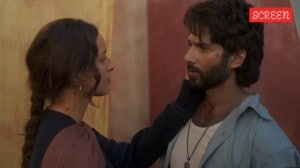
The film,which releases on January 21,has the actor play a dhobi and explores his life beyond the washing pen. Sandwiched between the railway lines and a giant skyscraper in Mumbais latest realty hotspot,it is the irony that the dhobi ghat represents which made Rao consider it for the title. The title is metaphoric for the city where many kinds of lives come together, she explains. However,the debut director is only one of the many to have trained cameras on the historic landmark.
It may seem like a dated concept,but every time you give clothes to your neighbourhood laundryman,chances are that they land up on one of these stones. In anything from Rs 2 to Rs 10 on an average,you can get your clothes washed and ironed here. The business comes from companies,hotels,export clothing manufacturing units,laundries and households from across Mumbai, says Khiladi Nirmal,on his way to the eastern suburb of Mankhurd to deliver clothes.
Built in 1890 by the British,the dhobi ghat at Mahalaxmi is the only BMC-operated open laundry in the city and is spread across close to 10 acres. With 731 washing stones,it provides employment to almost 10,000 people. Every owner pays a monthly rent of Rs 293 to the municipality,the non-payment of which for thrice consecutively months can cause the cancellation of their license. However,most dhobis working here are carrying on their family legacy,such as Suresh Maati,a third-generation dhobi. Its the Parsi community that helped us prosper, he recounts. They supported us financially and morally,often funding the education of our children.
The birds-eye view aside,the community is strongly-knit and outsiders are seldom welcome. But with appropriate permissions from their local association,Dhobi Kalyan & Audhyogik Vikas Co-op Society,one can find an entry in this near-fortress. Designed almost like a jigsaw puzzle,dhobi ghat with washing pens at the centre,is also lined with up to 3,000 hutments that house many dhobis. For a set-up this massive,it is surprising that the city provides dhobi ghat with 24-hour supply of water. The drainage system too seems immaculate. It was not always so, explains Santosh G Kanojia,the chairman of the Society,which was formed by the late social activist Umashankar Mishra who took up the cause of the dhobis.
But over time,with the underworld thriving in our neighbourhood,business began to wane. Encroachers and land sharks took over,sewage system deteriorated and water supplies suffered,and the government continued to overlook our plight, Kanojia explains.
It was not until early 2000s that the association managed to free funds reserved for dhobi ghats development. The land currently remains under dispute with the BMC who wanted to clear it out under the SRA scheme.
Moderisation is underwayup to 200 washing machines have been installed. But a fully-mechanised dhobi ghat remains a distant dream, sighs Karmesh Mahanta,who does delivery for some of the professional set-ups that have cropped up.
But Kanojia is hopeful. He now sits in a recently-constructed office within the premises,with a computer on his desk– the contribution made by Aamir Khan Productions. Many documentaries are shot here and Bollywood too films us from time to time. A few scenes from Lage Raho Munnabhai were shot here,as were some from Hisss. The place makes for good cinematography and that brings us funds after all,every penny counts.
Kanojia switches on the computer to show us an image of Rao and Pratik at the dhobi ghat,along with Abdul Ghani,one of the locals who got himself a minor role in the film. He says,Aamir Khan had invited the dhobi community personally for a special screening on Saturday. 50 of us had hired a bus to attend it. Its this love that makes us realise that we arent unwanted in the city.
Stay updated with the latest - Click here to follow us on Instagram