Journalism of Courage



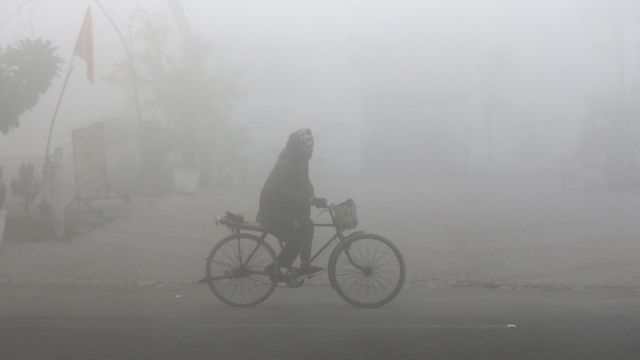 In response to the prevailing conditions, the Chandigarh Traffic Police has issued a detailed advisory, urging the the public to remain cautious while driving during foggy conditions. (ANI)
The Meteorological Department, Chandigarh, has issued a dense to very dense fog warning for the city, cautioning that foggy conditions are likely to continue over the next few days, affecting visibility during late night and early morning hours.
The warning comes amid forecasts of a western disturbance likely to affect northern parts of India from December 20, under whose influence light rainfall is expected at isolated places between December 20 and 22. Thereafter, weather conditions are expected to turn largely dry, though fog may still linger during night and morning hours, mentioned the Met Department, Chandigarh.
According to the Met Department’s latest assessment, dense to very dense fog has been observed in Chandigarh, including at the Chandigarh airport area, with humidity levels remaining high — conditions that are conducive to the persistence of thick fog. On Thursday, several parts of the city witnessed extremely low visibility, disrupting smooth vehicular movement and causing delays for office-goers and inter-city commuters travelling towards Panchkula, Mohali and Zirakpur.
As per official observations recorded at the Chandigarh Weather Observatory, the maximum temperature in the city stood at 21.9 degrees Celsius while the minimum temperature was recorded at 9.9 degrees Celsius, both marginally above normal. The maximum relative humidity touched 95 per cent while minimum humidity was around 53 per cent.
The five-day forecast for the Chandigarh region indicates partly cloudy skies till December 21, followed by mainly clear conditions thereafter. Maximum temperatures are expected to range between 22 degrees Celsius and 23 degrees Celsius, while minimum temperatures may fluctuate between 8 degrees Celsius and 11 degrees Celsius. Despite stable temperatures, meteorologists have cautioned that fog intensity may remain high during night and early morning hours, particularly on December 19, with dense fog at isolated places likely on December 20 as well.
The dense fog on Thursday posed considerable challenges to motorists. “I was driving into Chandigarh from Ambala early in the morning, and visibility was hardly a few metres on some stretches. Even with fog lights on, it was difficult to judge the distance of the vehicle ahead,” said Rishi Sharma, a private employee who commutes daily to the city.
Another commuter, Anas Ahmed, who was travelling from Mohali to Sector 43, said the fog made driving stressful and time-consuming. “The entire drive felt risky because cyclists and pedestrians were barely visible. I had to slow down significantly, and it took me much longer than usual to reach my destination,” she said.
Traffic Police advisory
In response to the prevailing conditions, the Chandigarh Traffic Police has issued a detailed advisory, urging the the public to remain cautious while driving during foggy conditions.
Motorists have been advised to avoid unnecessary travel during dense fog, drive at reduced speeds, maintain a safe distance from the vehicle ahead, and strictly avoid lane jumping. The use of headlights and fog lights has been strongly recommended, while parking vehicles on roadsides has been discouraged due to the heightened risk of accidents in low visibility.
A senior traffic police official said that traffic police personnel have been deployed at vulnerable and high-traffic stretches to manage traffic flow and assist commuters. “Dense fog significantly reduces reaction time and visibility. We urge drivers to strictly follow traffic rules, use fog lights properly, and stay alert for pedestrians and cyclists. Our teams are on the ground to ensure smoother traffic movement and to respond quickly to any emergencies,” the official said.
The Met Department has also highlighted potential impacts of dense fog on transport and aviation, warning of slower journey times and the possibility of traffic collisions. Citizens have been advised to limit outdoor exposure unless necessary and to cover their face when stepping out during peak fog hours.

 4 min read