Journalism of Courage



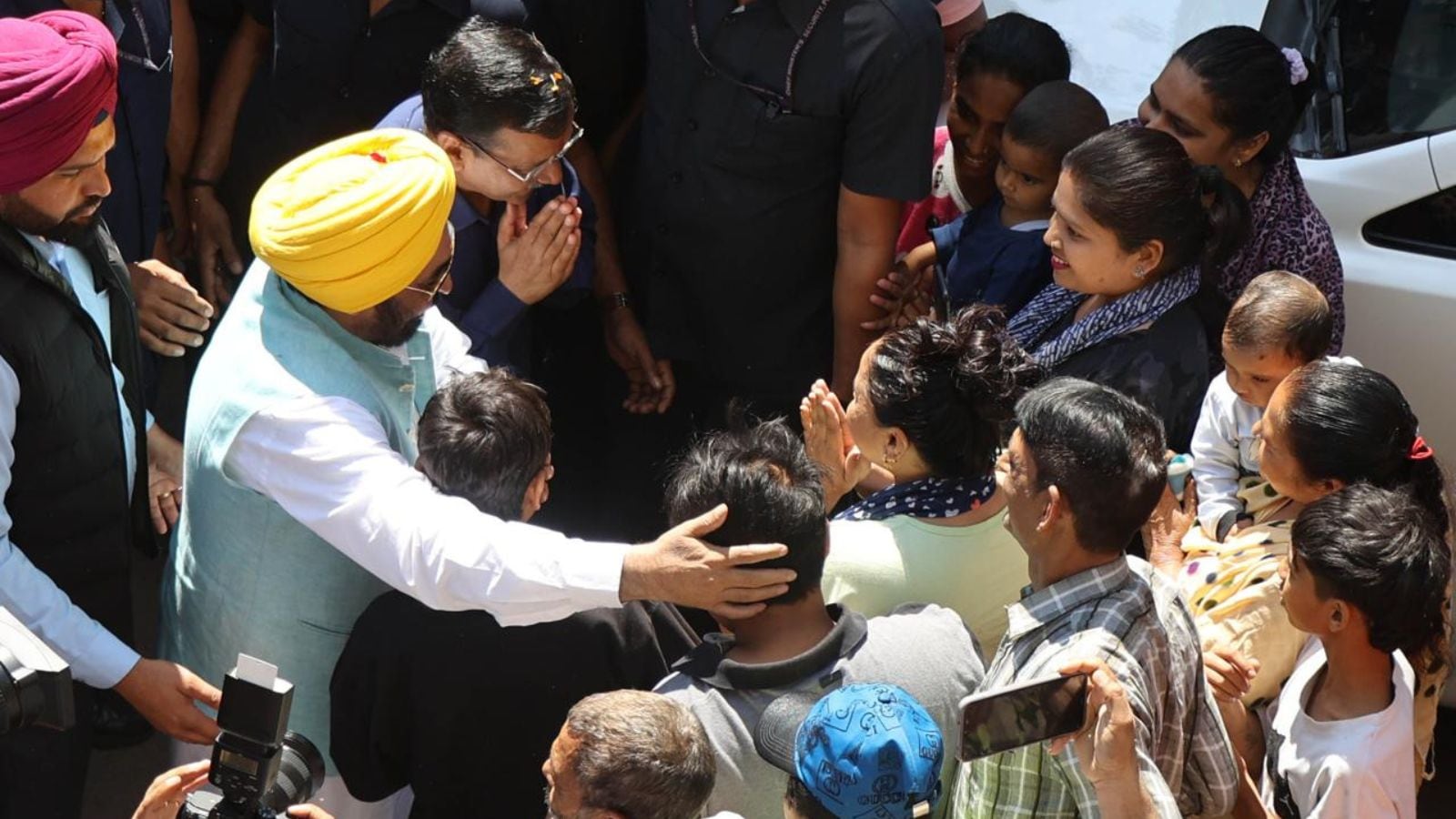 The demarcation of Punjab constituencies was conducted by the Delimitation Commission of India in 1951, 1961, and 1971. (File Image)
Amidst a debate over the upcoming delimitation exercise, with politicians claiming Punjab and Haryana may get lesser number of Lok Sabha seats — let’s understand how the demarcation of Punjab constituencies was conducted by the Delimitation Commission of India in 1951, 1961, and 1971. Established under the Delimitation Commission Act, this Commission is responsible for redrawing boundaries of both the parliamentary and Assembly seats, based on latest census data, to ensure equitable population representation across constituencies.
Based on the 1951 census, the initial delimitation that year marked the first post-Independence effort to define parliamentary constituencies. There were 494 Lok Sabha seats, corresponding to a national population of approximately 36.1 crore. In Punjab, the process established foundational constituencies for parliamentary representation. During the 1952 general polls, Punjab had 105 and 15 Assembly and parliamentary seats, respectively.
Haryana and Himachal Pradesh were not yet carved out of Punjab — with the parliamentary constituencies being Ambala-Shimla, Amritsar, Fazilka-Sirsa, Ferozepur-Ludhiana, Gurdaspur, Gurgaon, Hoshiarpur, Hisar, Jhajjar-Rewari, Jullundur, Kangra, Karnal, Nawanshahr, Rohtak, and Tarn Taran. Ambala-Shimla, Fazilka-Sirsa, Ferozepur-Ludhiana, and Jhajjar-Rewari had two MPs each in general and reserved categories — with casting of two votes for each class.
The Commission undertook the second delimitation after the 1961 Census, taking the number of Lok Sabha seats to 522 (an increase of 28), reflecting a national population of about 43.9 crore. Punjab saw significant administrative changes during this period, due to the States Reorganisation Act, 1956, which had led to the merger of Patiala and East Punjab States Union (PEPSU) with Punjab, raising the Assembly and parliamentary seats to 154 (with 33 reserved for Scheduled Castes) and 22 (five reserved), respectively.
Haryana and Himachal Pradesh were still part of Punjab — with the parliamentary seats being Amritsar, Ambala, Bathinda, Ferozepur, Gurdaspur, Gurgaon, Hisar, Hoshiarpur, Jhajjar, Jalandhar, Kaithal, Kangra, Karnal, Ludhiana, Mahendragarh, Moga, Patiala, Phillaur, Rohtak, Tarn Taran, Sangrur, and Una.
The 1971 Census prompted another delimitation, increasing the Lok Sabha constituencies to 543 (an increase of 21), aligning with a national population of about 54.8 crore. In Punjab, the Punjab Reorganisation Act, 1966, had earlier led to the creation of Haryana and the transfer of several districts to Himachal Pradesh — reducing the Punjab Assembly seats to 104 (dip of 17) with 23 reserved. This adjusted constituency boundaries to reflect the demographic and administrative changes, ensuring each seat represented a roughly equal population segment.
The delimitations were aimed at maintaining the principle of ‘One Person, One Vote’, ensuring fair and effective representation by adjusting seats in accordance with population shifts and administrative changes. Back then, there were 13 parliamentary constituencies — Amritsar, Fazilka, Ferozepur, Gurdaspur, Hoshiarpur, Jalandhar, Ludhiana, Patiala, Sangrur, Tarn Taran, along with Bathinda, Phillaur, and Ropar being reserved.
Established in 1976, the current 117 Punjab Assembly constituencies (an increase of 13, with 29 reserved) was as per the Delimitation of Parliamentary and Assembly Constituencies Order, passed that year. In the 1977 general polls, the Lok Sabha seats in Punjab remained at 13 — with Fazilka merged into the Ferozepur parliamentary seat and Faridkot being the new one formed; Phillaur, Patiala, Jalandhar, and Ludhiana were the reserved seats from 1977 to 2004.
Among the 117 Assembly constituencies, the ones reserved increased to 34 in the delimitation of 2008, leading to renaming and reorganisation of several constituencies. Punjab continued to have 13 Lok Sabha seats — Phillaur, Ropar, and Tarn Taran being dissolved, while Anandpur Sahib, Khadoor Sahib, and Fatehgarh Sahib being created. Among the 13, four seats — Faridkot, Hoshiarpur, Jalandhar, and Fatehgarh Sahib — were reserved.
This delimitation in Punjab led to significant changes in both the Assembly and parliamentary seats. The revisions were aimed at ensuring equitable representation by adjusting seats in line with population shifts and administrative considerations.

 4 min read