Journalism of Courage



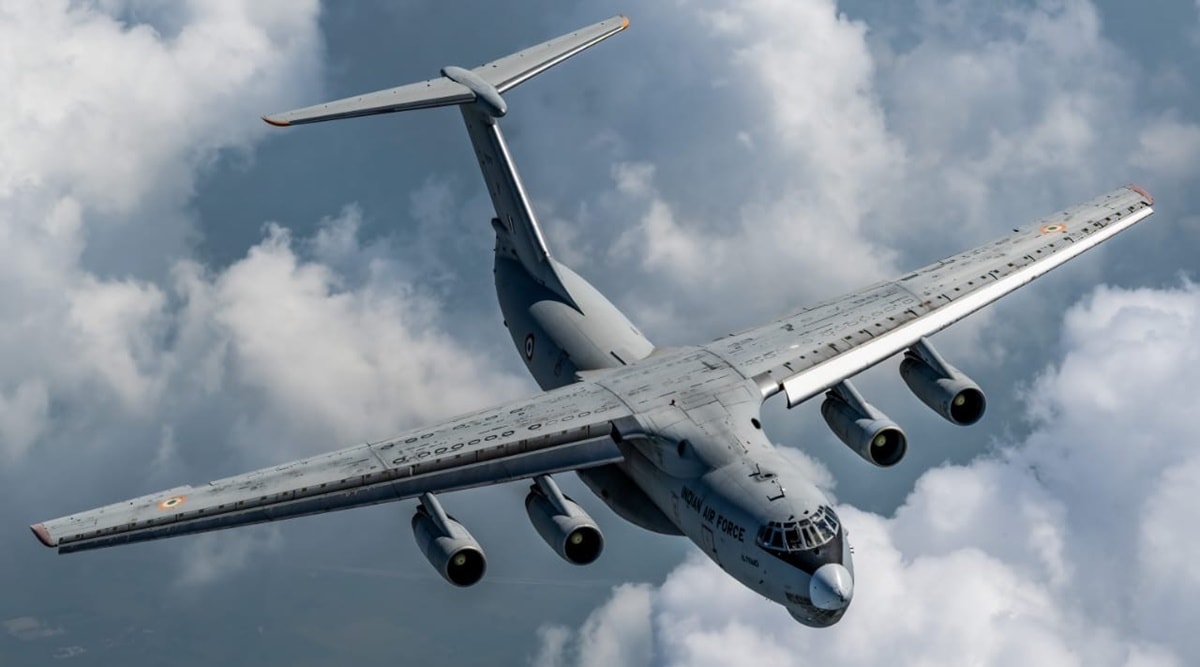 IL-76 aircraft of 44 Squadron (Express)
The No. 44 Squadron of the Indian Air Force is celebrating its Diamond Jubilee this year in Chandigarh. Though the event was meant to be organised in 2021 when the squadron actually completed its diamond jubilee, the Covid-19 pandemic and consequent restrictions meant that the celebration had to be postponed.
The squadron was raised in Chandigarh in April 1961 by Wing Commander (later Air Marshal) Trilok Nath Gadhiok. Incidentally, Wing Commander Gadhiok was also the first station commander of Air Force Station, Chandigarh.
The newly inducted AN-12 transport aircraft from the Soviet Union formed part of the squadron for several decades till they were replaced by IL-76 transport aircraft in the mid-1980s.
Six AN-12 aircraft formed part of the newly formed 44 Squadron in the turbulent period of 1961-62. The squadron was initially named ‘The Himalayan Geese’ (the bird is on the Squadron’s crest) but it was changed to ‘Mighty Jets’ when the changeover to IL-76 aircraft happened.
Not long after the first batch of aircraft of AN-12s were inducted into 44 Squadron, the first unfortunate accident took place in August 1961 when the nose gear of an aircraft collapsed upon landing and the aircraft caught fire. However, there was no loss of life.
The squadron’s diamond jubilee comes at a time when the Soviet-era warhorses of the IAF are giving way to newer technologies from the West. The American C-17s are now more commonly seen taking to the skies from Chandigarh to transport men and material to Ladakh than the IL-76. And the day is not too far away when these mighty jets will have to be put to rest after the completion of their glorious service.
While the unit has had its share of missions in disaster relief operations, sudden induction in overseas operational commitments like IPKF in Sri Lanka, Operation Cactus in Maldives and supporting the Army in troop build-up in northern area, no mention of its history can be complete without referring to its bombing role in the 1971 Indo-Pak war.
The squadron was at the time commanded by Wing Commander (later Air Vice Marshal) Vidya Bhushan Vashisht, who was awarded the Maha Vir Chakra for his role in undertaking several bombing missions deep inside Pakistan in the western sector.
Wing Commander Vashisht had taken over the squadron in the aftermath of a tragedy when 11 persons including the Commanding Officer – Wing Commander Ajit Kumar Bhattacharjee – had died in a crash while practising bombing runs near Ahmednagar in Maharashtra. Squadron Leader Birendra Dutt Dangwal was the co-pilot of the aircraft while Squadron Leader V P Handa was the navigator.
Under these circumstances, with the war only a few months away, Wing Commander Vashisht had to restore confidence in the squadron for the bombing task that had been assigned to it and practice for it under safe conditions.
Air Vice Marshal Arjun Subramaniam (retd) has written a detailed account of the exploits of Wing Commander Vashisht and 44 Squadron in the 1971 war, beginning with the attack on Pakistan Army’s fuel and ammunition dump in the Changa Manga forest near Kasur in West Punjab on December 3, 1971. The attack was repeated the following night despite heavy anti-aircraft fire causing widespread damage to the dump.
On the third consecutive day, the CO 44 Squadron led a bombing mission of the squadron’s aircraft to Haji Pir pass in Jammu and Kashmir, causing degradation of the Pakistan Army’s artillery brigade located in that area.
Among the targets that 44 Squadron engaged during the war were the Sui Gas Plant in Balochistan, Fort Abbas near Bahawalnagar in Pakistan’s Punjab and Suleimanki headworks near Okara in West Punjab. Air Vice Marshal Subramaniam has specially mentioned a raid on Skardu airbase by Canberra aircraft which was led by an AN-12 of 44 Squadron as pathfinder-cum-lead bomber and which was piloted by Wing Commander Vashisht.
The accomplishments of the squadron in the 1971 war led it to be the first transport squadron to be awarded Battle Honour for the war. Apart from Wing Commander Vashisht being awarded the Maha Vir Chakra, Squadron Leader (later Group Captain) Gursaran Singh Ahluwalia and Squadron Leader (later Wing Commander) PB Kalra, navigator, were awarded Vir Chakras. Incidentally, Wing Commander Vashisht received the MVC as well as a Vayu Sena Medal during his tenure as CO of 44 Squadron, a rare accomplishment.
His citation for the Maha Vir Chakra reads: “Commanding Officer of an operational squadron [No.44 Squadron, Antonov An-12], led a group of heavy bombers of his squadron to attack an important enemy fuel and ammunition dump at Changa Manga forest on the night of December 3. 1971. In spite of very heavy enemy ground fire, he pressed home the attack, and caused severe damage to the target. Again, on the next night, he led another raid to the same target and succeeded in causing further heavy damage in the face of intense enemy ground fire. On the night of December 5, 1971, he led a formation of his bombers, this time to attack enemy positions in the Haji Pir Pass in Pakistan-occupied Kashmir.”
“The difficulties and dangers of this operation were due as much to the great volume of ground fire in the target area, as to the hazards of flying his large aircraft and leading his formation at low level through mountainous terrain. In spite of these hazards. Wing Commander Vashisht pressed home the attack and achieved marked success in hitting the enemy’s positions. In addition to these, he had led many other missions deep into enemy territory where opposition could be expected from fighter aircraft and anti-aircraft fire. In all these raids Wing Commander Vashisht completed the tasks to him without any loss to our aircraft. He has displayed inspired leadership, exceptional devotion to duty, and conspicuous bravery in repeatedly leading attacks against heavily defended enemy targets, night after night”.

 6 min read