Journalism of Courage



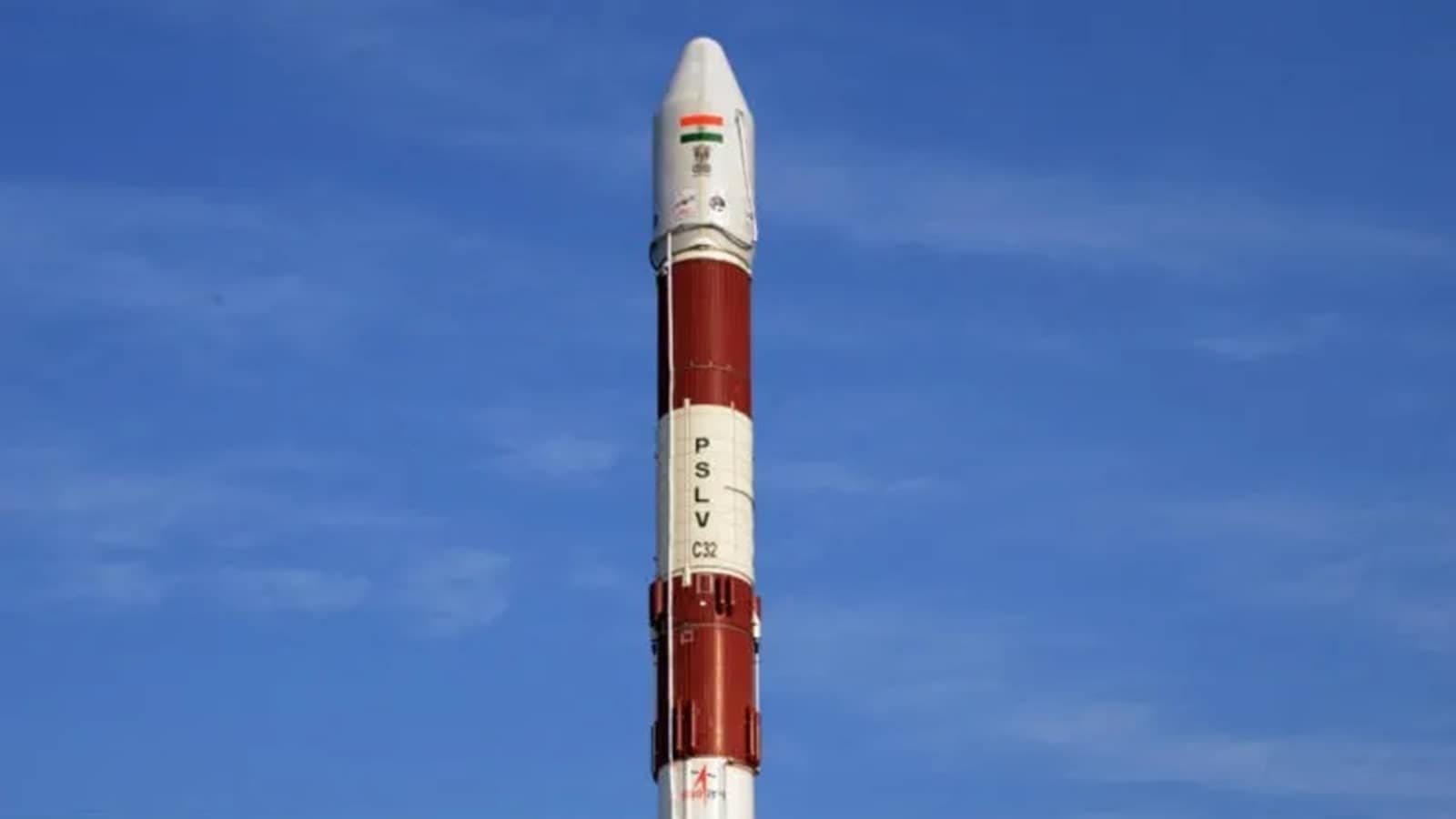 The two satellites will fly in formation for six hours, separate away and then rendezvous again. (Representational image/File)
The first ever privately built version of the Polar Satellite Launch Vehicle, the Indian Space Research Organisation (Isro)’s workhorse rocket, will possibly have its maiden flight by the end of 2024, NewSpace India Limited chief D Radhakrishnan said Wednesday.
Radhakrishnan said NSIL, the state-run firm mandated with the commercialisation of Isro’s technology, will, however, look at a new public-private partnership model for the future manufacturing of the space agency’s new heavy-lift rocket — the Launch Vehicle Mk III (LVM3) which is the upgraded version of the GSLV Mk III — instead of a supplier model adopted for the private manufacture of the PSLV rocket.
The industry consortium of Hindustan Aeronautics Limited and L&T are building the first private version of the PSLV rocket known as the PSLV-XL N1 and have completed various stages including the realisation of solid motors last year. The contract for the private manufacture of the PSLV was signed in 2022 at the Bengaluru Space Expo by the HAL and L&T consortium. The contract mandates the end-to-end production of five PSLV XL rockets.
“Under the project which was kicked off two years ago we are looking at launching the first fully Indian industry manufactured PSLV possibly by the end of this year,” Radhakrishnan said.
Radhakrishnan said while PSLV’s private manufacture has been a stepping stone for the entry of the Indian industry into the space sector it has also helped NSIL and Isro “understand the nuances and complexities that are involved in launch vehicle realisation, especially in a vehicle like PSLV which involves several complex systems”.
“The PSLV manufacturing model which we have adopted for production was more of a supply order since it was the first attempt to get the industry to take up the responsibility of end-to-end production. Now, we are looking at a newer mode of engagement with the Indian industry going on to the next operational launch vehicle of Isro which is the LVM3 heavy lift launcher where the LVM3 vehicles have to be produced in very large numbers,” he said.
With as many as five to six LVM3 rockets likely to be required to be flown per year over the next five years from the current production of two vehicles, according to NSIL’s market assessment, the space firm is looking at a PPP model for building the rockets rather than relying exclusively on state funding.
“What is very noteworthy is the engagement with the industry under this project is going to be for an extremely long period of a range of 10 to 15 years where we ensure that we roll out something like 60 vehicles. This mode of PPP is likely to encourage the industry to also become partners which was not the case in the earlier approach,” said Radhakrishnan.
“This is more challenging as the launch market is extremely dynamic and to an extent controlled by geo-political factors and another important point is that the launch service market is very difficult to predict for a long period,” he added.
Since it came into existence in 2019 to replace Antrix Corp, Isro’s former commercial arm, NSIL has facilitated the commercialisation of several technologies. The rollout of the national fisheries project involving the installation of satcom systems in fishing boats by private vendors has involved Isro’s communication technology.
“One project of NSIL of social relevance which has been taken up is the project for the national rollout of MSS communication and support system for marine fishing and department of fisheries and we have used the expertise of three prominent industries for realising and establishing nearly one lakh MST terminals for fishing vessels,” Radhakrishnan said.
One of the major Isro technologies that NSIL is looking to commercialise is the Small Satellite Launch Vehicle (SSLV) which had a successful test flight in August this year. While NSIL signed a deal for SSLV’s maiden commercial flight in 2019, with a satellite of a US space start-up Spaceflight, even before the SSLV was tested, the deal fell through due to the pandemic and delays in the realisation of the rocket.
SSLV’s first major commercial flight with a foreign payload is now expected to be in 2026 with the Optimus satellite of Australian space firm Space Machines. Space Machines is a participant at the 2024 Bengaluru Space Expo with former Australian cricket great Steve Waugh as an ambassador for the firm.
Under a decadal vision, the Centre is aspiring to take the Indian space economy from its current value of $8 billion to $44 billion by 2033.
“This is one of the most challenging tasks for this is a five x improvement or increase. We are looking at every sub-sector in the space industry be it launch vehicles, satellite manufacturing, data disseminations, application ground stations and so on to see how we can move the space economy,” said Pawan Goenka, Chairman, Indian National Space Promotion and Authorisation Centre (IN-SPACe), at the Bengaluru Space Expo.
“Among the larger things that we are trying to do is to get the earth observation satellite constellation launch for which the expression of interest was released just yesterday (September 17) and 32 companies have shown interest and it is a big deal because it will bring in the private sector to launching satellite constellations in India for data dissemination,” said Goenka.
“The earth observation remote sensing data that has been created mostly by Isro needs to be multiplied three to four times and this is an opportunity for the private sector to launch EO satellites and create data. This is waiting to explode. The kind of data requirement in India will be at least 10x of what we have today,” Goenka said.
“It is very easy for Isro to launch these satellites but we have decided that rather than Isto doing it we will have the private sector coming in owning the satellites, operating them and monetising these satellites,” he said.

 6 min read