4 min read

Journalism of Courage



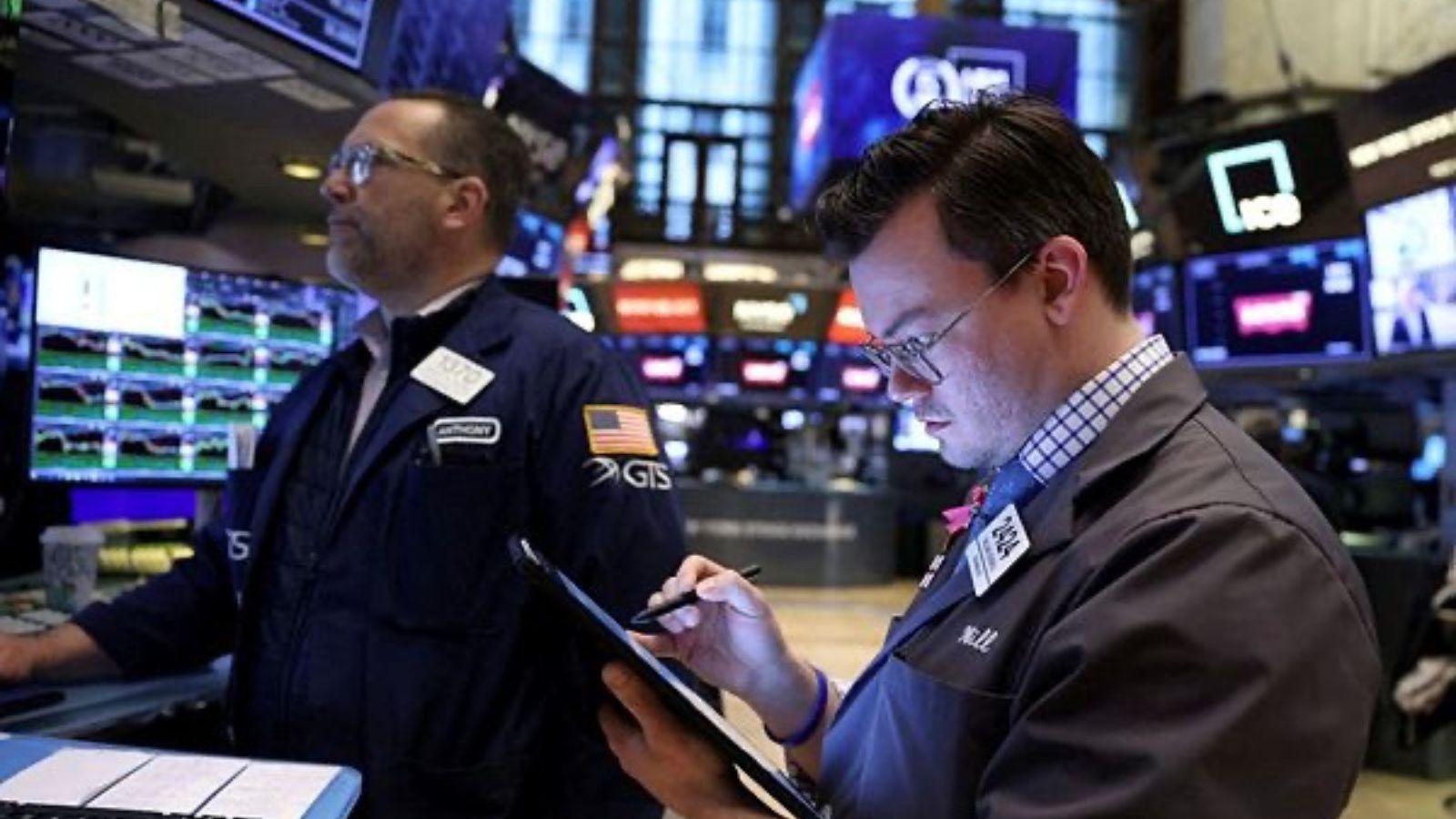 Traders work on the trading floor at the New York Stock Exchange (NYSE). (Reuters)
US markets are set for an upheaval on Tuesday when the settlement time for US equities, corporate municipal bonds and other securities will be halved to one day, or T+1, after the adoption of a new Securities and Exchange Commission rule in February 2023.
Here is what to expect:
A trade settlement occurs when the buyer receives the security and the seller is paid. This final stage is handled by the Depository Trust Company (DTC), a subsidiary of the Depository Trust and Clearing Corporation.
Regulators hope a faster settlement process will reduce risk and improve efficiency in the world’s largest markets, as investors will get their money and securities sooner. Currently, as trades take two days to conclude, there can be hiccups before investors receive their money or securities.
A trading frenzy around the “meme stock” GameStop in 2021 highlighted the need to reduce counterparty risk and improve capital efficiency and liquidity in securities transactions. SEC Chair Gary Gensler said the change will make the US market infrastructure more resilient, timely and orderly.
Market participants, such as banks, custodians, asset managers and regulators were working over the weekend to ensure a smooth switch, the Securities Industry and Financial Markets Association (Sifma) said.
A virtual command center has been created to monitor the implementation and communicate potential issues. Over 1,000 people will join multiple daily calls, said Tom Price, managing director at Sifma.
The conversion of the Depositary Trust and Clearing Corporation (DTCC) to T+1 will be a central part of the shift to faster settlements, as it provides clearing and settlement services for Wall Street, but all market participants will have to adjust, from banks to asset managers and custodians.
No. Trades in India are being settled one day after the trade, after the country’s Securities and Exchange Board completed its phased-in transition in January 2023. Now India has set its sights on same-day settlement, joining China where stock settlement is T+0 and T+1 for cash settlement.
Canada, Mexico and Argentina shifted to one-day settlement on Monday, a day before the United States.
Alejandro Félix, president of the AMIB’s (Mexican Association of Stock Institutions) Administration Committee, said Mexico decided to speed up T+1 to preserve the correlation with the U.S.
Britain’s stock markets plan to shift to T+1 by the end of 2027, while the European Union has said it is also looking to follow the U.S., but the timing has not been announced.
Financial firms will have less time to line up dollars to buy stocks, recall shares out on loan, or fix transaction errors, which could heighten the risk of settlement failures and raise transaction costs. The foreign exchange market, for instance, still settles in two days.
As market participants adjust to faster settlements, they expect a temporary increase in trade fails. This happened in September 2017 when the settlement period was reduced from three to two days, according to Sifma.
The SEC said “a shorter settlement cycle may lead to a short-term uptick in settlement fails and challenges to a small segment of market participants.”
Research firm ValueExchange found in a survey that market participants expect the trade fail rate to increase to 4.1% after T+1 implementation from 2.9%. Sifma expects a minimal rise in the fail rate which would be resolved quickly, Price said.